
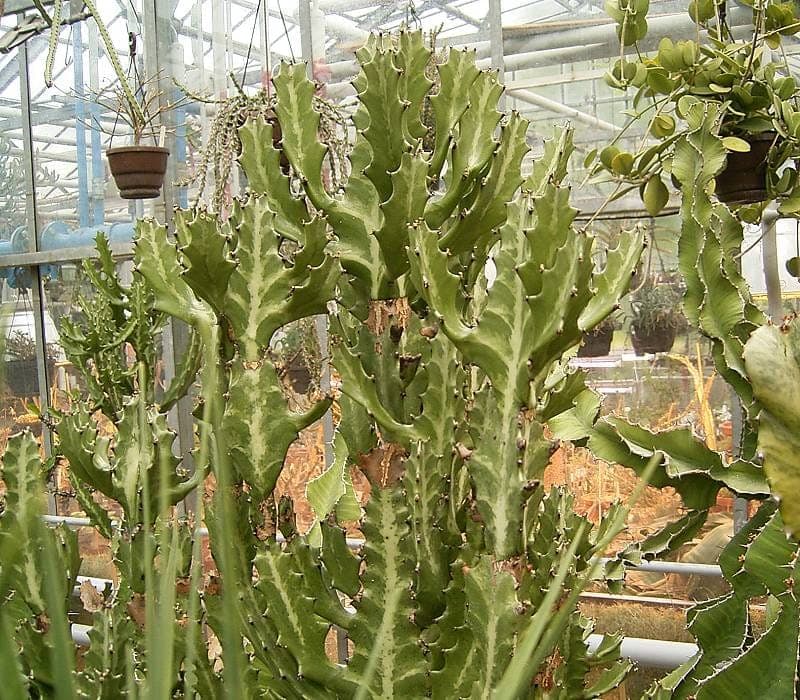
Frank Vincentz / CC BY-SA 3.0, via Wikimedia Commons
Euphorbia lactea: complete guide
Euphorbia lactea
¿Quieres ver Euphorbia lactea: complete guide en tu jardín?
1 minuto, sin tarjeta de crédito
Overview
Euphorbia lactea, known as candelabra spurge or mottled spurge, originates from Sri Lanka. This remarkable succulent displays a distinctive candelabra-like growth pattern with three- or four-angled stems. White marbling on green tissue makes it a striking ornamental for indoor settings and outdoor gardens in warm climates.
Appearance and bloom
The plant produces upright-growing, thick fleshy stems with characteristic three-sided or four-sided geometry. Small leaves appear along the stems in sparse arrangement. The foliage is minimal and linear, often deciduous in growth. Cream-colored, tiny flowers appear in clusters, followed by small red seed pods. Most visual appeal derives from the architectural stem structure.
Ideal location
Full sun is essential - at least 6-8 hours of direct sunlight daily. Position on a very sunny south-facing windowsill or outdoors. Cold or partial shade causes leggy, weak growth. Good air circulation helps prevent moisture problems.
Soil
Extremely well-draining soil is mandatory. Use cactus mix or add 50 percent sand to universal potting soil. pH can be neutral to slightly alkaline. Succulents do not require nutrient-rich soil. Add small perlite or pumice for extra drainage.
Watering
Minimal water required. During growing season (spring/summer), water only when soil is completely dry - roughly every 2-3 weeks. During dormancy (fall/winter), water very sparingly. Excessive moisture is the main killer. Better to underer than overwater.
Diseño gratis
¿Quieres ver Euphorbia lactea: complete guide en tu jardín? Crea un diseño gratis ahora.
Pruning
Minimal pruning necessary. Remove damaged stems or dead foliage. Tilting growth can be prevented by regular rotation for sunlight. Pruning encourages branching; cut surfaces dry quickly and heal.
Maintenance calendar
January-March: Winter dormancy; minimal water. April-May: Growth begins; resume watering. June-September: Growth season; moderate water. October-December: Rest; keep dry. Repot annually in spring with fresh soil.
Winter hardiness
Not hardy. Minimum temperature 5-10 degrees Celsius. Frost damages the plant severely. Bring indoors in cold climates. Indoors ideal 15-25 degrees Celsius. Window drafts in winter provide protection.
Companion plants
Pair with other succulents: Aloe species, Sansevieria, Crassula varieties. Echeveria types add color beside Euphorbia green. Jade plant adds form. Dry arrangements with gravel and stones enhance the effect.
Closing thoughts
Euphorbia lactea is ideal for those seeking low-maintenance, drought-tolerant specimens. Its architectural appearance makes it a striking ornamental in modern interiors or gardens in warmer climates.
Find this plant at plant retailers and online succulent shops. UK garden centers stock succulents. German OBI and Hornbach offer diverse succulent assortments. French Truffaut and Jardiland provide succulent gardening solutions.
Want to learn more about succulents? Visit gardenworld.app/en for plant combinations. Or check gardenworld.app/en for more plant catalog.
¿Quieres ver Euphorbia lactea: complete guide en tu jardín? Crea un diseño gratis ahora.
Sube una foto, elige un estilo y obtén un diseño fotorrealista con lista de plantas en menos de un minuto.
Más de 10.000 jardines diseñados
Sin tarjeta de crédito


Plantas similares
Woolly mercury: complete guide
Mercurialis tomentosa
All about Mercurialis tomentosa, the woolly mercury from southwestern Europe: site, soil, watering, care and garden design tips.
Shurur: complete guide
Euphorbia fruticosa
Everything about Shurur: cultivation in dry climates, xeriscaping, care and tips for drought-resistant gardens in warm climates
Glary spurge: complete guide
Euphorbia glareosa
Everything about glary spurge: cultivation, maintenance, frost hardiness and use in Mediterranean and mountain-inspired gardens