
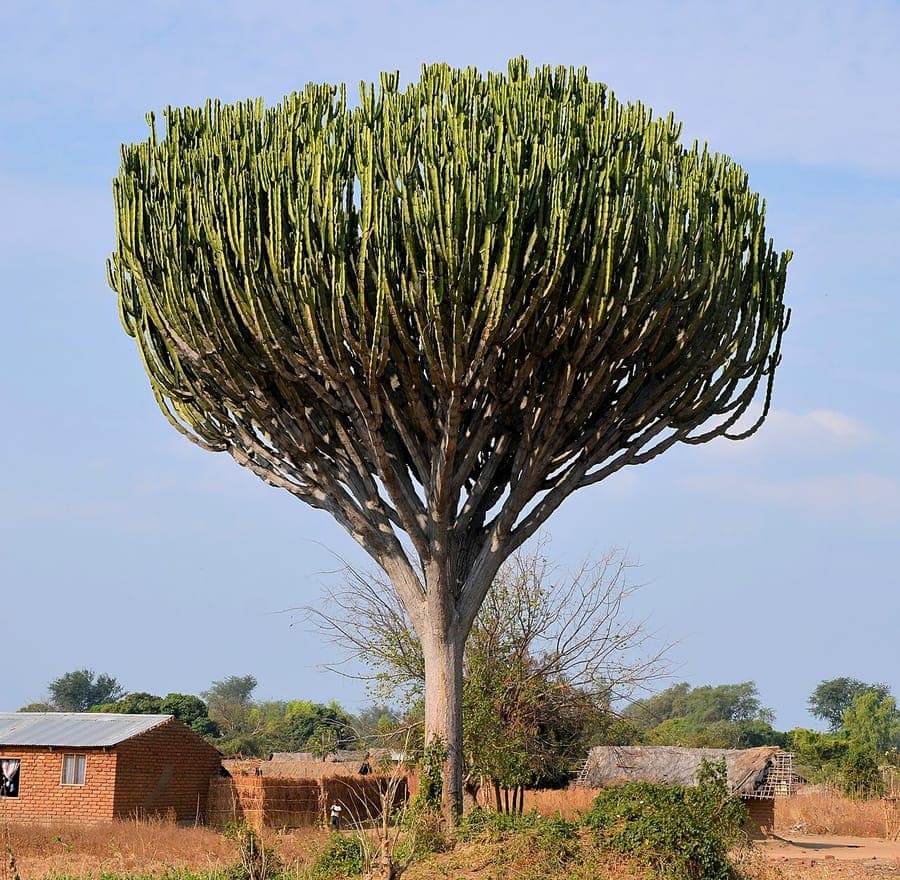
Hans Hillewaert / CC BY-SA 3.0, via Wikimedia Commons
Euphorbia ingens: complete guide
Euphorbia ingens
¿Quieres ver Euphorbia ingens: complete guide en tu jardín?
1 minuto, sin tarjeta de crédito
Overview
Euphorbia ingens, also known as the cactus spurge or candelabra tree, is an impressive succulent plant originating from East Africa. This plant can grow up to 8 meters tall in ideal natural conditions, though cultivated specimens remain much smaller. The plant is known for its striking candelabra-like growth form, with thick, stiff branches that are almost rectangular. This unique appearance makes it a popular choice for collectors and succulent enthusiasts.
Appearance and bloom
Euphorbia ingens grows as a columnar tree with a basal trunk and characteristic four-sided, green stems. These stems are deeply ridged and provided with small spines in rows. The plant produces small leaves at the tips of young growth, but these quickly fall off as the plant matures, leaving only the green stems visible.
The flowers of Euphorbia ingens are small and inconspicuous, occurring in greenish-yellow colors. They are not the attraction of this plant. Instead, the plant offers its spectacular architectural form. The fruits are small, round capsules that open to release seeds. In household conditions, this plant rarely blooms.
Ideal location
Euphorbia ingens requires a very sunny location. Plant it in a position with at least 6 to 8 hours of direct sunlight daily. This is a plant that loves full sun and can even flourish in very hot conditions. In light or shade, the plant will etiolate (stretch) and lose its architectural appearance.
Temperature is critical for this succulent plant. In winter, the plant should be kept in a cool environment, preferably between 10 and 15 degrees Celsius. Ensure the plant is protected from frost threat, as it is not fully hardy in cold climates. Plant it in a well-draining location protected from wind.
Soil composition
Euphorbia ingens requires very well-draining, gritty soil. An ideal mix consists of 50 percent cactus/succulent potting soil and 50 percent extra sand, perlite, or gravel. This provides immediate drainage and prevents water accumulation around the roots, which can lead to rot.
The pH of the soil can be neutral to slightly acidic, between 6.0 and 7.5. Do not add organic material, as it retains water and can cause root rot. The plant is accustomed to very poor soils and performs well without much nutrition.
Watering
Watering is critical for Euphorbia ingens, especially water quantity. During the growing season (May to October), water when the soil is completely dry, typically once every two to three weeks. The plant can endure long periods of drought and would suffer more from over-watering than under-watering.
In winter, from November to April, watering should be almost completely avoided. Water only once every two months, or even less in very cold conditions. Ensure water can drain from the pot hole and the plant never sits in water. Over-watering is the most common cause of failure with this plant.
Diseño gratis
¿Quieres ver Euphorbia ingens: complete guide en tu jardín? Crea un diseño gratis ahora.
Pruning and shaping
Euphorbia ingens can tolerate pruning, but since this plant grows slowly, aggressive pruning is not necessary. You can remove damaged, diseased, or dead branches. Because this plant naturally assumes its unique form, pruning for shape is typically not needed. Allow the plant to retain its natural candelabra-like appearance.
If you want to keep the plant smaller, you can remove the tips when it reaches an undesired height. However, this will disrupt the plant's characteristic form. It is better to choose a smaller cultivar or younger specimen than to try pruning a large specimen.
Maintenance calendar
March - April: Beginning of growing season, add water sparingly. May - June: Regular water addition, fertilize once monthly. July - August: Continued moisture reduction, continued fertilizing. September - October: Gradually reduce moisture. November - February: Winter dormancy, minimal to no water.
Winter hardiness
Euphorbia ingens is not hardy in cold climates. The plant cannot tolerate temperatures below 10 degrees Celsius. In warm climates (USDA zones 10-11), it can be grown outdoors, but it is usually kept in containers so it can be moved when cold approaches.
In temperate climates, Euphorbia ingens must be grown in containers in a heated greenhouse or indoors. Plant it outside during summer in very warm regions, but ensure you bring it inside before frost begins. Extreme cold will cause serious damage or death to the plant.
Companion plants
Euphorbia ingens thrives best when grown alone or in combination with other large succulents such as Aloe, Sansevieria (snake plant), and larger cacti. It can be dramatic as the centerpiece of a succulent arrangement. Avoid placing other plants nearby, as the plant needs sunny and well-drained terrain.
In containers, it can be combined with other drought-tolerant plants, but ensure their water requirements are similar.
Closing remarks
Euphorbia ingens is a spectacular, architectural plant that can easily grow in the right conditions. With excellent drainage, minimal water, and plenty of sun, this plant will thrive. This is a plant for patient gardeners who appreciate slow growth. Find Euphorbia ingens at specialized succulent nurseries or online suppliers. For more information on cultivation and care, visit gardenworld.app. Enjoy the dramatic form of this remarkable African plant.
¿Quieres ver Euphorbia ingens: complete guide en tu jardín? Crea un diseño gratis ahora.
Sube una foto, elige un estilo y obtén un diseño fotorrealista con lista de plantas en menos de un minuto.
Más de 10.000 jardines diseñados
Sin tarjeta de crédito


Plantas similares
Woolly mercury: complete guide
Mercurialis tomentosa
All about Mercurialis tomentosa, the woolly mercury from southwestern Europe: site, soil, watering, care and garden design tips.
Shurur: complete guide
Euphorbia fruticosa
Everything about Shurur: cultivation in dry climates, xeriscaping, care and tips for drought-resistant gardens in warm climates
Glary spurge: complete guide
Euphorbia glareosa
Everything about glary spurge: cultivation, maintenance, frost hardiness and use in Mediterranean and mountain-inspired gardens