
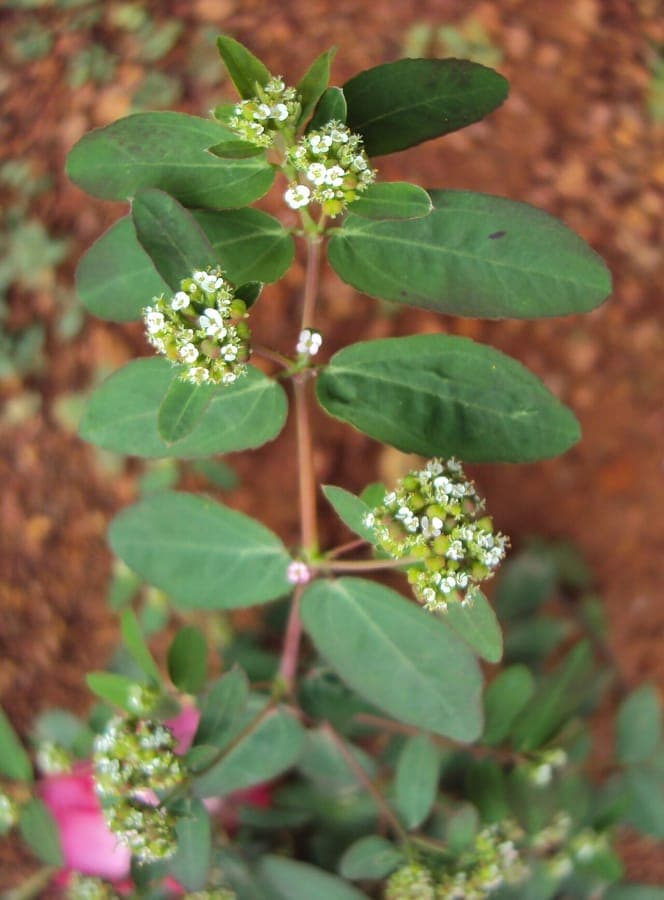
Vinayaraj / CC BY-SA 3.0, via Wikimedia Commons
Euphorbia hypericifolia: complete guide
Euphorbia hypericifolia
¿Quieres ver Euphorbia hypericifolia: complete guide en tu jardín?
1 minuto, sin tarjeta de crédito
Overview
Euphorbia hypericifolia, commonly known as Sweatplant or Hypericum-leaved Spurge, is a refined ornamental plant distinguished by its delicate, fine foliage and abundant tiny white flowers. This compact plant reaches heights of approximately 30-60 cm and, thanks to its dense growth habit, serves as an ideal choice for borders, front gardens and container cultivation. Originating from Central and South America, it has gained popularity in contemporary garden design for its refined appearance.
In modern gardening circles, Euphorbia hypericifolia is appreciated for gardeners seeking subtle, continuously flowering elements. The plant offers summer through autumn blooms with countless microscopic flowers that collectively create substantial visual impact through sheer abundance.
Appearance & Bloom Cycle
The plant naturally grows compact, forming a full, rounded structure with minimal pruning required. The foliage is small, linear and possesses a fresh, grass-like texture that appeals to contemporary aesthetic preferences. Flowers are tiny, white to cream-yellow, arranged in terminal inflorescences. They appear in profusion from June through October, occasionally lasting until the first frost.
The overall appearance is exceptionally refined and more elegant than many traditional flowering shrubs. This makes it particularly suitable for minimalist, naturalistic and modern garden styles where subtlety is valued.
Ideal Location
Euphorbia hypericifolia is a sun-lover that performs optimally in locations receiving at least 6 hours of direct sunlight daily. In shadier positions, the plant becomes leggy and produces significantly fewer flowers. A sunny, well-ventilated spot is essential for maximum visual impact.
The plant tolerates wind reasonably well, making it suitable for terrace settings and coastal gardens. Avoid deeply shaded, damp locations where stagnation occurs, as this promotes fungal diseases.
Soil Requirements
Euphorbia hypericifolia is not particularly fussy about soil composition but performs best in well-draining soil. Heavy clay soils should be amended with sand or perlite to improve drainage. The ideal pH range is 6.0 to 7.5, slightly acidic to neutral.
The plant tolerates poor soils better than excessive fertility. A planting medium of potting soil mixed with garden loam is sufficient. Ensure excellent drainage to prevent root rot, which is the primary cause of plant failure.
Diseño gratis
¿Quieres ver Euphorbia hypericifolia: complete guide en tu jardín? Crea un diseño gratis ahora.
Watering
Euphorbia hypericifolia has moderate water requirements. Allow the soil to dry slightly between waterings. Excessive moisture leads to root rot and fungal infections. During dry periods, water thoroughly but allow the soil to dry somewhat between applications.
For container-grown plants, special attention to drainage is necessary. Water only when the top 2-3 cm of soil feels dry. In winter, significantly reduce watering frequency.
Pruning
Euphorbia hypericifolia requires minimal pruning. Its natural growth habit is already compact and well-formed. Simply remove damaged or diseased stems in early spring. Deadhead spent flowers regularly to encourage continuous blooming throughout the season.
For container-grown specimens, light shaping pruning in spring helps maintain an even more compact form, though this is purely optional.
Maintenance Calendar
March-April: Inspect for diseases and pests. Repot container plants if necessary. May-June: Growing season begins. Water regularly, optionally applying dilute balanced fertilizer. July-September: Peak bloom period. Continue consistent watering and deadheading. October-November: Bloom declines. Gradually reduce water supply. December-February: Dormancy period. Minimal water. Monitor for pests in warm sheltered locations.
Winter Hardiness
Euphorbia hypericifolia is not winter-hardy in Northern Europe. In temperate zones, the plant can only overwinter outdoors in very mild climates (USDA zone 9+). In most regions, container plants must be brought indoors before the first frost.
Place potted plants in a cool, bright room (10-15 degrees Celsius) before frost arrives. Ensure good ventilation and adequate light. In spring, return them outdoors once all frost danger has passed.
Companion Plants
Euphorbia hypericifolia combines beautifully with other summer-flowering plants in border settings. Excellent combinations include:
- Lavender for color and textural contrast
- Salvia for height and structural interest
- Silver-leaved plants such as Senecio cineraria for contrast
- Other compact bloomers like Dianthus and Phlox
- Grass-like plants such as Festuca glauca for soft texture
In container gardens, it works well alongside other Mediterranean plants with similar moisture requirements.
Closing Thoughts
Euphorbia hypericifolia is a beautiful, often-underutilized plant offering tremendous potential for contemporary garden design. With minimal care requirements and maximum aesthetic impact, this plant provides an elegant solution for gardeners seeking continuously flowering, refined textures. Find your plant at local garden centres. Visit gardenworld.app/en for more design inspiration and personalized garden advice tailored to your space.
¿Quieres ver Euphorbia hypericifolia: complete guide en tu jardín? Crea un diseño gratis ahora.
Sube una foto, elige un estilo y obtén un diseño fotorrealista con lista de plantas en menos de un minuto.
Más de 10.000 jardines diseñados
Sin tarjeta de crédito


Plantas similares
Woolly mercury: complete guide
Mercurialis tomentosa
All about Mercurialis tomentosa, the woolly mercury from southwestern Europe: site, soil, watering, care and garden design tips.
Shurur: complete guide
Euphorbia fruticosa
Everything about Shurur: cultivation in dry climates, xeriscaping, care and tips for drought-resistant gardens in warm climates
Glary spurge: complete guide
Euphorbia glareosa
Everything about glary spurge: cultivation, maintenance, frost hardiness and use in Mediterranean and mountain-inspired gardens