
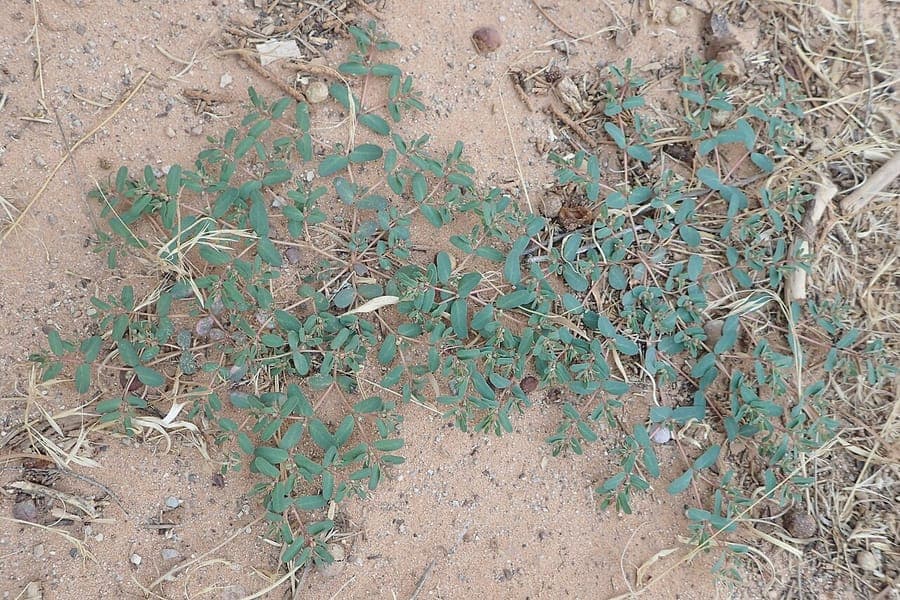
Kenraiz / CC BY-SA 4.0, via Wikimedia Commons
Euphorbia glyptosperma: complete guide
Euphorbia glyptosperma
¿Quieres ver Euphorbia glyptosperma: complete guide en tu jardín?
1 minuto, sin tarjeta de crédito
Overview
Euphorbia glyptosperma, commonly called ridge-seed spurge, ribseed sandmat, or corrugate-seeded spurge, is a diminutive herbaceous plant native to North America, ranging from Canada through the USA to northeastern Mexico, and naturalized across much of Europe. The plant is prized in drought gardens for its minimal footprint, extreme toughness, and fascinating ridged seed structures.
Like many Euphorbia species, it's an understated yet elegant choice for gravel gardens, between pavers, or as groundcover in the most challenging dry locations.
Appearance & bloom
Euphorbia glyptosperma is extremely low-growing and spreading, typically only 10 to 30 centimeters tall and equally wide. The plant forms small, densely branched rosettes, almost like a miniature shrub. Leaves are small and linear, usually green though they may turn red in full sun.
Flowers are very tiny and inconspicuous, yellow to reddish, arranged in cyathia at branch tips, blooming from June through October and attracting small pollinators.
The distinctive feature of this species is its seed structure. After flowering, tiny seeds develop distinctive ridged surfaces - the "ridge-seeds" that gave the plant its scientific name (glyptosperma = carved seeds). These seeds disperse by wind, and the plant self-seeds readily.
Ideal location
Euphorbia glyptosperma thrives in full sun on rocky, dry sites. A minimum of 6 hours of direct sunlight is necessary. This is a sun and warmth-loving species.
It's ideal for challenging sites where virtually nothing else grows: between pavers, in dry rock gardens, on outcrops or raised beds, along stone walls, or at the edge of poorly draining zones. The plant is so compact it occupies minimal space - plant in clusters for impact or scatter for naturalistic effect.
Soil
Euphorbia glyptosperma is genuinely unfussy about soil type. The plant grows almost anywhere provided drainage is perfect. In very heavy clay, extra sand or gravel might help, but even poor soils present no problem.
The plant tolerates extremely lean soil - this is actually advantageous since over-feeding promotes weak growth. pH can range from acidic to alkaline; the plant succeeds in virtually any soil type.
The single non-negotiable requirement is drainage. Waterlogging is fatal. Plant in well-draining zones or add fine gravel as a base layer.
Diseño gratis
¿Quieres ver Euphorbia glyptosperma: complete guide en tu jardín? Crea un diseño gratis ahora.
Watering
Once established, Euphorbia glyptosperma is exceptionally drought-tolerant - probably the toughest Euphorbia available. Water only if plants noticeably lose beauty.
For young plants and container specimens in the first year, water regularly but not excessively. Once established, water is virtually unnecessary. In extremely dry years, occasional water might help, but this is rarely needed.
Always ensure perfect drainage. Wet feet are worse than drought.
Pruning
Euphorbia glyptosperma requires no pruning. The plant naturally maintains a compact form. Dead material can be carefully removed, but usually isn't necessary.
If you wish to prevent self-seeding, remove seed heads before they fully ripen. Wash hands after contact with plant sap.
Maintenance calendar
Spring: no maintenance needed; verify plant survived winter intact. Summer: enjoy compact rosettes and tiny flowers; water only during extreme drought. Autumn: seeds ripen and disperse; monitor self-seeding if desired. Winter: no maintenance; plant overwinters easily in most climates.
Winter hardiness
Euphorbia glyptosperma is winter-hardy in zones 4-10 (down to approximately -25 degrees Celsius in many cases). This is remarkably cold-hardy, more so than expected. In severe winters, ice and snow may cause damage, but plants usually recover from below ground.
Wet winters are more problematic than cold. Ensure perfect drainage.
Companion plants
Euphorbia glyptosperma pairs well with:
- Other miniature drought-tolerant plants like small sedum species
- Tiny grey and silver-foliaged plants
- Saxifrage varieties
- Dianthus cultivars
- Small alpine and rock-garden specialists
Use for groundcover, between pavers, or in alpine troughs. Plant in groups of at least 3 to 5 for visibility.
Closing thoughts
Euphorbia glyptosperma is a humble but invaluable plant for gardeners with extremely dry, challenging sites. With its minimal growth habit and peculiar seed structures, it offers years of botanical interest. Plant in well-draining soil, full sun, and expect years of autonomous performance.
Available at major garden retailers. For specialized alpine and dry-garden seeds, visit www.gardenworld.app.
¿Quieres ver Euphorbia glyptosperma: complete guide en tu jardín? Crea un diseño gratis ahora.
Sube una foto, elige un estilo y obtén un diseño fotorrealista con lista de plantas en menos de un minuto.
Más de 10.000 jardines diseñados
Sin tarjeta de crédito


Plantas similares
Woolly mercury: complete guide
Mercurialis tomentosa
All about Mercurialis tomentosa, the woolly mercury from southwestern Europe: site, soil, watering, care and garden design tips.
Shurur: complete guide
Euphorbia fruticosa
Everything about Shurur: cultivation in dry climates, xeriscaping, care and tips for drought-resistant gardens in warm climates
Glary spurge: complete guide
Euphorbia glareosa
Everything about glary spurge: cultivation, maintenance, frost hardiness and use in Mediterranean and mountain-inspired gardens