
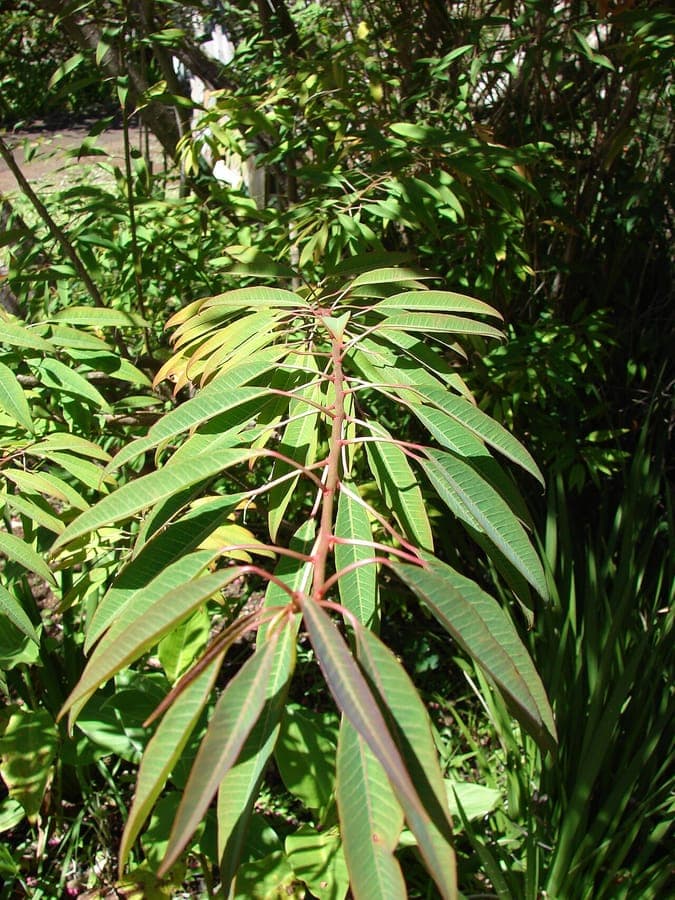
Forest & Kim Starr / CC BY 3.0, via Wikimedia Commons
Euphorbia fulgens: complete guide
Euphorbia fulgens
¿Quieres ver Euphorbia fulgens: complete guide en tu jardín?
1 minuto, sin tarjeta de crédito
Overview
Euphorbia fulgens, commonly known as the scarlet plume or coral flower, is a remarkable houseplant originating from the mountainous regions of Oaxaca in Mexico. This plant is celebrated for its flamboyant red flower spikes that can reach up to 20 centimeters in length. The flowers appear in clusters at the ends of branches, creating a spectacular display from October through February. The plant is widely cultivated as a decorative specimen due to its irresistible blooming period during autumn and winter.
Appearance and bloom
Euphorbia fulgens grows into a loosely branched shrub reaching 60 to 120 centimeters tall. The stems are slender and upright, with elongated, green leaves distributed along the branches. The true attraction lies in the flower spikes that emerge from the leaf axils. These plumes consist of small red cyathia (pseudo-flowers) densely clustered in elegant, drooping spikes. Blooming begins in October and peaks during November and December, making this plant perfect for brightening your home during dark months.
The flowers are not only visually striking but also fragrant, with a subtle, sweet scent that adds extra appreciation. After blooming, small round fruits develop that split open to release seeds. The leaves of Euphorbia fulgens are greenish-gray, approximately 3 to 5 centimeters long, with a soft, non-succulent texture.
Ideal location
Euphorbia fulgens thrives best in a location with plenty of indirect sunlight. This is a plant that loves bright environments but dislikes direct afternoon sun, especially in very warm climates. Place the plant near a south or west-facing window where it receives diffuse light. If you lack optimal natural lighting, a grow light or other artificial illumination can help.
Temperature is crucial for this tropical plant. Keep the plant in an area where temperatures remain between 15 and 22 degrees Celsius. The plant responds well to fluctuating nighttime temperatures (cooler than daytime), which simulates its natural growth rhythm and stimulates blooming. Avoid locations with temperature swings caused by drafts or proximity to heating elements.
Soil composition
Euphorbia fulgens requires nutrient-rich, well-draining potting soil that does not retain excess water. An ideal mix consists of 50 percent humus-rich garden soil, 30 percent coco peat, and 20 percent perlite. This composition ensures good air circulation around the roots and prevents water stagnation, which can cause disease.
Add organic material such as compost or leaf mold to stimulate nutrition. The soil pH should be slightly acidic, between 6.0 and 7.0. Regularly check that your potting soil maintains good structure. After two years, it is advisable to repot the plant into fresh soil and replace the old medium.
Watering
Watering is critical for Euphorbia fulgens and requires balance. During the growing season (March to October), the soil should be moist but not waterlogged. Water when the top layer of soil feels dry, usually once per week. Use water at room temperature and ensure excess can drain from the pot hole.
From October to February, during the blooming period, you must be more generous with water. The plant needs more moisture at this time, but the soil still must not become waterlogged. Regularly check moisture levels by feeling the soil. If your plants experience under-watering in winter, flowers may drop prematurely.
It is essential to water only the soil, not the leaves or flowers. Water on the foliage can cause fungal issues and leaf spot diseases. Use moderately warm water. Demineralized or rainwater is ideal, but tap water is also suitable.
Diseño gratis
¿Quieres ver Euphorbia fulgens: complete guide en tu jardín? Crea un diseño gratis ahora.
Pruning and shaping
Pruning and shaping are essential for maintaining a compact, full form. After blooming (February to March), cut the plant back to approximately one-third of its original height. This stimulates new branching and ensures a bushier appearance. Remove dead or damaged branches anytime during the year.
During the growing season, you can pinch the growing tips to stimulate more side branches. This makes the plant fuller and results in more flower spikes. Do not leave the plant in its natural form, but actively shape it. Remove yellowed or diseased leaves as soon as you notice them.
When pruning the plant, wear gloves and keep your face and hands away from the milky sap that flows from the cut wounds. This sap can cause irritation and is toxic if ingested. Ensure good ventilation when pruning.
Maintenance calendar
March - April: Cut back after blooming, add fertilizer. May - June: Regular watering, monitor growth. July - August: Keep humidity levels high, fertilize monthly. September - October: Prepare for blooming, gradually reduce temperature. November - December: Blooming at its peak, increase humidity levels. January - February: Blooming continues, water carefully.
Winter hardiness
Euphorbia fulgens is not winter hardy and cannot tolerate frost. The plant is sensitive to temperatures below 10 degrees Celsius. It is not an outdoor plant in cool climates, but can remain outside during summer if temperatures stay above 15 degrees Celsius.
Bring the plant indoors when the first cold nights threaten. In warm climates (USDA zones 10-11), Euphorbia fulgens can stay outside for parts of the year, but it is always advisable to grow it as a container plant for easy relocation.
Keep the plant in winter in a location where temperatures do not drop below 12 degrees Celsius. Cooler temperatures can help initiate blooming, but extreme cold can be harmful.
Companion plants
Euphorbia fulgens grows well alongside other tropical plants such as Anthurium, Spathiphyllum (peace lily), and Rhaphidophora (raphidophora). These plants share similar light and moisture requirements. You can also benefit from combining it with low growers such as Episcia (flame violet) and Peperomia.
Plants with thin leaves work well together because they avoid competition for light. Avoid placing succulents or cacti near Euphorbia fulgens, as their moisture requirements are completely different.
Closing remarks
Euphorbia fulgens is a unique houseplant that provides winter blooming and creates a tropical atmosphere in your home. With good light, balanced watering, and regular care, your plant will produce blooms year after year. Find Euphorbia fulgens at major garden centers like Intratuin or Gamma, where you can get professional advice and quality specimens. This plant is an investment in your gardening enjoyment during the gray winter months. For more information on care and cultivation, visit gardenworld.app where you will find complete guides. Enjoy the scarlet beauty of this Mexican treasure.
¿Quieres ver Euphorbia fulgens: complete guide en tu jardín? Crea un diseño gratis ahora.
Sube una foto, elige un estilo y obtén un diseño fotorrealista con lista de plantas en menos de un minuto.
Más de 10.000 jardines diseñados
Sin tarjeta de crédito


Plantas similares
Woolly mercury: complete guide
Mercurialis tomentosa
All about Mercurialis tomentosa, the woolly mercury from southwestern Europe: site, soil, watering, care and garden design tips.
Shurur: complete guide
Euphorbia fruticosa
Everything about Shurur: cultivation in dry climates, xeriscaping, care and tips for drought-resistant gardens in warm climates
Glary spurge: complete guide
Euphorbia glareosa
Everything about glary spurge: cultivation, maintenance, frost hardiness and use in Mediterranean and mountain-inspired gardens