
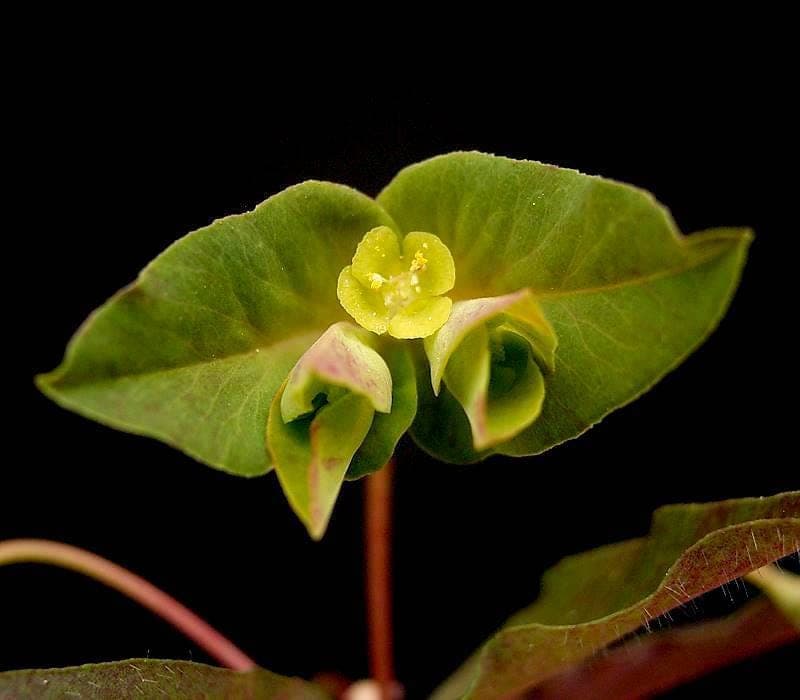
Frank Vincentz / CC BY-SA 3.0, via Wikimedia Commons
Sweet spurge: complete guide
Euphorbia dulcis
¿Quieres ver Sweet spurge: complete guide en tu jardín?
1 minuto, sin tarjeta de crédito
Overview
Sweet spurge (Euphorbia dulcis) is a charming perennial groundcover native to much of Europe. This low-growing plant is valued for its delicate flowers and ability to brighten shaded corners where many plants struggle. Reaching only 30-40 cm tall, it fits perfectly in borders, garden edges, and mixed perennial plantings.
The common name references the slightly sweeter taste of the plant's milky sap compared to other Euphorbia species - though like all spurges, this sap is toxic and should be handled carefully.
Appearance & bloom cycle
Sweet spurge develops a compact, bushy form with numerous slender, branching stems. Lance-shaped leaves emerge fresh green and turn striking red-brown hues in autumn. The flowers appear from April through July as tiny yellow-green blooms clustered in characteristic umbrella-like arrangements (cyathia) that attract bees and other pollinators.
As summer progresses, the plant produces drooping seed capsules that naturally split open when ripe, scattering seeds widely. The extended flowering season ensures visual interest from spring deep into summer.
Ideal location
Sweet spurge thrives in part-shade to full sun, showing remarkable adaptability. While the plant tolerates dense shade under trees, it also performs well in bright sunny locations. In very warm regions, afternoon shade helps preserve foliage color intensity.
This is an excellent choice for difficult shady sites - woodland edges, beneath established trees, and other challenging corners where most groundcovers falter.
Soil requirements
Sweet spurge is unfussy about soil chemistry, accepting acidic, neutral, and slightly alkaline conditions equally well. The critical factor is drainage. Waterlogged soils lead to root rot, so ensure adequate drainage, especially in winter.
Heavy clay can be amended with sand or compost to improve structure. Poor, infertile soils actually suit this plant perfectly - extra fertilization encourages excessive leaf growth at the expense of flowers.
Watering
Once established, sweet spurge requires modest watering. Newly planted specimens need regular moisture for their first 4-6 weeks, but mature plants manage well with natural rainfall in most locations.
Increase watering only during extended dry spells or in containers. Winter watering is rarely necessary. The plant's low moisture needs make it ideal for water-conscious gardeners.
Diseño gratis
¿Quieres ver Sweet spurge: complete guide en tu jardín? Crea un diseño gratis ahora.
Pruning
Sweet spurge demands minimal pruning. Deadheading spent flowers encourages continued blooming, though it is not essential. In early spring, you can cut back to approximately 10-15 cm to rejuvenate leggy growth.
If the plant becomes congested, selectively remove a few older stems at ground level to improve air circulation and light penetration within the plant. The milky sap can irritate sensitive skin, so wash hands thoroughly after pruning.
Maintenance calendar
March: Spring cleanup - remove dead growth, cut back to 15 cm April-May: Peak growth and flowering; water regularly if dry June-July: Continued blooms; deadhead as needed August: Seeds ripen and disperse naturally September-October: Foliage develops rich red-brown tones November-February: Dormant; minimal care needed
Winter hardiness
Sweet spurge is fully hardy throughout most of Europe. In USDA zones 5-8 (covering the Netherlands, Belgium, and Germany), it survives winters without protection. Above-ground parts may discolor in severe frost, but the plant regrows vigorously from underground crowns each spring.
Even in harsh winters dropping to -20°C, the plant typically survives intact. Good drainage prevents winter-wet damage, so ensure water runs off quickly.
Companion plants
Sweet spurge pairs beautifully with shade-loving perennials:
- Helleborus (Christmas rose) - similar requirements, blooms as Euphorbia fades
- Heuchera (Coral bells) - contrasting leaf colors
- Carex (Sedge) - structural complement
- Epimedium (Barrenwort) - delicate leaves near Euphorbia's form
- Astilbe - overlapping bloom times
- Pulmonaria (Lungwort) - identical growing conditions
Closing
Sweet spurge is an underappreciated treasure in many European gardens. Its toughness, extended flowering, and vibrant autumn colors deserve far more recognition. Whether planted in deep shade or full sun, this Euphorbia adapts remarkably to diverse conditions.
Most garden centers stock young potted plants in April-May at reasonable cost. The investment is low and the return high. On gardenworld.app you can design a garden layout that maximizes sweet spurge's potential in your shadiest spots, and discover complementary groundcovers that thrive in similar conditions.
¿Quieres ver Sweet spurge: complete guide en tu jardín? Crea un diseño gratis ahora.
Sube una foto, elige un estilo y obtén un diseño fotorrealista con lista de plantas en menos de un minuto.
Más de 10.000 jardines diseñados
Sin tarjeta de crédito


Plantas similares
Woolly mercury: complete guide
Mercurialis tomentosa
All about Mercurialis tomentosa, the woolly mercury from southwestern Europe: site, soil, watering, care and garden design tips.
Shurur: complete guide
Euphorbia fruticosa
Everything about Shurur: cultivation in dry climates, xeriscaping, care and tips for drought-resistant gardens in warm climates
Glary spurge: complete guide
Euphorbia glareosa
Everything about glary spurge: cultivation, maintenance, frost hardiness and use in Mediterranean and mountain-inspired gardens