
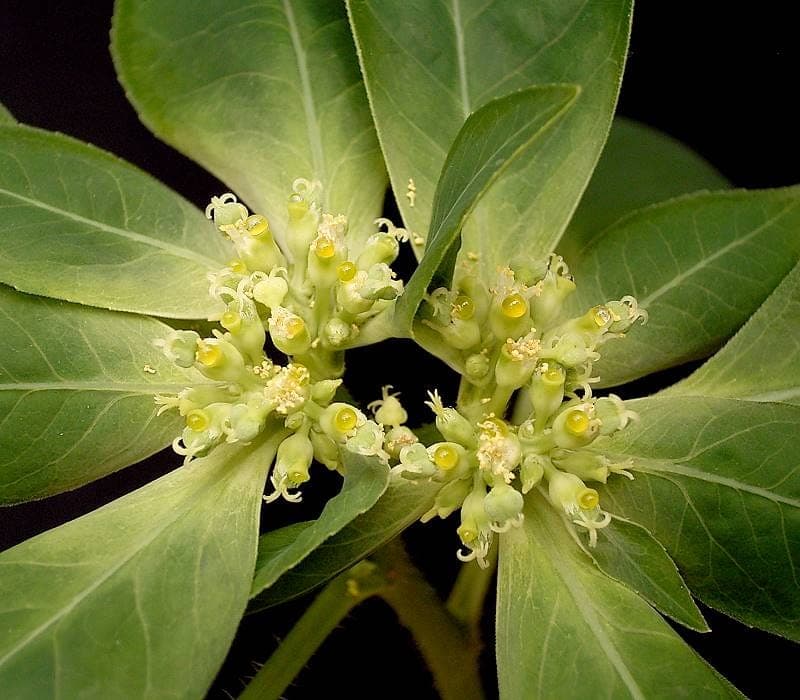
Frank Vincentz / CC BY-SA 3.0, via Wikimedia Commons
Euphorbia dentata: complete guide
Euphorbia dentata
¿Quieres ver Euphorbia dentata: complete guide en tu jardín?
1 minuto, sin tarjeta de crédito
Overview
Toothed spurge (Euphorbia dentata) is a one- to multi-year herbaceous plant from the Euphorbiaceae family. This plant originates from Central and Eastern North America where it grows in open, dry habitats. Euphorbia dentata is a compact, bushy plant reaching up to 60 centimeters tall and characterized by toothed leaves and yellow inflorescences. The plant is known for its drought tolerance and resilience, making it an excellent choice for gardens with warm, dry climates.
Appearance and bloom
Toothed spurge has linear to elliptical, distinctly toothed leaves approximately 2-5 millimeters in diameter. Stems are green to reddish and branch profusely, resulting in a broad, compact crown shape. Flowers are microscopic and appear in cyathia, typical for the Euphorbia genus. These are surrounded by light yellow bracts that provide visual appeal. The fruit is a three-lobed capsule.
Ideal location
Toothed spurge grows optimally in fully sunny locations with at least 6-8 hours of direct sunlight daily. The plant tolerates even very hot, exposed sites without problems. Plant it in borders, gardens, or containers in open areas. Partial shade is possible but diminishes compactness and flowering. For best results, choose locations where the plant can grow unhindered with minimal competition.
Soil
Toothed spurge grows well in virtually any draining soil type, from sandy to clay-containing mixes. Neutral to slightly acidic soil is ideal; the plant also tolerates more alkaline soils. Fertilization need not be heavy; moderate nutrient levels suffice completely. Avoid moisture-retentive, wet soils that can cause rot. In containers, use a well-draining potting mix.
Watering
After planting, water regularly until the plant is well-established. Once established, water can be reduced considerably. The plant is very drought-tolerant and handles long dry periods well. In extremely dry summers, occasional watering may encourage flowering. Avoid excessive moisture, especially in cold months, as this can cause rot.
Diseño gratis
¿Quieres ver Euphorbia dentata: complete guide en tu jardín? Crea un diseño gratis ahora.
Pruning
Pruning is optional and primarily used for shape formation. Young plants can be pinched in early growing season to encourage branching. Spent flower clusters can be removed, though self-shedding usually occurs automatically. Careful cleanup after frost damage can happen in spring. Generally, healthy growth requires minimal intervention.
Maintenance calendar
March-April: Sow indoors or directly outdoors after frost danger. May-June: Transplant outdoors and growth begins. July-October: Flowering period with yellow flowers. October-November: Harvest seed for next season; plant dies in cold areas. December-February: Dormancy in cold climates; remains green in warmer zones.
Winter hardiness
Toothed spurge is generally grown as an annual in temperate climates and dies after frost damage. In warmer climates it can be perennial. The plant tolerates frost periods less well than many other Euphorbia species. In areas with severe winters, seed starting under glass is recommended.
Companion plants
Combine Euphorbia dentata with other drought-tolerant garden plants such as Salvia, Lavandula, Achillea, and Sedum. Yellow and reddish-brown foliage of companions compliments the yellow inflorescences of spurge. Groundcovers and other low growers work well as underplanting. Avoid tall-growing plants that block sunlight.
Closing
Toothed spurge brings heat-resistant, drought-tolerant beauty to every sunny garden. With minimal maintenance and versatile combination possibilities, this plant delivers yellow flowers for seasons. Plant centers in Europe stock Euphorbia dentata seeds available through garden seed catalogs and can be arranged through retailers. Visit gardenworld.app for more ideas on drought-tolerant gardening. With Euphorbia dentata you have a proven, resilient choice for warm gardens. Ask gardenworld.app for more tips on annual flowers and warm-climate garden design.
¿Quieres ver Euphorbia dentata: complete guide en tu jardín? Crea un diseño gratis ahora.
Sube una foto, elige un estilo y obtén un diseño fotorrealista con lista de plantas en menos de un minuto.
Más de 10.000 jardines diseñados
Sin tarjeta de crédito


Plantas similares
Woolly mercury: complete guide
Mercurialis tomentosa
All about Mercurialis tomentosa, the woolly mercury from southwestern Europe: site, soil, watering, care and garden design tips.
Shurur: complete guide
Euphorbia fruticosa
Everything about Shurur: cultivation in dry climates, xeriscaping, care and tips for drought-resistant gardens in warm climates
Glary spurge: complete guide
Euphorbia glareosa
Everything about glary spurge: cultivation, maintenance, frost hardiness and use in Mediterranean and mountain-inspired gardens