
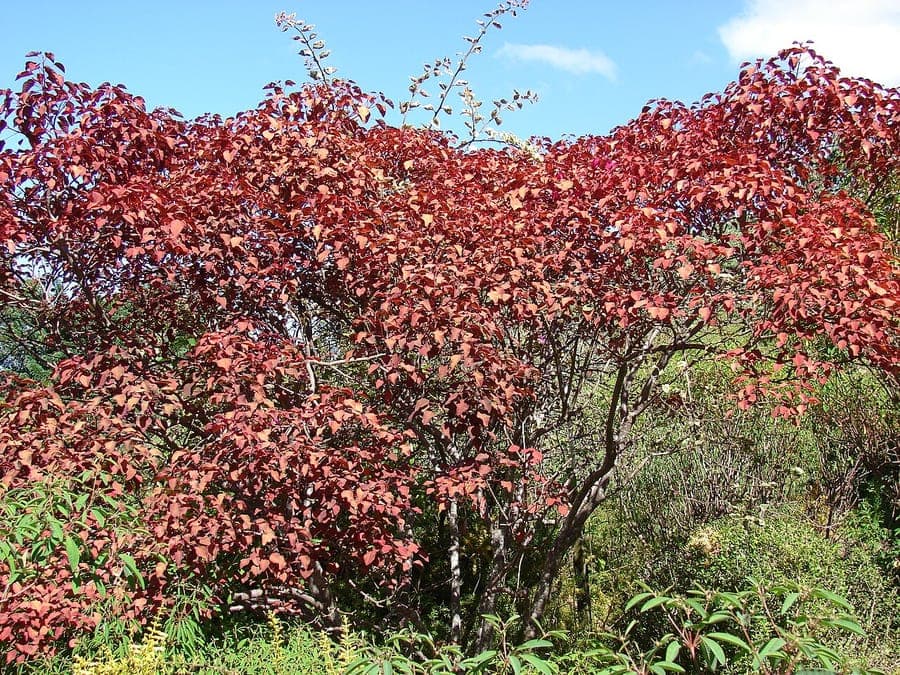
Forest & Kim Starr / CC BY 3.0, via Wikimedia Commons
Tropical smokebush: complete guide
Euphorbia cotinifolia
¿Quieres ver Tropical smokebush: complete guide en tu jardín?
1 minuto, sin tarjeta de crédito
Overview
The Tropical smokebush, scientifically known as Euphorbia cotinifolia, is a magnificent ornamental shrub native to Mexico and tropical America. This plant is celebrated for its striking red to copper-colored foliage that adds dramatic visual interest to any garden setting. Also known as Caribbean copperplant or Mexican shrubby spurge, it's a favorite among gardeners seeking statement plants with bold color and texture.
The plant grows as a compact to medium-sized shrub, thriving both indoors and outdoors depending on climate conditions. In cooler regions, it's typically grown as a houseplant, while in warmer areas it can flourish outdoors year-round. The unique foliage color deepens throughout the growing season, creating an ever-evolving color palette that keeps gardens visually dynamic.
Appearance & Bloom
The Tropical smokebush is distinguished by its remarkable leaf coloration. Leaves emerge green and gradually transform to red or deep copper tones, creating stunning visual contrasts. The leaves are elongated with a soft, velvety texture that invites touch. The common name "cotinifolia" references the similarly impressive Cotinus plant.
Flowers are small and inconspicuous, typically yellow-green to reddish, appearing in loose clusters. The real attraction lies in the exceptional foliage, which remains vibrant throughout the growing season. Plants typically reach 1-2 meters in height, varying with growing conditions and climate.
In tropical climates, winter leaf drop is normal and part of the plant's natural cycle. Protect plants from severe frost when growing outdoors. The dramatic foliage color intensifies under stress, making this plant particularly striking in fall.
Ideal Location
The Tropical smokebush thrives in sunny positions. For optimal red foliage pigmentation, provide 6-8 hours of direct sunlight daily. In very hot climates, afternoon shade prevents leaf scorch while maintaining color intensity.
Position outdoors in protected locations sheltered from strong winds that may cause branch breakage. As a houseplant, place near a sunny south-facing window for best color development. The plant's ornamental value peaks in full sun.
Soil
This Euphorbia requires well-draining soil. Create an ideal mix of garden soil, potting soil, and perlite in 2:2:1 ratio for optimal drainage. The plant tolerates acidic to neutral soils, flourishing best in slightly acidic conditions (pH 6.0-6.5).
Excellent drainage is crucial, as this plant is susceptible to root rot. Add extra sand or perlite in humid regions. For container growing, use a cactus or succulent potting mix that ensures rapid water drainage and prevents waterlogging that invites fungal disease.
Diseño gratis
¿Quieres ver Tropical smokebush: complete guide en tu jardín? Crea un diseño gratis ahora.
Watering
The Tropical smokebush is remarkably drought-tolerant once established. During the growing season (spring and summer), water moderately, allowing soil to dry slightly between waterings. Overwatering is a common cause of failure with this species.
In fall and winter, reduce watering significantly, especially as temperatures drop below 15 degrees Celsius. Never allow plants to sit in waterlogged soil, as this causes root rot and plant decline. Use well-draining containers with drainage holes to prevent water accumulation.
Water directly at the soil base rather than overhead to prevent fungal leaf diseases. Observe plants closely and water only when the top inch of soil feels dry.
Pruning
Pruning maintains compact, full growth. Prune in early spring as growth resumes. Remove dead, damaged, or weak shoots, improving plant structure. Pruning stimulates branching, creating fuller, denser silhouettes with more vibrant new foliage.
Regular light pruning produces stronger juvenile growth with more intense red coloration. Remove seed pods when they appear to redirect energy into foliage rather than reproduction. Head back leggy growth to encourage bushy development.
Maintenance Calendar
Spring: Begin pruning, resume regular watering, repot in fresh soil. Summer: Water regularly, feed every two weeks with low-nitrogen, high-potassium fertilizer to enhance red coloration. Fall: Gradually reduce watering as temperatures cool. Winter: Minimal water, no feeding, protect from frost exposure.
Winter Hardiness
The Tropical smokebush is not winter hardy in temperate climates. It tolerates only brief exposure to temperatures below 10 degrees Celsius. In areas experiencing hard freezes, move potted specimens indoors or provide freeze protection with horticultural fleece.
Bring container plants indoors before nighttime temperatures drop below 15 degrees Celsius. If frost damage occurs, prune back to healthy green wood and place in warm conditions for recovery. This plant appreciates consistent warmth for optimal color and vigor.
Companion Plants
The Tropical smokebush pairs beautifully with fellow drought-tolerant plants: agave, yucca, sedum, and ornamental grasses. Use it as a focal point in container displays or mixed borders. Copper-red leaves contrast dramatically with silver-foliaged plants like artemisia or senecio.
In warmer climates, combine with other tropical specimens such as Cordyline, Coleus, and bougainvillea for lush, cohesive tropical ambiance. The red foliage creates stunning backdrops for lighter-colored flowering plants.
Conclusion
The Tropical smokebush is an exceptional choice for gardeners seeking drama and color. With well-draining soil, abundant sunlight, and careful watering practices, this plant will provide years of ornamental satisfaction. Whether growing in warm climates or maintaining as a houseplant, this Euphorbia brings elegance and tropical flair to any space.
Explore design inspiration on gardenworld.app/en to discover how to integrate this stunning plant into your garden. Let its vibrant copper-red foliage transform your outdoor aesthetic!
¿Quieres ver Tropical smokebush: complete guide en tu jardín? Crea un diseño gratis ahora.
Sube una foto, elige un estilo y obtén un diseño fotorrealista con lista de plantas en menos de un minuto.
Más de 10.000 jardines diseñados
Sin tarjeta de crédito


Plantas similares
Woolly mercury: complete guide
Mercurialis tomentosa
All about Mercurialis tomentosa, the woolly mercury from southwestern Europe: site, soil, watering, care and garden design tips.
Shurur: complete guide
Euphorbia fruticosa
Everything about Shurur: cultivation in dry climates, xeriscaping, care and tips for drought-resistant gardens in warm climates
Glary spurge: complete guide
Euphorbia glareosa
Everything about glary spurge: cultivation, maintenance, frost hardiness and use in Mediterranean and mountain-inspired gardens