
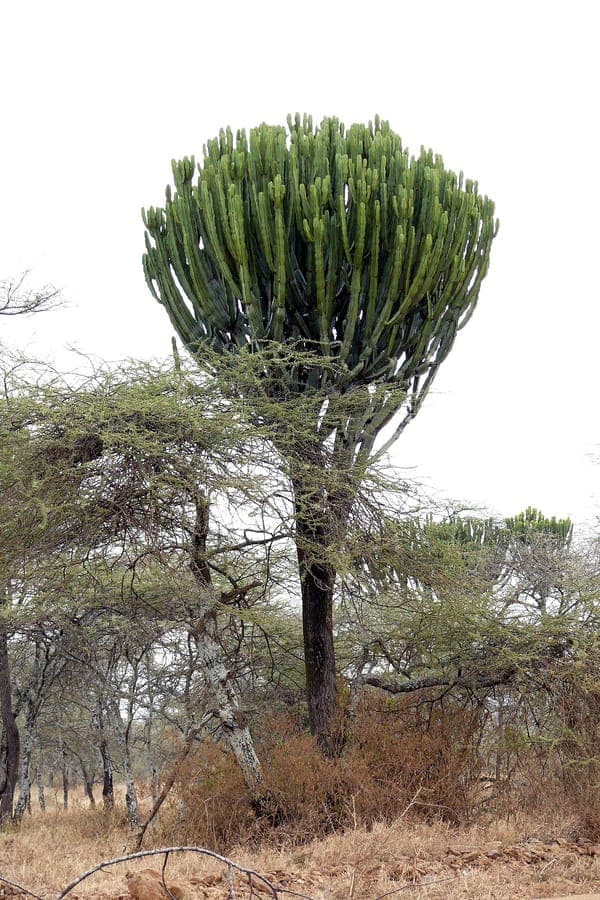
Haplochromis / CC BY-SA 3.0, via Wikimedia Commons
Candelabra Tree: complete guide
Euphorbia candelabrum
¿Quieres ver Candelabra Tree: complete guide en tu jardín?
1 minuto, sin tarjeta de crédito
Overview
The candelabra tree (Euphorbia candelabrum) is a dramatic, architecturally striking succulent native to Angola. This remarkable member of the Euphorbiaceae family is celebrated for its distinctive branching habit, where thick primary branches grow upward and subsequently branch into multiple secondary branches, resembling a traditional candelabra. For lovers of architectural plants and large exotic specimens, the candelabra tree is an absolute favorite. The plant grows slowly but can eventually reach substantial dimensions, creating truly dramatic effects in gardens or large containers.
This plant is popular among succulent collectors and is a real showstopper in southern gardens or specialized conservatories. The candelabra tree symbolizes botanical interest while simplifying garden maintenance significantly. Although slow-growing, the investment in patience ultimately yields an impressive, unique specimen.
Appearance and Bloom
The candelabra tree develops into a distinctly architectural specimen, typically 2 to 4 meters tall in temperate environments. The characteristic candelabra-like form arises from thick, silvery-green primary branches that grow obliquely upward, each subsequently branching into multiple secondary branches. This pattern repeats, creating a striking, regular structure.
The leaves are small, oval, and green, clustering densely around young branch tips. During the growing season, small, inconspicuous flowers appear at branch ends, followed by small cork-like fruit capsules that remain on the plant. The ornamental value of the candelabra tree lies primarily in its architectural form rather than its flowers.
Ideal Location
The candelabra tree thrives best in very sunny locations receiving at least 8 to 10 hours of direct sunlight daily. It is nearly perfect for southern and southwestern exposures. In temperate climates, full sun is recommended because it grows fairly slowly and requires light for optimal development.
The plant is frost-sensitive and cannot tolerate temperatures below 5°C. In all temperate climates, it must be grown in containers. A protected, warm location against a south-facing wall is ideal. In severely cold regions, move the plant to a greenhouse or conservatory for winter.
Soil Requirements
The candelabra tree requires excellent drainage, more so than many other species. Use a specially formulated cactus and succulent potting mix, or create your own by mixing standard potting soil with extra grit, shells, or perlite (approximately 1 part soil to 1 part drainage material). The plant accepts poor, sandy soils and tolerates saline soils well.
Ensure good drainage in containers - use pots with multiple drainage holes at the bottom. Repot only every 2-3 years, as this plant grows slowly.
Diseño gratis
¿Quieres ver Candelabra Tree: complete guide en tu jardín? Crea un diseño gratis ahora.
Watering
The candelabra tree is extremely water-efficient. After the first month (during which water is given regularly until roots establish), water application can be reduced significantly. During the growing season (April-September), water once every 2-3 weeks. In winter (October-March), minimize watering - only once per month or monthly if the soil is completely dry.
Overwatering is the primary cause of problems. Be cautious with heavy rainfall if the plant stands outdoors - ensure water can drain away.
Pruning
Pruning is virtually unnecessary. The plant naturally grows into an attractive form. Remove only damaged or diseased material. If branches develop undesirably, they can be carefully cut back, but this is not recommended as it disrupts the architectural design.
Because the candelabra tree grows slowly, pruning will have only very gradual effects.
Maintenance Calendar
January-February: Minimal care. Check that the soil is dry. Typically no watering during normal winters.
March-April: Begin watering gradually as growth weather arrives. Check for pests (rare). No feeding needed.
May-June: Regular watering (once every 2-3 weeks). No feeding needed. Observe growth.
July-August: Continue watering schedule. No feeding needed. Very warm conditions support growth.
September-October: Gradually reduce watering. Prepare for winter dormancy.
November-December: Minimal watering. No feeding. Protect from frost.
Winter Hardiness
The candelabra tree is not winter-hardy in temperate climates. The plant cannot tolerate frost. In southern Europe (southern Spain, southern Portugal), it might survive outdoors with protective mulch, but in cold regions, container cultivation is essential. Move the plant to a warm greenhouse, conservatory, or protected location when temperatures threaten to fall below 5°C.
The plant tolerates cool overwintering (around 10-12°C) well, provided it remains dry. This can help keep the plant vigorous.
Companion Plants
The candelabra tree forms an unequaled focal point in large containers. Other large Euphorbia species create interesting companions. Other architectural plants such as yucca, dracaena, and large agaves can form interesting larger-scale companions. Low-growing succulents such as smaller agaves and aloes can be planted around the base of the candelabra tree for contrast.
Avoid plants with regular watering requirements in the same container.
Closing
The candelabra tree is a botanical masterpiece for those who can provide patience and excellent drainage. This slow-grower ultimately yields impressive, architectural specimens offering decades of ornamental beauty. For lovers of exotic plants, the candelabra tree is absolutely essential. Plant it in well-draining potting soil, provide minimal water, and enjoy years of growth toward a unique beauty.
For more information on large succulents, visit gardenworld.app. For acquiring young specimens, I recommend specialized succulent nurseries. The candelabra tree is an investment in long-term, botanical beauty. Discover gardenworld.app for additional exotic succulent ideas and growing techniques.
¿Quieres ver Candelabra Tree: complete guide en tu jardín? Crea un diseño gratis ahora.
Sube una foto, elige un estilo y obtén un diseño fotorrealista con lista de plantas en menos de un minuto.
Más de 10.000 jardines diseñados
Sin tarjeta de crédito


Plantas similares
Woolly mercury: complete guide
Mercurialis tomentosa
All about Mercurialis tomentosa, the woolly mercury from southwestern Europe: site, soil, watering, care and garden design tips.
Shurur: complete guide
Euphorbia fruticosa
Everything about Shurur: cultivation in dry climates, xeriscaping, care and tips for drought-resistant gardens in warm climates
Glary spurge: complete guide
Euphorbia glareosa
Everything about glary spurge: cultivation, maintenance, frost hardiness and use in Mediterranean and mountain-inspired gardens