
Rasbak / CC BY-SA 3.0, via Wikimedia Commons
Wood spurge: complete guide
Euphorbia amygdaloides
¿Quieres ver Wood spurge: complete guide en tu jardín?
1 minuto, sin tarjeta de crédito
Overview
Euphorbia amygdaloides, commonly known as wood spurge, is a remarkable shade-loving perennial from the Euphorbiaceae (spurge) family, native to the Mediterranean region and Europe through Central Asia. This is genuinely valuable for anyone wanting interest in shaded areas: the plant is evergreen, has beautiful yellow-green flowers in early spring, and demands virtually no maintenance.
This plant deserves far greater recognition than it currently receives. It combines shade tolerance, seasonal interest, evergreen foliage, and extremely easy maintenance. Perfect for challenging dark corners.
Appearance & bloom cycle
Euphorbia amygdaloides grows as a perennial, usually 30-60 cm tall, with relatively compact habit. Leaves are lance-shaped, 3-8 cm long, dark green and very ornamental. In winter the foliage retains its colour – a major advantage in dark seasons.
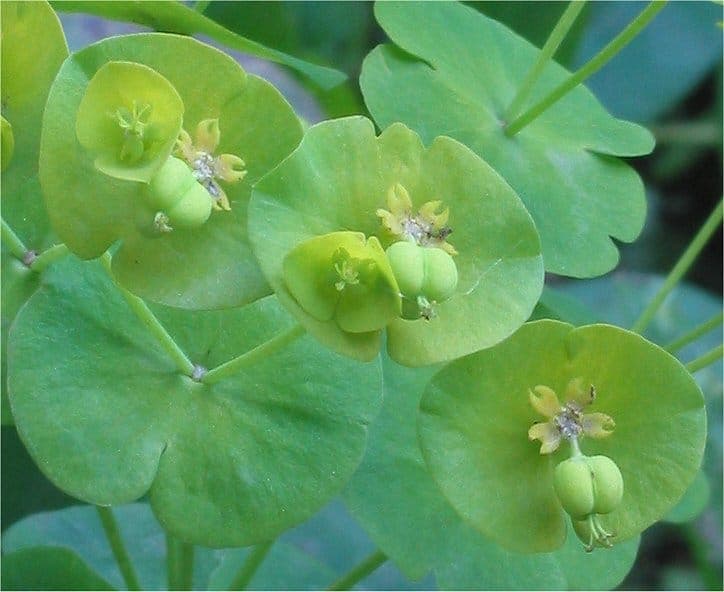
The "flowers" are actually cyathia – composite flower structures with yellow-green bracts. They appear March-May at stem tips in striking floral clusters. The flowers are highly attractive to pollinators.
After flowering, the plant develops interesting seed capsules that gradually drop. The plant often self-seeds – entire areas can become covered in time.
Ideal location
Choose a shaded to part-shaded position. The plant thrives under trees, in woodland edges, along building north sides, and in other dark corners. The plant tolerates even deep shade better than most perennials.
Morning sun is fine, but afternoon and evening shade is preferred. Full sun (more than 6 hours direct) can cause the plant to sprawl and lose compactness.
Wind is no issue. Shelter isn't essential.
Soil requirements
Euphorbia amygdaloides is quite undemanding. The plant grows in most soils provided they're well-draining. Waterlogging must be avoided.
PH can be neutral to acidic (5.5-7.5). Humus-rich soil helps, especially early on, but isn't essential. Many gardeners plant this in rather poor soils and get excellent results.
In dry soils, some compost helps, but once rooted the plant often thrives even there.
Diseño gratis
¿Quieres ver Wood spurge: complete guide en tu jardín? Crea un diseño gratis ahora.
Watering
Once established, the plant is very drought-tolerant. Young plants, however, need regular watering in the first growing seasons. Water 1-2 times weekly in very dry spells.
Once the plant is firmly rooted (after about 2 years), it usually thrives independently. Excessive water can actually be harmful – so be sparing.
Mulching helps retain moisture and suppress weeds in the first seasons.
Pruning
Pruning is scarcely necessary. The plant naturally grows compactly. You can remove spent stems in June if you wish to prevent prolific self-seeding – but many gardeners actually encourage this because the young seedlings are very useful.
Dead or damaged foliage can be removed.
Maintenance calendar
March-April: Planting (best period). Plant grows away. Water regularly. Flowering occurs this season.
May-June: Flowering fades. Seed development. Pruning possible.
July-September: Growth continues. Plant is now fully established. Minimal maintenance needed.
October-February: Plant remains green and attractive. No watering needed except during extreme drought.
Winter hardiness
Excellent: Euphorbia amygdaloides is very hardy throughout Britain, to about -20°C. Evergreen therefore extremely valuable. No protection needed.
Companion plants
Euphorbia amygdaloides pairs beautifully with other shade-flowering material: Helleborus, Asarum, Epimedium, groundcovers. Combined with ferns and gaura clumps it creates lovely associations.
Also beautiful with early woodland bloomers like Erythronium and Anemone. The yellow-green flowers work well against deep green backdrops.
Plants are available from many garden centres and online plant suppliers.
Final thoughts
Euphorbia amygdaloides is an absolute asset for shaded gardens. Evergreen, fully hardy, attractive to pollinators, and demands virtually no maintenance. This is the plant with which you transform dark corners – suddenly, empty dark spaces become interesting.
On gardenworld.app you can commission a garden design with proper attention to shade planting. Our designers understand how to revitalise quiet garden corners with plants like Euphorbia amygdaloides.
Once planted, this plant will independently provide you with beautiful yellow-green flower clusters each spring for years. Truly a plant you can't miss in any British garden with shaded areas!
¿Quieres ver Wood spurge: complete guide en tu jardín? Crea un diseño gratis ahora.
Sube una foto, elige un estilo y obtén un diseño fotorrealista con lista de plantas en menos de un minuto.
Más de 10.000 jardines diseñados
Sin tarjeta de crédito


Plantas similares
Woolly mercury: complete guide
Mercurialis tomentosa
All about Mercurialis tomentosa, the woolly mercury from southwestern Europe: site, soil, watering, care and garden design tips.
Shurur: complete guide
Euphorbia fruticosa
Everything about Shurur: cultivation in dry climates, xeriscaping, care and tips for drought-resistant gardens in warm climates
Glary spurge: complete guide
Euphorbia glareosa
Everything about glary spurge: cultivation, maintenance, frost hardiness and use in Mediterranean and mountain-inspired gardens