
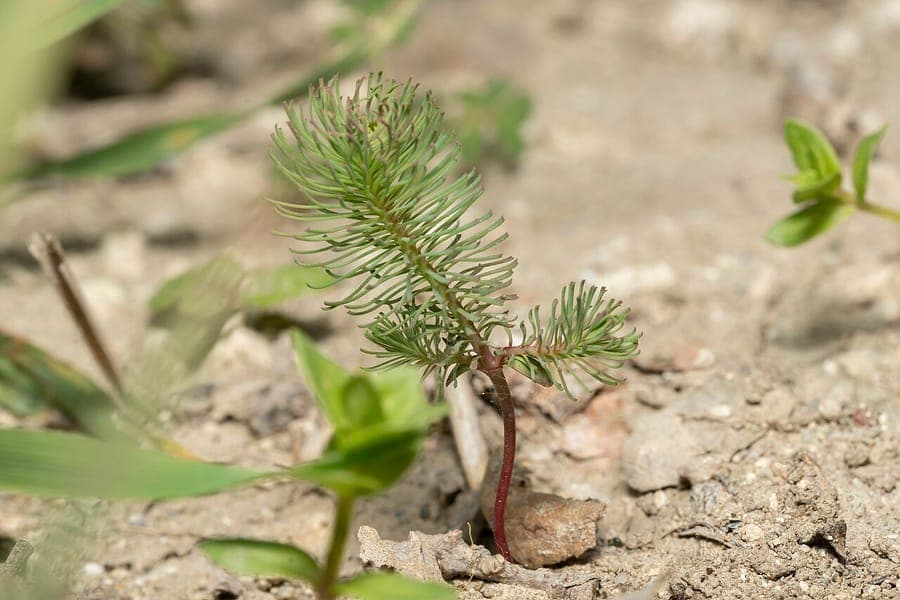
Eleftherios Katsillis / CC BY 4.0, via Wikimedia Commons
Aleppo Spurge (Euphorbia aleppica): complete guide
Euphorbia aleppica
¿Quieres ver Aleppo Spurge (Euphorbia aleppica): complete guide en tu jardín?
1 minuto, sin tarjeta de crédito
Overview
Aleppo Spurge (Euphorbia aleppica), an eastern Mediterranean plant from the Euphorbiaceae family, is perfectly adapted to warm, dry conditions. Native from the Mediterranean basin to the Transcaucasus, this is a genuinely specialized plant for hot, well-drained environments.
This is not your typical garden filler. Euphorbia aleppica displays beautiful blue-gray needle-like foliage creating dramatic textural interest in dry borders. Yellow flower clusters are subtle yet elegant, with long flowering extending through summer.
Ideal for cultivation in southern Europe, warm regions of northern Europe, and anywhere drought-adapted plants are valued.
Appearance and bloom
Aleppo Spurge grows 30-60 cm tall, forming a compact shrubby habit. Foliage is exceptionally fine and blue-gray, creating distinctive aesthetic effect. Leaves are semi-evergreen to evergreen depending on climate.
Flowers are yellow, displayed in characteristic Euphorbia clusters (cyathiums). These appear June through September, providing extended bloom period. The contrast between blue-gray foliage and yellow flowers is striking.
Fruits are small brown capsules; botanically interesting though not spectacular. The plant grows low and compact, perfect for front-of-border placement.
Ideal location
Aleppo Spurge requires full sun. This is non-negotiable. Sunny, warm locations encourage best growth and flowering. South-facing walls or roof gardens are ideal habitat.
Protection from strong cold wind is beneficial; south or west-facing orientations in warm climates are perfect. The plant grows well in containers, advantageous for moving to protected locations in winter (in colder climates).
Drainage is essential; waterlogging is fatal to this plant.
Soil
Euphorbia aleppica thrives in very well-drained, ideally sandy soil. pH from 5.5 to 7.5 is acceptable. Soil fertility is not crucial; the plant accepts lean soil.
Add sharp sand to heavy soils. Potting soil can be enriched with perlite. Avoid adding organic matter; this plant prefers dry, lean conditions.
Watering
This is Aleppo Spurge's greatest strength: extreme drought tolerance. Once established (after 1 year), virtually no supplemental watering is needed except during exceptional droughts.
First year: water regularly (weekly) until well rooted. After establishment, water input can be minimal. The plant accepts complete neglect beautifully.
Overwatering is more harmful than underwatering. Better too little than too much.
Diseño gratis
¿Quieres ver Aleppo Spurge (Euphorbia aleppica): complete guide en tu jardín? Crea un diseño gratis ahora.
Pruning
Aleppo Spurge requires minimal pruning. After flowering (October), spent flower stems can be removed. Formative pruning is unnecessary as the plant naturally assumes compact form.
Damaged branches or overly long shoots can be removed anytime. Generally, this plant is best left undisturbed.
Monthly maintenance calendar
January-February: Frost protection needed in cold regions. Check drainage. No watering.
March: Growing season starts. Water cautiously. Inspect for frost damage.
April-May: Water only if extremely dry. Growth accelerates.
June-July: Peak bloom. Yellow flowers prominent. No watering needed.
August-September: Flowering continues. Heat bloom benefits plant. No water.
October-November: Bloom ends. Remove spent flower stems. Prepare for winter.
December: Winter dormancy. Frost protection in cold climates. No watering.
Winter hardiness
Aleppo Spurge is sensitive to hard frost. In zones with temperatures below -5 degrees Celsius, container cultivation is recommended. Move to protected location (greenhouse, cold frame, or indoors) in October.
In southern Europe and warm garden zones, in-ground cultivation is possible. Extra rock bedding helps retain warmth around the plant in winter. Tunnel or cloth protection against severe frost is prudent.
Companion plants
Aleppo Spurge pairs beautifully with other drought-tolerant plants. Lovely alongside Sedum species, Sempervivum, Pulsatilla, Lavender, Santolina. Blue-gray foliage complements silver-leaved plants like Artemisia or Helichrysum.
In rock gardens, it functions as an excellent central specimen surrounded by low alpines. Against gray stone, yellow flowers stand out beautifully.
Closing remarks
For the right gardener (one who loves drought-adapted plants), Aleppo Spurge is a genuine gem. Minimal water requirements, extended bloom, and unique blue-gray foliage make it valuable for hot, dry locations.
Not universally winter hardy so caution is warranted. But for gardeners seeking minimal maintenance and cultivating in warm climates, this is an excellent choice. Visit gardenworld.app for more similar drought-adapted plants and design inspiration.
¿Quieres ver Aleppo Spurge (Euphorbia aleppica): complete guide en tu jardín? Crea un diseño gratis ahora.
Sube una foto, elige un estilo y obtén un diseño fotorrealista con lista de plantas en menos de un minuto.
Más de 10.000 jardines diseñados
Sin tarjeta de crédito


Plantas similares
Woolly mercury: complete guide
Mercurialis tomentosa
All about Mercurialis tomentosa, the woolly mercury from southwestern Europe: site, soil, watering, care and garden design tips.
Shurur: complete guide
Euphorbia fruticosa
Everything about Shurur: cultivation in dry climates, xeriscaping, care and tips for drought-resistant gardens in warm climates
Glary spurge: complete guide
Euphorbia glareosa
Everything about glary spurge: cultivation, maintenance, frost hardiness and use in Mediterranean and mountain-inspired gardens