
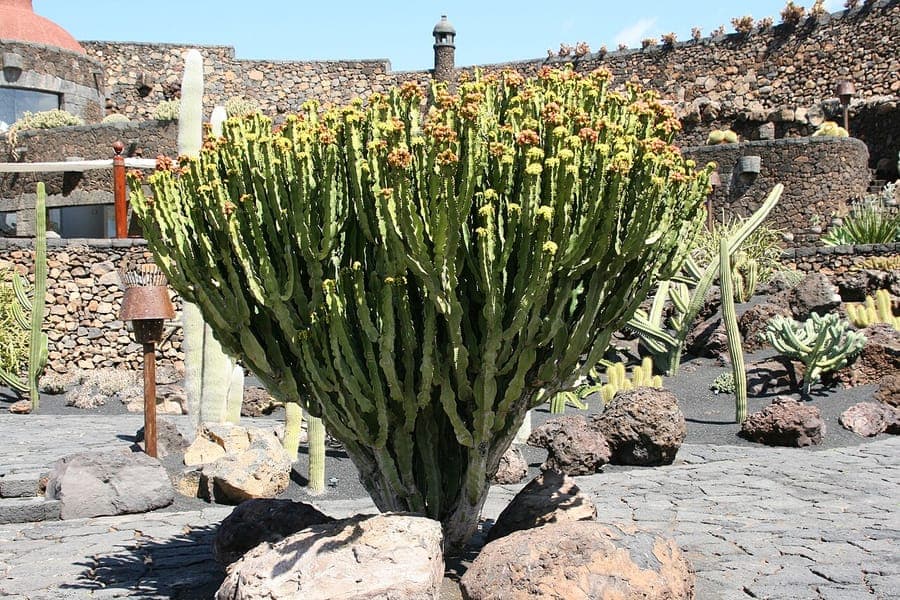
Frank Vincentz / CC BY-SA 3.0, via Wikimedia Commons
Euphorbia abyssinica: complete guide
Euphorbia abyssinica
¿Quieres ver Euphorbia abyssinica: complete guide en tu jardín?
1 minuto, sin tarjeta de crédito
Overview
Euphorbia abyssinica, known as Abyssinian spurge or Desert-candle, is a dramatic succulent shrub with deeply architectural form. Originating from northeast Africa (Sudan, Ethiopia, Eritrea to Somalia), this plant is spectacle for those who dare. With its towering, candelabra-like branches and compact foliage, it offers year-round interest and unique structural value in dry, sunny gardens.
This is not a conventional garden plant - it is a genuine statement piece that stands out from the crowd. Perfect for contemporary gardens, dry succession plantings, and those seeking something truly different.
Appearance and Flower Structure
Under ideal conditions the plant can reach 3-5 meters, though it typically grows considerably shorter. The stems are green, succulent, and candelabra-shaped, with small, subtle foliage clusters distributed along branches. This creates extremely clean, architectural appearance.
Flowers are small and yellow or yellow-green cyathia (characteristic cup-like structures of Euphorbia) appearing in clusters along the stems. Though not spectacular, the plant's form itself is spectacular.
Following flowering, interesting capsules develop and may persist for months, providing extended interest.
Ideal Location
Abyssinian spurge demands full sun and generous space to express its full architectural character. Plant on an elevation or against a wall where it stands against sky. Minimum 6-8 hours daily direct sun is essential.
Use as solitary accent, rooftop garden element, or against walls. Combine with other dry, structural plants for maximum effect.
Soil
Drainage is critical. Use cactus/succulent compost or add substantial gravel and sand to regular garden soil. The plant tolerates very poor soil without difficulty.
Slightly acidic to neutral pH (6.5-7.0) is ideal. No fertilization needed - the plant actually grows slower and stronger in poor conditions.
Diseño gratis
¿Quieres ver Euphorbia abyssinica: complete guide en tu jardín? Crea un diseño gratis ahora.
Water and Irrigation
Once established, this is a genuine drought specialist. In typical years you can provide almost no water throughout the entire year. During extremely dry periods you may occasionally water, but avoid excess.
During growing season (summer) you can provide light, occasional watering during extreme drought. In winter the plant enters complete dormancy and requires no water.
In containers water more frequently, but remain cautious - this plant genuinely demands minimal water.
Pruning and Maintenance
Pruning is rarely necessary. The plant develops natural elegant form. Remove only dead branches or damaged sections. You may gently reduce the tops for more compact growth, but do so carefully - cut wounds can cause issues.
Wear gloves for all work - the sap irritates.
Maintenance Calendar
April-May: Check drainage. Plant outdoors in sunny location. June-August: Growth accelerates. Minimal water during extreme drought. September-October: Growth stabilizes. No further water. November-March: Complete dormancy. No water, no maintenance.
Winter and Frost
Abyssinian spurge is frost-sensitive. It does not tolerate temperatures below approximately -5 to -10°C. In Netherlands and Belgium it must be brought indoors during winter or moved in containers, or grown in heavily protected locations.
In warm regions (southern France, southern Spain) it may overwinter outdoors in sheltered locations. Check your local winter temperatures before planting.
Propagation
Propagation is possible from seed or cuttings. Sow seed in spring. Taking cuttings is somewhat riskier - allow them to dry thoroughly before planting (minimum several days) and use dry, sandy soil.
Companion Plants
Combine with:
- Other dry, architectural plants (agave, aloe)
- Gravel or gravel beds
- Minimal, clean design elements
- Other euphorbias
- Eryngium for contrast
Safety Precautions
The sap of this plant causes skin irritation. Wear gloves during all work. Keep children and pets away. Toxic if ingested.
Closing Thoughts
Abyssinian spurge is for those who dare - not for conventional gardens, but an extraordinary beauty for contemporary, dry succession designs. This plant truly deserves a place in the right context.
Seek specialized nurseries; not universally available. Make your garden special with gardenworld.app. Discover more about exotic succulents on gardenworld.app.
¿Quieres ver Euphorbia abyssinica: complete guide en tu jardín? Crea un diseño gratis ahora.
Sube una foto, elige un estilo y obtén un diseño fotorrealista con lista de plantas en menos de un minuto.
Más de 10.000 jardines diseñados
Sin tarjeta de crédito


Plantas similares
Woolly mercury: complete guide
Mercurialis tomentosa
All about Mercurialis tomentosa, the woolly mercury from southwestern Europe: site, soil, watering, care and garden design tips.
Shurur: complete guide
Euphorbia fruticosa
Everything about Shurur: cultivation in dry climates, xeriscaping, care and tips for drought-resistant gardens in warm climates
Glary spurge: complete guide
Euphorbia glareosa
Everything about glary spurge: cultivation, maintenance, frost hardiness and use in Mediterranean and mountain-inspired gardens