
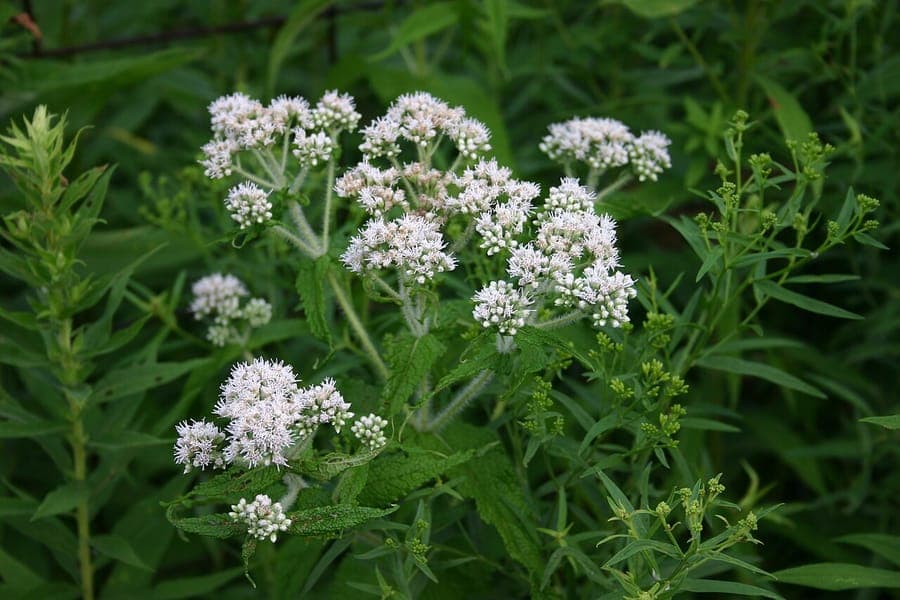
SB_Johnny / CC BY-SA 3.0, via Wikimedia Commons
Boneset: complete guide
Eupatorium perfoliatum
¿Quieres ver Boneset: complete guide en tu jardín?
1 minuto, sin tarjeta de crédito
Overview
Eupatorium perfoliatum, better known as Boneset or Thoroughwort, is a robust North American wildflower from the Asteraceae family. This strong, hardy plant is renowned for its dense clusters of small white flowers blooming from July through September. Growing naturally in moist to wet areas from Canada to the southern United States, Eupatorium perfoliatum has played a role in traditional medicine for centuries, particularly for immune and bone health support.
In gardens, Eupatorium perfoliatum is a valuable plant for natural borders, wild gardens, and ecological projects. With its attractive flowers and useful properties, it is popular with beekeepers and pollinator-conscious gardeners. Gardenworld.app helps you design ecological, self-supporting gardens with herbal plants.
Appearance and Bloom
Eupatorium perfoliatum grows as an upright, much-branched plant, typically between 60 and 150 centimeters tall, depending on growing conditions. The plant bears large, elongated leaves that pass through the stem in a perfoliate fashion, which is unique in this plant family. The leaves are rough and hairy.
The flowers appear in dense, woolly white clusters at the stem tips from July through October. Each flower is small and inconspicuous, but the mass creates a spectacular floral display. The flowers are highly attractive to bees, butterflies, and other pollinators, making the plant valuable in pollinator-friendly gardens.
Ideal Location
Eupatorium perfoliatum grows best in moist to wet soils with full sun to half-shade. The plant is very flexible and tolerant regarding growing conditions. In deeper shade, the plant will grow weaker and flower less. In very dry environments, foliage may wilt.
The plant is suitable for natural gardens, moist borders, waterside plantings, and ecological zones. It thrives well in British, Belgian, Dutch, and German climates with strong preference for moist locations. In warmer Mediterranean climate, extra water may be necessary.
Soil
Eupatorium perfoliatum grows optimally in moist, humus-rich soils. The ideal pH is between 5.5 and 7.5. The plant tolerates variable soil types from clay to loam, as long as moisture content is moderately elevated. In poor soils add well-rotted compost or leaf mold.
When container-grown, ensure regular moisture retention without stagnation. A mixture of garden soil with additions of peat and compost works well. The plant tolerates even wet winter soils without damage.
Diseño gratis
¿Quieres ver Boneset: complete guide en tu jardín? Crea un diseño gratis ahora.
Watering
Eupatorium perfoliatum loves moist conditions and must receive regular water during the growing season. During dry periods in summer, daily watering may be necessary. Once established, the plant tolerates more drought than young specimens.
In moist soils and natural settings, rainwater usually suffices. In containers and drier soils, regular watering is needed to maintain the plant in optimal condition.
Pruning
Eupatorium perfoliatum requires minimal pruning. Remove dead or damaged stems in spring. After blooming in October, you can cut the plant back to 15 centimeters height, after which it regrows in the next season. The plant does not completely die back in winter.
Deadheading spent flowers is optional but may encourage secondary blooming. Ensure pruning tools are clean.
Maintenance Calendar
- Spring (March-May): Plant regrowth. Add compost. Check soil moisture levels. Start watering.
- Summer (June-August): Growth peak. Water regularly, especially during dry spells. Enjoy growth.
- Autumn (September-October): Bloom reaches peak. Continue watering until first frost. Begin winter preparation.
- Winter (November-February): Plant dies back above ground. Prune to 15 cm in February. Minimal care.
Winter Hardiness
Eupatorium perfoliatum is extremely hardy to -20 degrees Celsius or lower. The plant grows back as a perennial from the root crown after winter. In Britain, Netherlands, Belgium, Germany, and France, plants overwinter without protection. The plant behaves as a true perennial in temperate climates.
Natural mulching with fallen leaves helps protect the root crown against extreme cold, though usually unnecessary.
Companion Plants
Eupatorium perfoliatum combines beautifully with other moisture-tolerant perennials such as Lythrum, Teasel, Japanese Bistorta, other Eupatorium species, and Marsh Impatiens. The plant is spectacular when grouped in clusters of 3 to 5. At waterside areas it creates a natural transition between water and drier zones.
Bees and butterflies will be attracted to the white flowers. Other pollinator-friendly plants nearby amplify the effect.
Closing Thoughts
Eupatorium perfoliatum is an excellent choice for gardeners interested in traditional herbs, ecological gardening, and pollinator-friendly plant choices. The white flowers create a soft, natural appearance in the garden. Gardenworld.app can help you design a complete ecological garden with similar plants.
With minimal care, strong winter hardiness, and attraction for pollinators, Eupatorium perfoliatum is a versatile, valuable addition to any perennial border. Historic use as a medicinal herb makes it even more interesting for enthusiastic gardeners and herb collectors.
¿Quieres ver Boneset: complete guide en tu jardín? Crea un diseño gratis ahora.
Sube una foto, elige un estilo y obtén un diseño fotorrealista con lista de plantas en menos de un minuto.
Más de 10.000 jardines diseñados
Sin tarjeta de crédito


Plantas similares
Calendula stellata: complete guide
Calendula stellata
Complete guide to Calendula stellata, the star-flowered marigold from Sicily: location, soil, watering and companion planting tips.
Korean chrysanthemum: complete guide
Chrysanthemum x rubellum
Chrysanthemum x rubellum is a hardy autumn perennial with single pink to copper flowers from August to November. Care and combinations.
Helianthus divaricatus: complete guide
Helianthus divaricatus
Helianthus divaricatus is a North American woodland sunflower with yellow summer blooms, ideal for naturalistic borders and shady edges.