
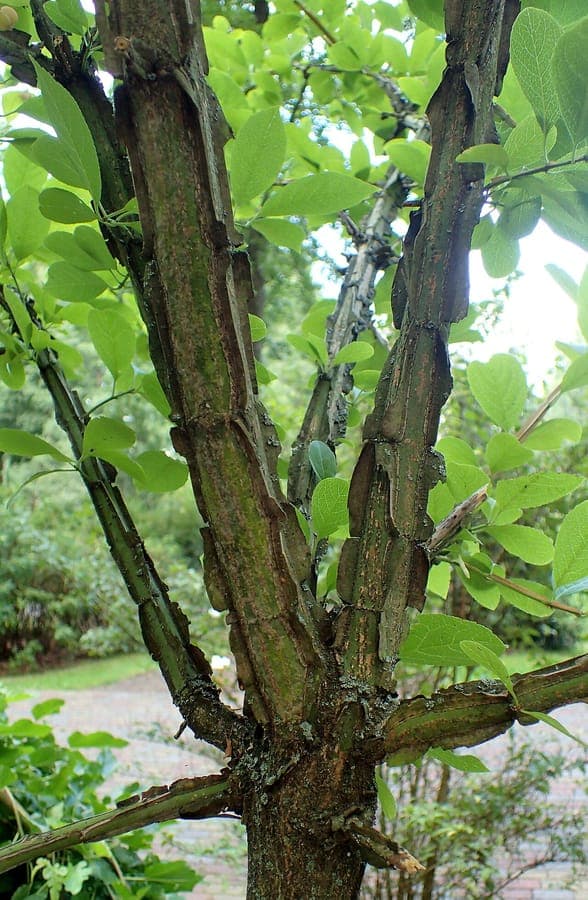
Krzysztof Ziarnek, Kenraiz / CC BY-SA 4.0, via Wikimedia Commons
Cork Spindle (Euonymus phellomanus): complete guide
Euonymus phellomanus
¿Quieres ver Cork Spindle (Euonymus phellomanus): complete guide en tu jardín?
1 minuto, sin tarjeta de crédito
Overview
Cork Spindle (Euonymus phellomanus), originating from central China, is a fascinating plant with exceptional textural qualities. What sets this shrub apart is its characteristic cork-like, winged stem structure, distinguishing it from other garden plants.
Unique among Euonymus species, phellomanus offers something special: cork-like, wing-shaped structures along stems and branches. This provides the plant with interesting architectural quality even in winter when bare. For gardeners passionate about textural interest, this is a first-rate choice.
Appearance and bloom
Cork Spindle features fine, narrow leaves that are yellowish-green during the growing season and golden to orange-yellow in autumn. The leaves are lanceolate and soft, giving the plant an elegant appearance.
Flowers are small, greenish blooms that attract little attention but serve their function well. The true distinguishing feature is the cork-like outgrowths running along stems and branches. These 'cork wings' give the plant its characteristic name and are especially visible in winter when foliage has dropped.
Autumn color is reliable: yellow to orange, somewhat more subtle than red European species. This nuance complements many garden schemes perfectly.
Ideal location
Cork Spindle grows best in sunny to part-shade locations. Full sun promotes the most interesting cork wing development. In full shade, cork patterning becomes less prominent.
Tolerant of many situations, ideal for mid-border placement, against walls or fences. The plant works beautifully as a specimen to showcase branch architecture. Sheltered placement is preferable to protect the delicate cork wings.
Soil
Euonymus phellomanus grows best in well-drained, fertile soil. pH from 5.5 to 7.5 suits the plant well. Heavy clay can be improved with sand and organic matter.
Add organic material such as compost when planting to promote healthy root development. Apply mulch (avoiding the stem) to retain moisture and suppress weeds. Fertile soil promotes better cork development.
Watering
Cork Spindle requires regular watering, especially during growth season. Water deeply monthly in the first year. Increase watering during dry periods and hot summers.
Check soil moisture at 7-10 cm depth; if dry, water thoroughly. The plant tolerates slightly moister soil than Euonymus nanus, but good drainage remains essential.
In winter, when the plant is dormant, reduce watering significantly. Occasionally check that the root zone doesn't completely desiccate.
Diseño gratis
¿Quieres ver Cork Spindle (Euonymus phellomanus): complete guide en tu jardín? Crea un diseño gratis ahora.
Pruning
Handle Cork Spindle pruning carefully as cork wings are fragile. Dead wood can be removed anytime. Shaping is best done in early spring with light pruning.
Avoid heavy cutting as this damages the characteristic cork wings. Selective interior pruning is preferable to external shaping. Young plants benefit from formative pruning in early years to establish neat form.
Monthly maintenance calendar
January-February: Check for frost damage. Inspect cork wings. Remove dead wood.
March: Growing season starts. Apply first fertilizer. Increase watering.
April-May: Regular watering. Flowering present. Top up mulch layer.
June-July: Peak growth. Maintain consistent watering. Monitor moisture.
August-September: Autumn color begins. Gradually reduce watering. Fruits ripen.
October-November: Beautiful yellow-orange autumn color. Leaf drop. Cork wings now prominent.
December: Winter dormancy. Minimal watering. Cork texture beautiful.
Winter hardiness
Euonymus phellomanus is very winter hardy, withstanding temperatures to -15 degrees Celsius. This quality makes it suitable for cultivation in the UK, Netherlands, Belgium, and northern France. Young specimens benefit from protective mulch in their first winter.
Once established (2-3 years), full winter hardiness is achieved. The plant awakens normally each spring. Frost damage to young shoots may occur but plants recover quickly.
Companion plants
Cork Spindle creates interesting contrast with other textural elements. Pair beautifully with fine ornamental grasses (Festuca glauca, Miscanthus sinensis) or silver-leaved plants (Artemisia, Santolina). Dark evergreen foliage as background dramatically highlights the cork texture.
Also striking against light stone walls where cork wings stand out sharply. Low companion plants like Sedum function well beneath.
Closing remarks
Euonymus phellomanus offers something unique in gardening: a plant that remains interesting even in winter through its architectural cork-winged stems. For gardeners with an eye for subtle textural beauty and botanical interest, this is an absolute recommendation.
Available from specialized garden centers. This is not a 'mass-market' plant but a conscious choice for the plant enthusiast. Visit gardenworld.app for ideas on how to effectively incorporate this intriguing Chinese shrub into garden compositions.
¿Quieres ver Cork Spindle (Euonymus phellomanus): complete guide en tu jardín? Crea un diseño gratis ahora.
Sube una foto, elige un estilo y obtén un diseño fotorrealista con lista de plantas en menos de un minuto.
Más de 10.000 jardines diseñados
Sin tarjeta de crédito


Plantas similares
Fringed grass of Parnassus: complete guide
Parnassia fimbriata
Everything about Fringed grass of Parnassus (Parnassia fimbriata): growing, soil, watering and care. A delicate mountain perennial with white fringed flowers.
Euonymus cornutus: complete guide
Euonymus cornutus
Horned spindle is an intriguing shrub from central China with distinctive winged seed capsules. Learn how to grow this unique plant.
Large-Winged Spindle: complete guide to this Far Eastern shrub
Euonymus macropterus Rupr.
Discover Large-Winged Spindle (Euonymus macropterus), an elegant Japanese shrub prized for spectacular winged fruits. Perfect for Asian gardens and woodland plantings.