
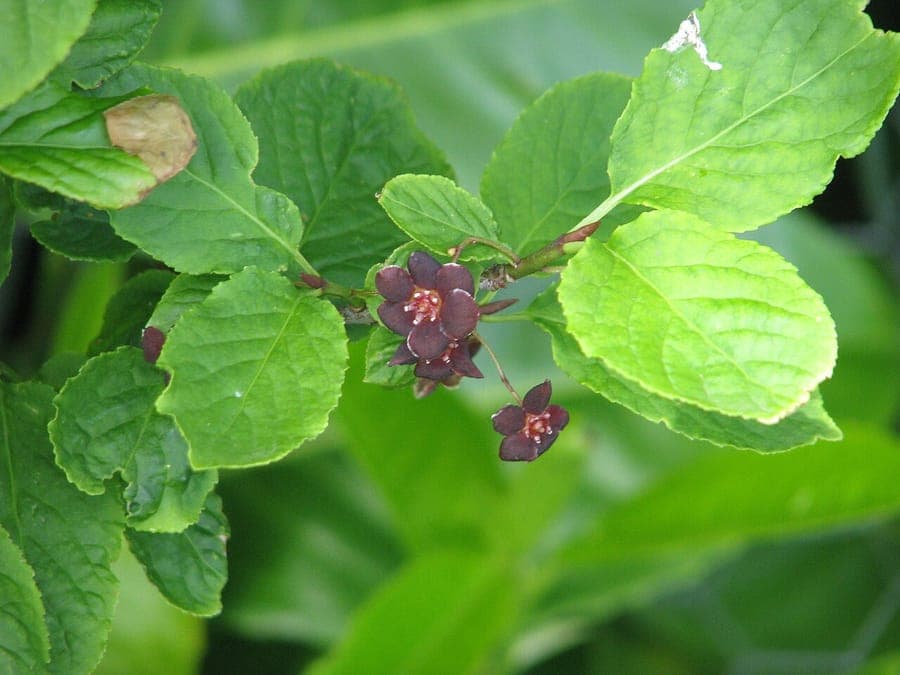
peganum / CC BY-SA 2.0, via Wikimedia Commons
Western Burning Bush (Euonymus occidentalis): complete guide
Euonymus occidentalis
¿Quieres ver Western Burning Bush (Euonymus occidentalis): complete guide en tu jardín?
1 minuto, sin tarjeta de crédito
Overview
The Western Burning Bush (Euonymus occidentalis), native to western North America from British Columbia to central California and Oregon, is a striking large shrub in the Celastraceae family. Unlike its dwarf cousin, this species grows substantially larger and offers exceptional autumn spectacle.
Growing 4 to 6 meters tall, this shrub is renowned for its dramatic color transformation in fall. The red foliage combined with ornamental fruits makes it a wildlife magnet, attracting birds with its abundant seeds. For larger gardens and naturalistic landscaping, this is an outstanding choice.
Appearance and bloom
Western Burning Bush features broader leaves than many Euonymus species, creating a fuller appearance. Foliage is glossy green during the growing season. Flowers are modest but present, yellowish-green in color, appearing in late spring.
The true spectacle arrives in autumn: intense red to deep crimson leaf coloring. Fruits are equally stunning: orange to red capsule-like structures that split open to reveal brilliant orange arils (seed coverings). This color show attracts birds, especially thrushes, which feast on the nutritious seeds.
Winter structure remains interesting with red stems and prominent branching architecture.
Ideal location
Western Burning Bush thrives in sunny to part-shade locations. Full sun promotes the richest autumn color. The plant also tolerates considerable shade, such as woodland understory, though fall display is less spectacular.
Good drainage is crucial. This plant tolerates moderately moist soils better than its dwarf relative, though waterlogging remains problematic. Excellent for groves along woodland edges, as windbreaks, or in large borders.
Soil
Western Burning Bush is flexible regarding soil conditions. Both acidic and neutral soils (pH 5.5 to 7.5) are well tolerated. It even grows in slightly moister soils compared to other shrubs in its genus.
Drainage must remain acceptable. On heavy clay, improved drainage with sand and organic matter may be necessary. Apply mulch after planting for insulation and moisture retention.
The plant requires minimal fertilization; add compost at planting and in early spring.
Watering
Western Burning Bush needs regular watering, especially the first two years. Once established, the plant is reasonably drought-tolerant, though it favors moister soils compared to relatives.
Check moisture to 10 cm depth; if dry, water thoroughly. During the growing period (spring-summer), water regularly. In autumn, reduce frequency as leaf fall signals the plant's transition.
Winter: minimal watering, but ensure the root zone doesn't completely desiccate.
Diseño gratis
¿Quieres ver Western Burning Bush (Euonymus occidentalis): complete guide en tu jardín? Crea un diseño gratis ahora.
Pruning
This shrub can become quite large and benefits from regular pruning to maintain desired form. Prune after flowering or in early spring. The plant tolerates pruning well and responds with fuller, tidier growth.
For windbreak applications, it can be trained to semi-open form by selectively removing lower branches. Avoid heavy winter pruning; wait until spring.
Formative pruning of young specimens encourages branching and creates more attractive mature plants.
Monthly maintenance calendar
January-February: Check for frost damage. Remove dead branches. Heavy pruning possible.
March: Growing season begins. New foliage emerges. Apply fertilizer.
April-May: Water regularly. Growth accelerates. Flowering commences.
June-July: Peak growth. Maintain consistent watering. Monitor plant health.
August-September: Prepare for autumn. Reduce watering. Fruits ripen.
October-November: Spectacular autumn color. Leaf drop. Fruits provide bird food.
December: Winter dormancy. No frost protection required.
Winter hardiness
Western Burning Bush is sufficiently hardy, withstanding temperatures to -12 degrees Celsius minimum. This makes it suitable for cultivation in the northern UK, Netherlands, Belgium, and northern France.
Young specimens benefit from protective mulch in their first winter. Once established (after 2 years), full winter hardiness is achieved. Frost damage to young shoots may occur in extremely cold winters but plants typically recover.
Companion plants
Western Burning Bush pairs beautifully with evergreen foliage plants like Ilex verticillata (Winterberry), Aronia, or Sambucus (Elder). For contrast, the pale foliage of Betula (Birch) or Acer palmatum creates interesting visual effects.
In woodland scenarios, underplant with shade-tolerant Vinca, Asarum, or ferns. Hydrangea companions provide texture variation. Ornamental grasses like Luzula and Deschampsia offer grasslike contrasts.
Closing remarks
Western Burning Bush delivers spectacular autumn effects and genuine wildlife value. For larger gardens and landscape applications, this species is an outstanding choice. With regular care and appropriate pruning, it develops into a magnificent specimen with year-round ornamental interest.
Available from specialized garden centers. This species deserves recognition for its ecological contribution and ornamental value. Visit gardenworld.app for inspiration on how to integrate this beautiful North American native into your landscape design.
¿Quieres ver Western Burning Bush (Euonymus occidentalis): complete guide en tu jardín? Crea un diseño gratis ahora.
Sube una foto, elige un estilo y obtén un diseño fotorrealista con lista de plantas en menos de un minuto.
Más de 10.000 jardines diseñados
Sin tarjeta de crédito


Plantas similares
Fringed grass of Parnassus: complete guide
Parnassia fimbriata
Everything about Fringed grass of Parnassus (Parnassia fimbriata): growing, soil, watering and care. A delicate mountain perennial with white fringed flowers.
Euonymus cornutus: complete guide
Euonymus cornutus
Horned spindle is an intriguing shrub from central China with distinctive winged seed capsules. Learn how to grow this unique plant.
Large-Winged Spindle: complete guide to this Far Eastern shrub
Euonymus macropterus Rupr.
Discover Large-Winged Spindle (Euonymus macropterus), an elegant Japanese shrub prized for spectacular winged fruits. Perfect for Asian gardens and woodland plantings.