
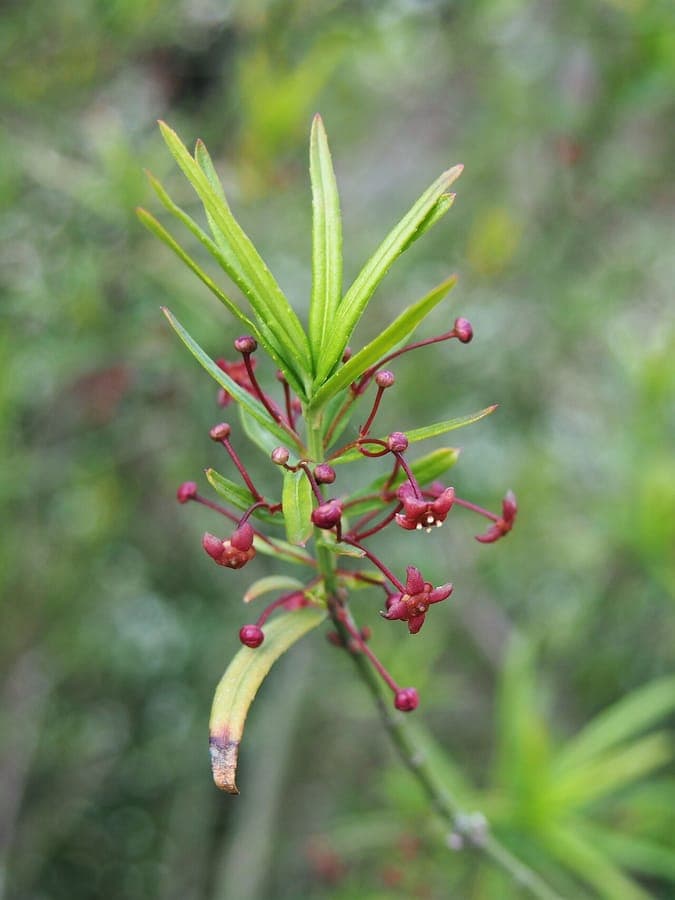
Agnieszka Kwiecień, Nova / CC BY-SA 4.0, via Wikimedia Commons
Dwarf Spindle (Euonymus nanus): complete guide
Euonymus nanus
¿Quieres ver Dwarf Spindle (Euonymus nanus): complete guide en tu jardín?
1 minuto, sin tarjeta de crédito
Overview
Dwarf Spindle (Euonymus nanus), also known as Dwarf Burning Bush or Fusain Nain, is a charming compact shrub from the Celastraceae family. Originating from Northeast Romania through the Caucasus to Central Asia and Mongolia, this elegant little plant brings refined character to any garden. It requires minimal care while delivering year-round visual interest.
Euonymus nanus is an underrated choice for modern gardens. This dwarf variety grows naturally compact and rounded, requiring little pruning intervention. Its modest height makes it perfect for the front of borders, as an accent in rock gardens, or as ground-level planting beneath taller specimens.
Appearance and bloom
Euonymus nanus distinguishes itself with very fine, lanceolate foliage. The leaves are narrow and bright green, creating a delicate texture throughout the season. In spring, subtle yellowish-green flowers appear in small clusters, offering understated charm.
The real spectacle arrives in autumn when foliage transforms into warm golden-red tones. The small fruits remain relatively inconspicuous, but the stunning fall color more than compensates. The shrub maintains its beauty well into late autumn before leaves finally drop.
The slender stem structure contributes to a naturally elegant appearance, perfect for naturalistic garden compositions.
Ideal location
Dwarf Spindle thrives in sunny to part-shade settings. For the richest autumn coloring, full sun exposure is recommended. This plant is highly flexible and succeeds in borders, rock gardens, and containers alike.
Crucial is adequate drainage; avoid locations with standing water. In front gardens, this shrub excels because it occupies minimal space. Light shade from larger trees poses no problem, provided sufficient daylight reaches the plant.
Soil
Euonymus nanus is not fussy about soil conditions. It grows in nearly any soil, provided it drains well. Heavy clay soils can be amended with sand and organic matter to prevent waterlogging.
Optimal pH ranges between 5.5 and 7.0 (neutral to slightly acidic). Add organic material such as compost when planting to improve soil structure and encourage root development. Mulching around the plant (avoiding the stem) helps retain moisture and suppress weeds.
Watering
Dwarf Spindle has moderate watering requirements. During the growing season (spring and summer), water regularly, but avoid waterlogging. Check soil moisture at 5 cm depth; if dry, watering is needed.
Once established, the plant is fairly drought-tolerant, a significant advantage. During dry periods and hot summers, increase watering frequency. Ensure water reaches the root zone effectively.
Winter watering needs are minimal as the plant enters dormancy. Occasionally check that soil doesn't dry out completely.
Diseño gratis
¿Quieres ver Dwarf Spindle (Euonymus nanus): complete guide en tu jardín? Crea un diseño gratis ahora.
Pruning
Dwarf Spindle requires minimal pruning since it naturally assumes a neat form. Remove damaged or dead branches anytime during the year. For extra compactness, light pruning after flowering suits the plant.
If the plant grows too large, moderate pruning in early spring works well. Avoid heavy cutting, as this disrupts the natural form. Growth peaks in early spring, so timing pruning after this period is ideal.
Irregular shapes can be corrected by selectively removing branches from the interior.
Monthly maintenance calendar
January-February: Check for frost damage. Remove dead wood. Plant emerges from winter dormancy.
March: Growing season begins. Apply organic fertilizer. Verify drainage after snow melt.
April-May: Water regularly as growth accelerates. Blooming commences. Top up mulch layer.
June-July: Peak growing season. Maintain consistent watering. Monitor for any signs of stress.
August-September: Reduce watering as autumn approaches. Autumn coloration develops beautifully.
October-November: Autumn colors at their peak. Leaf drop begins. Decrease watering frequency.
December: Winter dormancy. No frost protection needed due to excellent hardiness.
Winter hardiness
Euonymus nanus is exceptionally cold-hardy, withstanding temperatures below -15 degrees Celsius. This makes it an excellent choice for cultivation throughout northern Europe, including the UK, Netherlands, Belgium, and northern France.
Young specimens in their first winter might benefit from protective mulch around the base for extra insulation. Once established (after 2-3 years), no winter protection is necessary.
The plant survives frost periods without issue and resumes normal development each spring.
Companion plants
Dwarf Spindle pairs beautifully with other compact shrubs. Consider combining with Ilex (Holly) for evergreen backbone, Sarcococca for fragrance, or Hedera (Ivy) as ground cover. Planting in groups of three or five at equal spacing creates visual impact.
In rock gardens, it complements alpine plants and ornamental grasses exceptionally well. With Sedum and Sempervivum, it creates interesting textural contrasts. As a specimen plant, it shines especially against darker backgrounds.
Mediterranean herbs like Lavender and Salvia provide excellent companions, offering contrasting foliage and flowering periods.
Closing remarks
Euonymus nanus is an undervalued classic shrub offering substantial benefits: compact growth, winter hardiness, minimal maintenance demands, and spectacular autumn color. Whether your front yard is small or you seek subtle elegance, this dwarf spindle deserves a place in your garden design.
Available at specialized garden centers. With minimal care, Euonymus nanus becomes a quiet favorite in your landscape. Visit gardenworld.app for more plant advice and design inspiration. Explore how other gardeners incorporate this charming shrub in their front and back gardens. Gardenworld.app assists you in finding plants that perfectly suit your garden's unique character and climate.
¿Quieres ver Dwarf Spindle (Euonymus nanus): complete guide en tu jardín? Crea un diseño gratis ahora.
Sube una foto, elige un estilo y obtén un diseño fotorrealista con lista de plantas en menos de un minuto.
Más de 10.000 jardines diseñados
Sin tarjeta de crédito


Plantas similares
Fringed grass of Parnassus: complete guide
Parnassia fimbriata
Everything about Fringed grass of Parnassus (Parnassia fimbriata): growing, soil, watering and care. A delicate mountain perennial with white fringed flowers.
Euonymus cornutus: complete guide
Euonymus cornutus
Horned spindle is an intriguing shrub from central China with distinctive winged seed capsules. Learn how to grow this unique plant.
Large-Winged Spindle: complete guide to this Far Eastern shrub
Euonymus macropterus Rupr.
Discover Large-Winged Spindle (Euonymus macropterus), an elegant Japanese shrub prized for spectacular winged fruits. Perfect for Asian gardens and woodland plantings.