
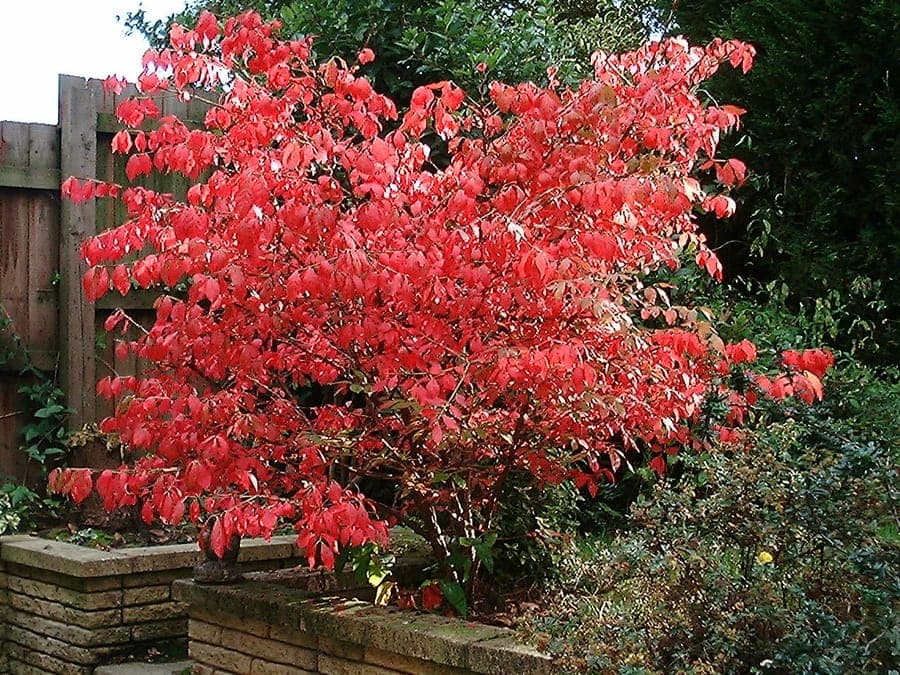
Chris Barton/Gif absarnt / CC BY-SA 3.0, via Wikimedia Commons
Burning Bush: complete guide
Euonymus alatus
¿Quieres ver Burning Bush: complete guide en tu jardín?
1 minuto, sin tarjeta de crédito
Overview
The Burning Bush (Euonymus alatus) is an impressive ornamental shrub native to Siberia, Japan and China. This plant belongs to the Celastraceae family and is renowned for its spectacular red autumn foliage. The name reflects the intense crimson colours the leaves assume in October and November, making it one of the finest autumn shrubs for British and European gardens.
Appearance & Bloom
The Burning Bush grows 2-3 metres tall, forming a compact, dense habit. The plant features interesting winged twigs that remain decorative throughout winter. Foliage begins green but transforms to brilliant red and purple-red in autumn. Flowers appear in May-June as inconspicuous greenish blooms. The true beauty lies in the autumn display, which begins in October and continues until mid-November. Small red fruits complement the fiery foliage.
Ideal Location
The Burning Bush thrives in full sun to partial shade. For the most vibrant autumn colours, full sun is essential. The plant tolerates some shade but colours become less intense. Wind poses no problems and aids leaf dispersal. Protect young plants from severe frosts. The plant is extremely hardy and suitable for all regions.
Soil
The Burning Bush is undemanding regarding soil type. It grows in virtually any garden soil, whether acidic or alkaline. Well-draining soil is preferred but the plant tolerates heavier soils. Avoid waterlogged conditions. Add compost or garden manure when planting. The plant requires minimal feeding.
Diseño gratis
¿Quieres ver Burning Bush: complete guide en tu jardín? Crea un diseño gratis ahora.
Watering
After establishment, the Burning Bush requires little additional water. In dry summer periods, supplementary watering benefits young plants. Established specimens are drought-tolerant. Container-grown plants need regular watering, especially during growing season.
Pruning
The Burning Bush typically requires minimal pruning. Shape pruning can occur in March to maintain form. Remove dead or damaged branches as needed. Hard pruning is possible but unnecessary. The plant recovers well after pruning.
Maintenance Calendar
March: Light shaping pruning possible. April-May: Tip young shoots for more branching. June-July: Check for insects or diseases. August-September: Prepare for autumn colouring. October-November: Enjoy autumn display. December-February: Minimal maintenance tasks.
Winter Hardiness
The Burning Bush is extremely hardy throughout Britain and Europe. It tolerates temperatures to minus 20 degrees Celsius easily. Even in northern regions, no protection is needed. Winged twigs may break in severe frosts but the plant regrows well.
Companion Plants
The Burning Bush combines beautifully with other autumn colourbringers. Combine with berberis for complementary colours. Yellow and orange foliage trees create striking contrasts. White birch (Betula pubescens) offers fine twig contrast. Ornamental grasses add movement. Dark foliage like ilex provides depth.
Closing
The Burning Bush is an essential shrub for the autumn garden. With spectacular red foliage, extreme hardiness and easy maintenance, it's a top choice. Perfect for hedges, borders and focal point planting. Visit gardenworld.app/en for more garden designs. Discover gardenworld.app/en for comprehensive garden concepts.
¿Quieres ver Burning Bush: complete guide en tu jardín? Crea un diseño gratis ahora.
Sube una foto, elige un estilo y obtén un diseño fotorrealista con lista de plantas en menos de un minuto.
Más de 10.000 jardines diseñados
Sin tarjeta de crédito


Plantas similares
Fringed grass of Parnassus: complete guide
Parnassia fimbriata
Everything about Fringed grass of Parnassus (Parnassia fimbriata): growing, soil, watering and care. A delicate mountain perennial with white fringed flowers.
Euonymus cornutus: complete guide
Euonymus cornutus
Horned spindle is an intriguing shrub from central China with distinctive winged seed capsules. Learn how to grow this unique plant.
Large-Winged Spindle: complete guide to this Far Eastern shrub
Euonymus macropterus Rupr.
Discover Large-Winged Spindle (Euonymus macropterus), an elegant Japanese shrub prized for spectacular winged fruits. Perfect for Asian gardens and woodland plantings.