
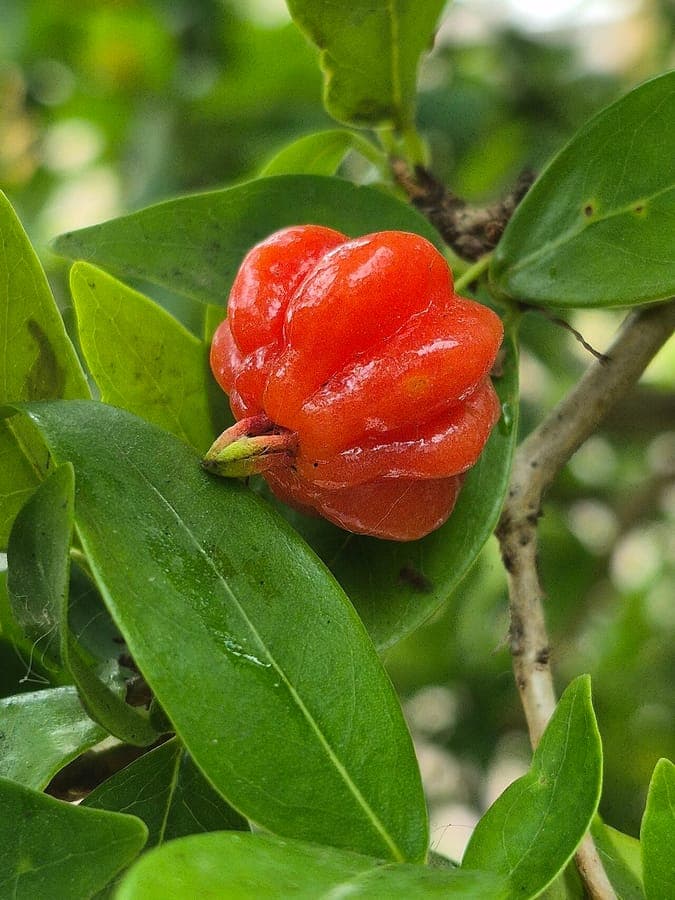
Bageense / CC BY-SA 4.0, via Wikimedia Commons
Eugenia uniflora: complete guide
Eugenia uniflora
¿Quieres ver Eugenia uniflora: complete guide en tu jardín?
1 minuto, sin tarjeta de crédito
Overview
Eugenia uniflora, commonly called Brazil cherry or Pitangatuba, is a compact ornamental fruiting shrub native to South America. Growing naturally from Eastern and Southern Brazil throughout South America, this plant is prized for its decorative value and productive nature. Glossy dark green foliage creates an elegant silhouette, while crimson to orange-red berries provide an outstanding visual display.
This plant is ideal for gardeners seeking a multifunctional shrub: attractive foliage, delicate white flowers, and edible fruit in a compact form.
Appearance and Bloom
Eugenia uniflora develops into a shrub reaching approximately 3-4 meters under favorable conditions, though indoors or in containers it remains much more compact (up to 1.5 meters). Leaves are elongated, glossy, and dark green, providing striking contrast with new reddish shoots.
Flowers are small, creamy white, and appear in clusters along branches. These subtle blooms yield to the real show: gleaming berries transitioning from green to yellow and finally to red or orange. Each color transition offers visual delight.
Ideal Location
Eugenia uniflora thrives in sunny positions receiving at least six hours of direct sunlight daily. Planted singly or in groups, specimens can form impressive focal points in temperate gardens.
When grown in containers, the plant offers flexible positioning: daytime sun exposure with protected winter placement if needed. In Mediterranean or warm temperate zones, the plant proves reasonably hardy and can overwinter outdoors.
Soil
Use well-draining potting mix amended with compost and sand for optimal growth. The plant tolerates various soil types but prefers slightly acidic to neutral conditions (pH 6.0-7.0). Container soil should incorporate extra sand for improved drainage.
Ensure excellent drainage in pots; standing water causes root rot and fungal diseases.
Watering
Water regularly during growing season (spring through fall), particularly during dry periods. Pots should not dry out completely but must not remain waterlogged. Mist foliage during hot, dry weather.
In winter, reduce watering but do not eliminate it entirely. A useful rule: soil should feel moist but not soggy.
Pruning
Eugenia uniflora responds well to pruning. Pinch back young growth to encourage compact form. After flowering, trim elongated stems. This stimulates branching and denser foliage.
Remove dead branches and disease-prone growth to improve air circulation.
Maintenance Calendar
- Spring: Pruning, repotting in larger containers, fertilizing
- Summer: Regular watering, misting during heat waves
- Autumn: Reduce watering, final fertilization
- Winter: Minimal care, frost protection for containers
Winter Hardiness
Eugenia uniflora is not fully winter hardy in temperate zones. In northern Europe, winter protection is essential. Move container plants to a cool, bright greenhouse or conservatory. Landscape specimens should be mulched heavily.
In southern French zones, the plant can overwinter outdoors with protection. Visit gardenworld.app/en for design inspiration with tropical accents.
Diseño gratis
¿Quieres ver Eugenia uniflora: complete guide en tu jardín? Crea un diseño gratis ahora.
Companion Plants
Pair Eugenia uniflora with other sun-loving Mediterranean species like Myrtus communis (myrtle) or Rosmarinus officinalis (rosemary). This combination creates authentic Mediterranean ambiance.
In container gardens, it works beautifully alongside Laurus nobilis (bay laurel).
Propagation and Growth
Eugenia uniflora can be propagated from seed or semi-ripe cuttings. Seed germination is slow but reliable, requiring warmth and patience. Semi-ripe cuttings root better under misting conditions. Both methods require consistent warmth (20-25°C).
In commercial nurseries, seed propagation is preferred for speed. At home, cuttings can be easily placed in perlite or sand mixture. A propagation case with bottom heat significantly accelerates root formation and success rates.
Diseases and Pests
Eugenia uniflora is generally very resistant to common pests and diseases. In greenhouse conditions, spider mites may cause problems during dry spells. Regular misting effectively controls infestations. Scale insects occasionally appear on older leaves and can be removed with alcohol on a cotton swab.
Fungal diseases arise from excessive moisture. Always ensure good air circulation and avoid wetting foliage. Strong air movement prevents most problems before they start. Well-spaced plants receive better ventilation than crowded arrangements.
Uses and Benefits
The berries of Eugenia uniflora are not only decorative but also completely edible and nutritious. They offer a pleasant tart-sweet flavor and can be consumed fresh, processed into jam, or used in desserts. They contain valuable vitamin C, antioxidants, and other important nutrients essential for human health.
Local populations in South America harvest these berries commercially for juice, preserves, and traditional medicine. In temperate climates, yields are modest but certainly worthwhile for household use. Many gardeners report that the ornamental value alone justifies cultivation.
Potting Soil and Fertilizer Management
Eugenia uniflora responds excellently to regular feeding during the growing season (May through September). Use slow-release organic fertilizer or balanced formulation once monthly. Excessive nitrogen promotes excessive foliage at the expense of flowers and fruit set.
Annually adding fresh compost to container plants helps maintain optimal nutrient status without dependency on synthetic fertilizers. This approach also improves soil structure and water-holding capacity. Organic matter also encourages beneficial microbial activity in the soil.
Final Thoughts
Eugenia uniflora is an excellent choice for gardeners seeking multifunctional appeal: elegant foliage, refined flowers, and productive berries. While winter protection is necessary in temperate zones, this plant is absolutely worth the investment. Start with one specimen in a generous container and enjoy its expanding beauty year after year.
Discover more tropical-inspired designs at gardenworld.app/en. With proper care, you will enjoy this Amazon treasure for many seasons.
¿Quieres ver Eugenia uniflora: complete guide en tu jardín? Crea un diseño gratis ahora.
Sube una foto, elige un estilo y obtén un diseño fotorrealista con lista de plantas en menos de un minuto.
Más de 10.000 jardines diseñados
Sin tarjeta de crédito


Plantas similares
Flooded gum (Eucalyptus grandis): complete guide
Eucalyptus grandis
Everything about the flooded gum: fast growth, impressive stature and silvery bark. How to plant and care for this eucalyptus in your garden.
Yellow gum (Eucalyptus leucoxylon): complete guide
Eucalyptus leucoxylon
Everything about the yellow gum: showy flowers in winter, compact form and drought tolerance. How to grow and care for this eucalyptus in your garden.
Sydney blue gum (Eucalyptus saligna): complete guide
Eucalyptus saligna
Everything about the Sydney blue gum: extraordinary growth rate, beautiful grey-blue bark and impressive stature. How to plant and care for this eucalyptus.