
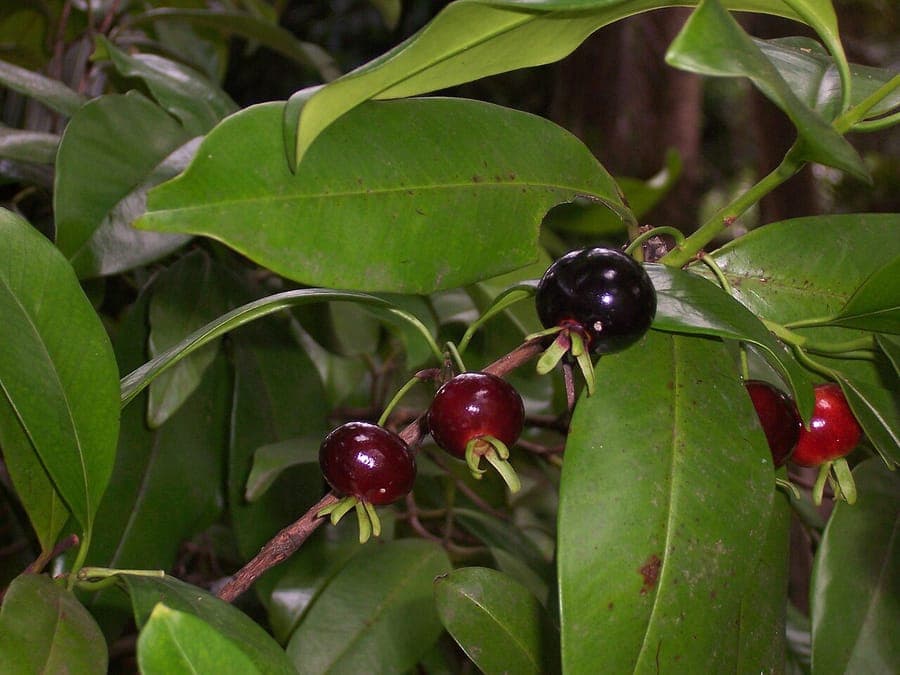
No machine-readable author provided. B.navez assumed (based on copyright claims). / CC BY-SA 3.0, via Wikimedia Commons
Eugenia brasiliensis: complete guide
Eugenia brasiliensis
¿Quieres ver Eugenia brasiliensis: complete guide en tu jardín?
1 minuto, sin tarjeta de crédito
Overview
Eugenia brasiliensis, known as grumichama or Brazil cherry, is a beautiful fruit tree from southeastern Brazil belonging to the Myrtaceae family (myrtle, guava). This tree produces small, dark red cherry-like fruits with deliciously sweet, fragrant flavor. The tree receives less cultivation attention outside Latin America than it deserves, representing an underappreciated treasure for fruit enthusiasts.
The tree grows compactly (5-7 meters under ideal conditions) with attractive dark green foliage. It represents an intriguing choice for warmer climates where exotic fruit culture is possible.
Appearance and bloom
Eugenia brasiliensis features beautiful, glossy dark-green leaves that are ovate to lance-shaped. The tree structure is compact and more refined than many other fruit trees. The foliage displays an elegant glossy surface that contributes to ornamental value.
Flowers are small, white to cream-colored blooms appearing in small clusters during early spring (March-April). Though small, these flowers are pleasantly fragrant and attract bees enthusiastically.
The fruits are the showpiece: small, dark red (nearly black) fruits measuring approximately 1.5-2 cm diameter grow in clusters on branches. They ripen from May to July, depending on region. The fruits are sweet and fragrant, with flavor reminiscent of black currant and raisin combined.
Ideal location
Grumichama requires full sun for optimal fruit production. Provide minimum 6-8 hours of direct sunlight daily. The tree tolerates light shade but fruit set diminishes noticeably.
The tree suits protected gardens in warmer regions, south-facing walls, and large pots on terraces. In temperate zones, position against warm walls or in very sheltered locations.
Soil
Eugenia brasiliensis prefers well-drained, slightly acidic to neutral soil with pH 5.5-7.0. The tree tolerates poor soil but fertile soil enhances growth and fruiting.
Incorporate organic material (compost, aged manure) into planting beds. In containers, use fertile potting mix with excellent drainage combined with coarse sand or perlite.
Mulch around roots with 5-8 cm of organic material to enhance moisture retention.
Diseño gratis
¿Quieres ver Eugenia brasiliensis: complete guide en tu jardín? Crea un diseño gratis ahora.
Watering
Grumichama enjoys regular watering, especially during fruit production and dry seasons. Water deeply but allow soil to dry slightly between waterings; avoid waterlogging.
In containers, water moderately, ensuring potting mix recovers between waterings. Excessive watering causes root rot.
Mature trees tolerate some drought, but consistent watering promotes superior fruit production.
Pruning
Pruning is not strictly necessary for tree health, but you may shape and maintain compactness. Remove damaged or weak branches in late winter (February-March) before growth begins. Avoid heavy pruning.
Crop-thinning pruning can be done after fruit harvest (July-August) to promote new fruiting growth.
Maintenance calendar
Spring (March-May): Primary growing season and bloom period. Apply balanced fertilizer once in March; later switch to potassium-higher fertilizer to promote fruit set. Water regularly. Flowering occurs.
Summer (June-August): Fruit ripening. Water regularly to support fruit production. Light supplemental feeding may be given in June. Fruit harvest occurs.
Autumn (September-October): Growth slows. Reduce watering as temperatures decline. No feeding.
Winter (November-February): Tree is largely dormant. Minimal watering. This is opportunity for pruning work if needed.
Winter hardiness
Eugenia brasiliensis is hardy to approximately 5-10degC (USDA zone 10-11). This makes outdoor cultivation challenging outside warm-climate regions. In temperate zones (Netherlands, Belgium), grow in large containers moved to greenhouse/conservatory for winter.
Young trees are more frost-vulnerable than mature specimens. Protect with burlap wrapping in youth.
Companion plants
Grumichama combines beautifully with other fruit trees and ornamental trees in tropical gardens. In container culture, combine with other exotic fruit trees for a fruit garden in pots effect.
The tree also works as a solo accent in larger containers on terraces.
Partner with other warm-climate fruits like guava, mango, and loquat.
Conclusion
Eugenia brasiliensis offers unique combination of fruit production and decorative value. Though limited availability outside Latin America, this tree deserves attention from fruit enthusiasts in warmer regions or with greenhouse culture. The flavorful fruits are valuable for fruit compotes, jams, and fresh consumption.
Visit gardenworld.app for more tropical fruit trees suited to your climate zone.
¿Quieres ver Eugenia brasiliensis: complete guide en tu jardín? Crea un diseño gratis ahora.
Sube una foto, elige un estilo y obtén un diseño fotorrealista con lista de plantas en menos de un minuto.
Más de 10.000 jardines diseñados
Sin tarjeta de crédito


Plantas similares
Flooded gum (Eucalyptus grandis): complete guide
Eucalyptus grandis
Everything about the flooded gum: fast growth, impressive stature and silvery bark. How to plant and care for this eucalyptus in your garden.
Yellow gum (Eucalyptus leucoxylon): complete guide
Eucalyptus leucoxylon
Everything about the yellow gum: showy flowers in winter, compact form and drought tolerance. How to grow and care for this eucalyptus in your garden.
Sydney blue gum (Eucalyptus saligna): complete guide
Eucalyptus saligna
Everything about the Sydney blue gum: extraordinary growth rate, beautiful grey-blue bark and impressive stature. How to plant and care for this eucalyptus.