
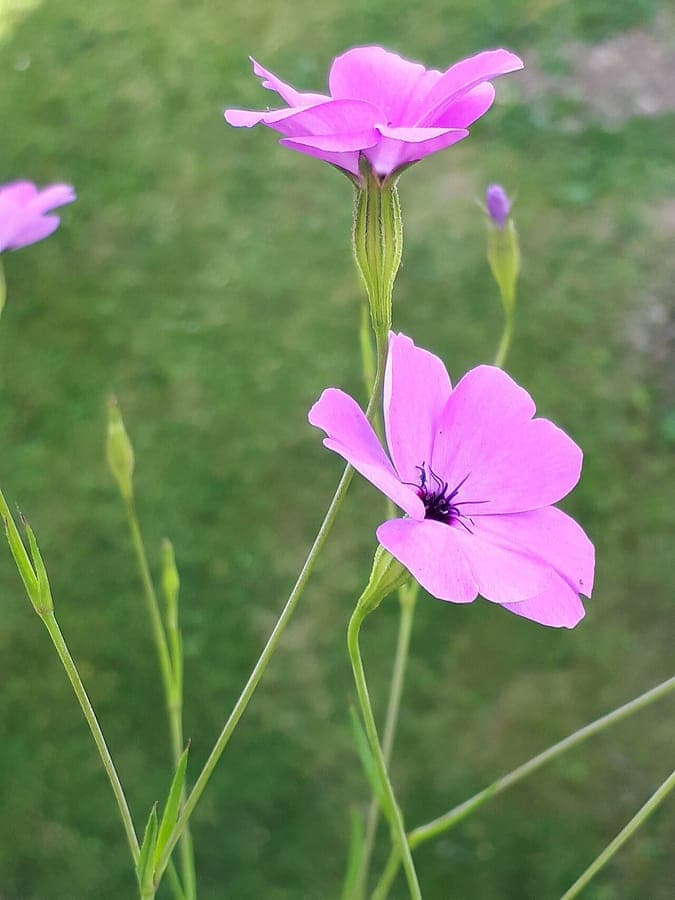
Matthias.Wolf / CC BY-SA 4.0, via Wikimedia Commons
Eudianthe coeli-rosa: complete guide
Eudianthe coeli-rosa
¿Quieres ver Eudianthe coeli-rosa: complete guide en tu jardín?
1 minuto, sin tarjeta de crédito
Overview
Eudianthe coeli-rosa, commonly known as Rose-of-heaven or Heaven's rose, is a charming annual plant with a rich history in gardens. This delicate flower originates from the Mediterranean region and the Canary Islands, bringing a tranquil pink hue and romantic charm to your garden. The plant belongs to the Caryophyllaceae family (carnation family), which explains why the flowers are so refined and beautiful.
The Rose-of-heaven is an excellent choice for gardeners seeking something different from the typical annual bloomers. It grows rapidly, flowers abundantly, and demands minimal care. Ideal for seed beds, borders, or even pots and containers. A genuine charmer that will attract many visitors to your garden.
Appearance and Bloom
The plant reaches 30-60 cm in height and forms elegantly branched shrubs with delicate foliage. The flowers are small yet remarkable - approximately 1-2 cm across - displaying a bright pink to red color with white centers. They resemble miniature carnations and appear in loose clusters along the branches.
Blooming begins in July and continues through October, providing months of continuous color. Even if the plant becomes somewhat leggy, new flowers continue to emerge. This is one of the major advantages - it simply keeps blooming as long as temperatures remain warm.
The resulting seed pods are interesting and harvestable - you can collect these and resow next year for a free return of this charming plant.
Ideal Location
Rose-of-heaven thrives in warm, sunny positions. Provide at least 6-8 hours of direct daily sunlight. In very warm regions, some light afternoon shade may be beneficial, though ample sun is genuinely necessary for optimal flowering.
It grows well in flower beds, containers, seed beds, and even hanging baskets. Use it for early summer color or as filler between slower-growing perennials. Combine with blue flowers (forget-me-nots, salvia) for classic contrast.
Soil
The plant is flexible regarding soil composition. Normal garden soil works perfectly, though it also tolerates somewhat poorer, sandy soil. The only scenario to avoid is very wet, heavy clay without drainage - this will cause root problems.
Ensure reasonable drainage by working some sand into heavy soil. A neutral pH (7.0) to slightly acidic (6.5) is ideal.
Sow directly in the flower bed where desired, or sow in pots indoors in March-April for earlier blooming.
Diseño gratis
¿Quieres ver Eudianthe coeli-rosa: complete guide en tu jardín? Crea un diseño gratis ahora.
Seed and Propagation
Rose-of-heaven is genuinely a seed plant. You can proceed two ways: purchase fresh seed or harvest seed from your previous plants. Either way, sow seeds in March-April indoors or in May directly in the ground.
Seed requires no stratification and germinates readily at room temperature to warm conditions (15-20°C). Place seed in light, moist seed compost on a bright windowsill. Germination typically occurs within 7-14 days.
Prick out seedlings when they develop two true leaves and plant out after the last frost. Space plants 20-30 cm apart.
Watering
As the plant grows, maintain moderately moist soil - neither soggy nor dry. Once flowering begins, the plant becomes much more tolerant and requires less water.
Always ensure good drainage. Excessive water provides no benefit; in fact, drought stress and poor drainage both cause greater damage.
In containers, water more frequently than in ground, but always wait until the top 1-2 cm of soil feels dry before watering again.
Maintenance and Deadheading
Regularly remove spent flowers (deadheading) to stimulate more blooms. This is simple yet very effective - your plant will continue flowering two to three weeks longer.
If the plant becomes too tall and leggy, gently pinch back the tops when 20-25 cm tall - this encourages branching and more flowers.
The plant requires no fertilization if planted in reasonably enriched garden soil, but in containers you may apply half-strength fertilizer every 2-3 weeks.
Maintenance Calendar
March-April: Sow seeds indoors or direct outdoors. May-June: Plant out after frost. Water regularly. July-August: Flowering begins, deadhead regularly. September-October: Bloom peaks, abundant color. November: Plant dies after first frost (annual).
Diseases and Pests
This is an extremely healthy plant. Because it grows vigorously and establishes well, pests are usually not problematic. In very wet conditions, foot rot may develop - prevent this through good drainage.
Flea beetles may damage seedlings, but adult plants are usually pest-free.
Companion Plants
Combine Rose-of-heaven with:
- Forget-me-nots for blue contrast
- Salvia for deeper tone
- White flowers (malva or linum)
- Ornamental grasses for texture
- Lavender or agapanthus
These combinations create beautiful, dynamic plant groupings that bloom throughout summer.
Closing Thoughts
Rose-of-heaven is an underrated annual that deserves far greater use. It grows rapidly, flowers abundantly, and demands genuinely minimal care. Whether you sow seeds or purchase young plants, this is a flower that will not disappoint.
Available at Intratuin and Gamma. Complete your garden with gardenworld.app's inspiration and plant guides. Discover more at gardenworld.app for other romantic annuals.
¿Quieres ver Eudianthe coeli-rosa: complete guide en tu jardín? Crea un diseño gratis ahora.
Sube una foto, elige un estilo y obtén un diseño fotorrealista con lista de plantas en menos de un minuto.
Más de 10.000 jardines diseñados
Sin tarjeta de crédito


Plantas similares
Dianthus karami: complete guide
Dianthus karami
Dianthus karami is a rare Lebanese mountain pink with fringed pink blooms on limestone cliffs, ideal for rock gardens and troughs.
Sicilian pink: complete guide
Dianthus siculus
Discover Dianthus siculus, an elegant purple bloomer from Sicily. Cultivation, June-September flowering and garden combinations.
Alpine mouse-ear chickweed: complete guide
Cerastium pedunculatum
Full growing guide for Cerastium pedunculatum: ideal location, soil, watering, winter hardiness, and companion plants for rock gardens.