
Wouter Hagens / Public domain, via Wikimedia Commons
Eucalyptus gunnii: complete guide
Eucalyptus gunnii
¿Quieres ver Eucalyptus gunnii: complete guide en tu jardín?
1 minuto, sin tarjeta de crédito
Overview
Eucalyptus gunnii, commonly known as cider gum or Gunn's eucalyptus, is a remarkable Tasmanian tree that adapts well to temperate climates. This tree from the Myrtaceae family (myrtle, guava) is prized for its stunning blue-silver rounded juvenile foliage, especially on young growth. The tree can reach 25-30 meters in ideal conditions, though regular pruning easily maintains it as a larger shrub.
This tree appeals to gardeners seeking architectural interest beyond typical foliage. The leaf scent is fresh and pleasantly eucalyptus-aromatic.
Appearance and bloom
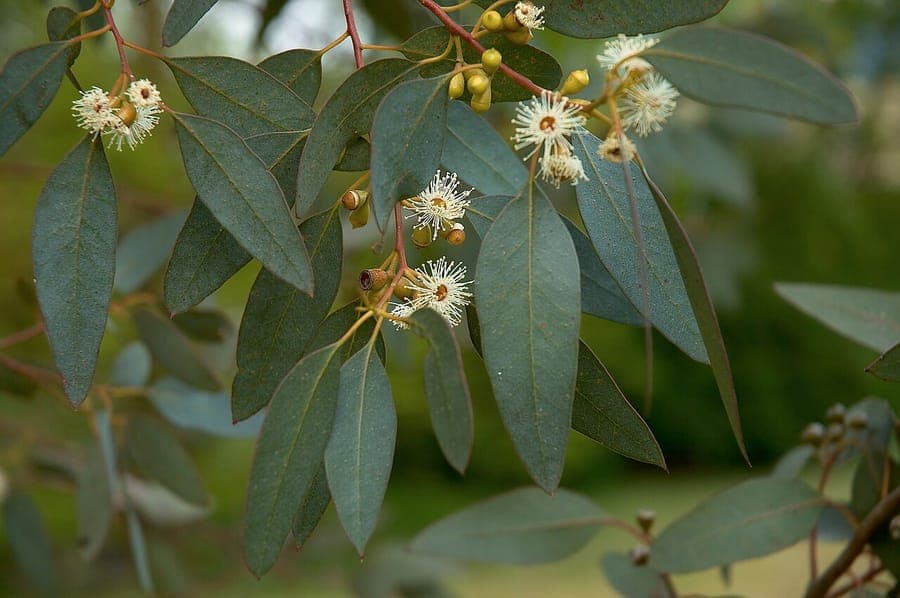
Eucalyptus gunnii displays three distinct foliage phases. Juvenile leaves are round, rigid, densely clustered, and possess a striking blue-silver waxy coating. Adult leaves are thinner, lance-shaped, and bright green. The bark is typically grey with pink or cream-colored flaking patches as it sheds.
Flowers are small white to cream-colored clusters appearing mainly in May-June. While not showy ornamentally, these flowers attract bees and support pollinator populations.
Fruit are characteristic woody seed capsules that provide architectural interest throughout the year.
Ideal location
Cider gum demands full sun with minimum 6-8 hours of direct sunlight daily. The tree tolerates wind well and can handle strong winds, though sheltered positions are preferred in youth.
The tree suits open gardens, large containers in youth, and windy locations. It excels in contemporary gardens where architectural forms are appreciated.
Soil
Eucalyptus gunnii is remarkably flexible with soil types. It tolerates acidic to neutral pH (5.5-7.5) and can grow in poor, sandy soil. However, excellent drainage prevents root rot.
In containers, use quality tree or seed compost mixed with sand or perlite for optimal drainage. Heavy clay must be amended with compost and sand.
Once established, the tree tolerates drought stress readily.
Watering
Cider gum is drought-tolerant once established, but requires regular watering during the first two years for strong root development. Water deeply but infrequently; allow soil to dry slightly between waterings.
In containers, water until moisture appears at drainage holes, then allow soil to dry partially. Overwatering is more damaging than underwatering.
Mature, established trees tolerate extended dry periods.
Diseño gratis
¿Quieres ver Eucalyptus gunnii: complete guide en tu jardín? Crea un diseño gratis ahora.
Pruning
Pruning is crucial for maintaining shape and compactness. Young trees can be cut back hard (to 30-50 cm height) in early years to promote bushier forms. This pruning is best done in early spring.
Annual maintenance pruning keeps the tree compact and promotes vigorous blue-silver juvenile growth, which has greater ornamental value than adult green foliage.
Maintenance calendar
Spring (March-May): Primary growing season. Apply balanced tree fertilizer. Begin pruning work to define shape. Watering increases with rising temperatures.
Summer (June-August): Growth slows. Maintain regular watering during dry periods. No fertilizer needed. Flowering occurs.
Autumn (September-October): Growth slows further. Reduce watering. No feeding.
Winter (November-February): Tree is largely dormant. Minimal watering. Pruning cuts can be made for spring regeneration.
Winter hardiness
Eucalyptus gunnii is one of the most cold-resistant eucalyptus species, hardy to approximately -15degC (USDA zone 8). This makes it excellent for the Netherlands, Belgium, and northern France.
Young trees may suffer frost damage; protect in early winters with wrapping material. Established trees are very winter-hardy.
Companion plants
Cider gum's blue-silver foliage combines beautifully with dark-leaved plants and contrasting structures. Partner with dark bamboo, purple heuchera, or deep-blue conifers.
In contemporary gardens, use as a solo accent or group 2-3 trees for mass effects.
The tree combines well with Mediterranean shrubs and lavender.
Conclusion
Eucalyptus gunnii brings architectural interest and year-round color to any garden. This is a tree for lovers of unusual forms and textures. With regular pruning and proper siting, you'll cultivate a specimen tree offering visual reward in winter and summer.
Visit gardenworld.app for more structural plants and guidance on integrating trees into your garden design.
¿Quieres ver Eucalyptus gunnii: complete guide en tu jardín? Crea un diseño gratis ahora.
Sube una foto, elige un estilo y obtén un diseño fotorrealista con lista de plantas en menos de un minuto.
Más de 10.000 jardines diseñados
Sin tarjeta de crédito


Plantas similares
Flooded gum (Eucalyptus grandis): complete guide
Eucalyptus grandis
Everything about the flooded gum: fast growth, impressive stature and silvery bark. How to plant and care for this eucalyptus in your garden.
Yellow gum (Eucalyptus leucoxylon): complete guide
Eucalyptus leucoxylon
Everything about the yellow gum: showy flowers in winter, compact form and drought tolerance. How to grow and care for this eucalyptus in your garden.
Sydney blue gum (Eucalyptus saligna): complete guide
Eucalyptus saligna
Everything about the Sydney blue gum: extraordinary growth rate, beautiful grey-blue bark and impressive stature. How to plant and care for this eucalyptus.