
Eric Hunt / CC BY-SA 4.0, via Wikimedia Commons
Erythronium albidum: complete guide
Erythronium albidum
¿Quieres ver Erythronium albidum: complete guide en tu jardín?
1 minuto, sin tarjeta de crédito
Overview
Erythronium albidum, known as the white trout-lily, white fawn-lily, or white dog's-tooth violet, is a charming small spring ephemeral from North America. This plant belongs to the Liliaceae family (lilies) and naturally grows in forests and wooded areas from southeastern Canada to the central and eastern United States. It is a treasured plant among spring ephemeral enthusiasts for its brief but spectacular blooming period. This plant adds grace and subtlety to the early spring garden.
Appearance and Bloom
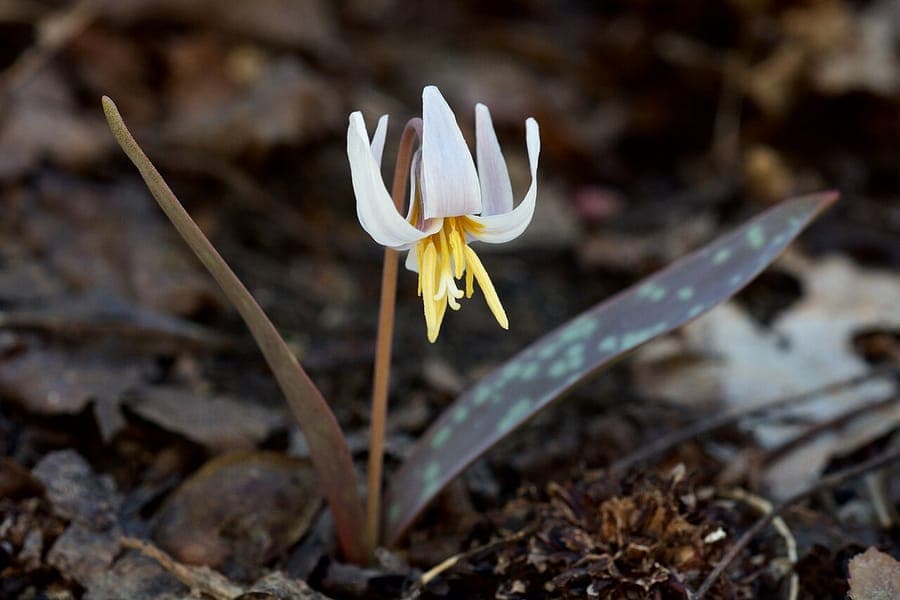
The white trout-lily is a small herbaceous plant reaching only 15 to 25 centimeters tall. The plant grows from corms and produces two long, elliptical leaves in spring that are often beautifully mottled or marbled with light and dark green patterns. The flowers appear in March and April, often before the leaves are fully expanded. Each plant typically bears 1 to 3 flowers on a slender stem. The flowers are characteristic of the genus: six white to salmon-white tepals sharply bent backward, creating a reflexed form unique to Erythronium species. Stamens are yellow. After blooming, small seed capsules form.
Ideal Location
The white trout-lily grows best in dappled shade locations under deciduous trees. A spot receiving morning sun but afternoon shade is ideal. The plant blooms in early spring before trees have fully leafed out, so it receives adequate light at that time. Later in the year it tolerates shade well. Avoid full sun, especially in warmer climates.
Soil
Erythronium albidum prefers rich, well-draining woodland soil with abundant organic matter. A pH between 5.5 and 7.0 is ideal. Plant corms in autumn (September-October) at a depth of 5 to 8 centimeters in well-prepared soil amended with leaf mold or compost. The plant grows best in soil that remains moist during spring growth but dries somewhat in summer when the plant is dormant. Good drainage is essential to prevent corm rot.
Watering
During the growing season (autumn through early summer), keep the soil moderately moist. Regular rainfall is usually sufficient. Water thoroughly after planting in autumn. In summer when the plant is dormant, the soil can dry out; this is normal. In container cultivation, water cautiously as standing water leads to corm rot. After the foliage dies back, the plant needs no supplemental water.
Diseño gratis
¿Quieres ver Erythronium albidum: complete guide en tu jardín? Crea un diseño gratis ahora.
Pruning
The white trout-lily needs no pruning. Allow foliage to die back completely before removing it; this returns nutrients to the corm. This typically occurs in May or June. Remove only damaged or diseased foliage.
Maintenance Calendar
Summer (June-August): The plant is dormant. Foliage has completely withered. No water needed unless extreme drought occurs.
Autumn (September-October): Plant corms in prepared soil. Water thoroughly.
Winter (November-February): Corms rest underground. Water only during drought.
Spring (March-May): The plant blooms. Enjoy the delicate flowers. After blooming, foliage grows. Keep moderately moist.
Winter Hardiness
The white trout-lily is extremely hardy. It grows naturally in areas with severe winters and can withstand temperatures down to -30 degrees Celsius. This is a plant thriving in temperate and cool climates. In warmer regions, however, the plant can be more challenging as it requires winter chilling. In the Benelux, it grows excellently in virtually all regions.
Companion Plants
The white trout-lily combines beautifully with other early spring bloomers like snowdrops (Galanthus), crocuses, and hyacinths. Also associate it with foliage plants that bloom later, such as helleborus (Christmas rose), epimedium, and aquilegia. The fine texture of trout-lilies contrasts nicely with coarser foliage growth. Under deciduous trees, it grows well among ferns and other shade-tolerant woodland plants.
Conclusion
Erythronium albidum is a subtle but essential addition to gardens embracing early spring. With its delicate white flowers and marked foliage, it adds grace to still-bare woodland gardens. This North American lily is robust and will return for many years with minimal maintenance. For woodland garden enthusiasts, this is a must-have plant. Gardenworld.app helps you select the right corms and find the perfect spot in your garden. Gardenworld.app also offers inspiration for creating a natural woodland scene with this and other early spring bloomers.
¿Quieres ver Erythronium albidum: complete guide en tu jardín? Crea un diseño gratis ahora.
Sube una foto, elige un estilo y obtén un diseño fotorrealista con lista de plantas en menos de un minuto.
Más de 10.000 jardines diseñados
Sin tarjeta de crédito


Plantas similares
Reverchon's gagea: complete guide
Gagea reverchonii
Full guide to Gagea reverchonii, Reverchon's gagea: rare Pyrenean bulb with bright yellow spring flowers, soil needs and companion planting.
Leafy gagea: complete guide
Gagea foliosa
Gagea foliosa is a rare Mediterranean bulb with bright yellow star-shaped flowers blooming February to March in well-drained rocky settings.
Tubular gagea: complete guide
Gagea fragifera
Gagea fragifera is a mountain bulb with golden-yellow star flowers blooming May to July on subalpine slopes from Europe to the Himalaya.