
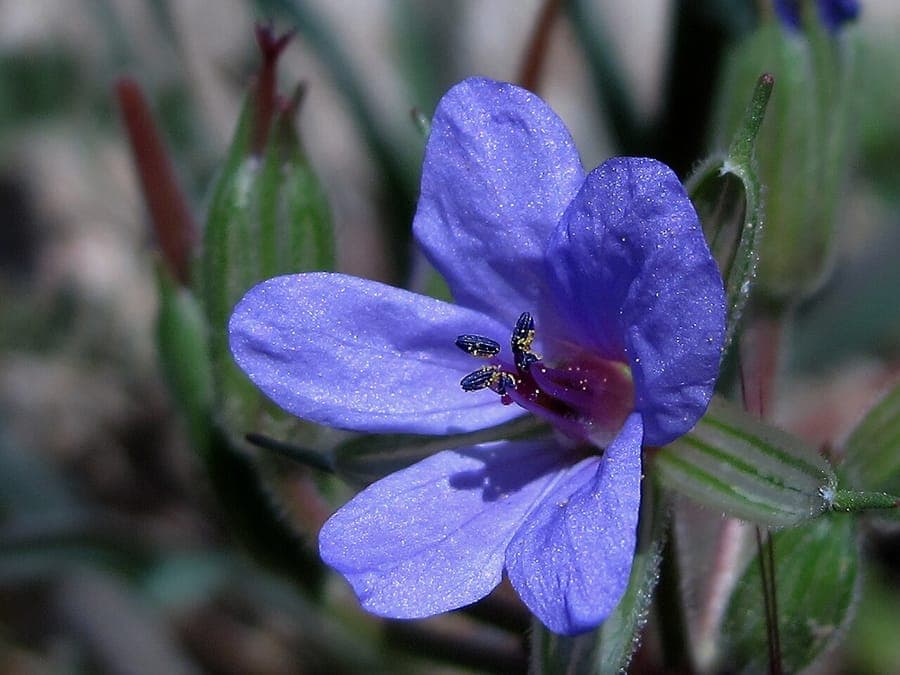
jacilluch / CC BY-SA 2.0, via Wikimedia Commons
Common Stork's Bill: complete guide
Erodium ciconium
¿Quieres ver Common Stork's Bill: complete guide en tu jardín?
1 minuto, sin tarjeta de crédito
Overview
Common stork's bill (Erodium ciconium) is a distinctive Mediterranean plant from the geranium family (Geraniaceae). Native to Mediterranean regions from southern Europe to Pakistan in warm, dry climates, this hardy perennial is a gem for Mediterranean gardens, rock gardens, and alpine beds. With fine, low foliage and delicate blue flowers, it brings authentic Mediterranean charm. The plant is exceptionally drought-tolerant and extremely low-maintenance.
Appearance and Bloom
Common stork's bill reaches 30-45 cm tall with a compact, upright form. The finely pinnate foliage is silvery-grey and highly decorative. From April through July, abundant small blue flowers appear on slender stems. Flower colors range from pink to blue depending on cultivar. The seed capsules form the characteristic long "stork's bill" seed dispersal organs after flowering. This unique seed mechanism is both biologically interesting and ornamentally attractive.
Ideal Location
Common stork's bill performs best in sunny locations with full sun exposure. At least 6-8 hours of daily sunlight is essential for optimal growth and flowering. In very hot climates, light afternoon shade can be welcome. Ensure good air circulation to prevent moisture-related problems. A sheltered, sunny position provides the best growing conditions.
Soil Requirements
Excellent drainage is absolutely essential for common stork's bill. The plant grows best in lean, well-drained soil. Sand, gravel, and rocky soils are ideal. Heavy clay must be heavily amended with sand, gravel, or vermiculite. Poor soil is actually preferable to rich soil. The plant tolerates somewhat saline soils reasonably well. Waterlogging and stagnation are fatal to this plant.
Watering
Once established, common stork's bill requires very little water. Drought is tolerated well due to its deep root system. Container-grown plants need more frequent watering, but always allow soil to dry somewhat between waterings. In very hot and dry periods, occasional supplemental water can be given. In winter, very little to no water is needed. Dry feet are much preferable to wet conditions.
Diseño gratis
¿Quieres ver Common Stork's Bill: complete guide en tu jardín? Crea un diseño gratis ahora.
Pruning
Pruning is minimal for common stork's bill. Remove spent flowers for neat appearance. Seed capsules can be partially retained for seed dispersal and biological interest. The plant grows compactly without needing major cutting. Damaged or dead material can be removed at any time. Gentle shaping is possible during the growing season but unnecessary.
Maintenance Calendar
March-April: Check for winter damage, refresh soil if needed. April-May: Growth and first flowering begin. May-July: Peak flowering period. August-October: Reduced flowering, keep dry. November-February: Dormant period, minimal care. Each spring: Remove old plant material. Every 2-3 years: Repot or save seed for propagation.
Winter Hardiness
Common stork's bill is hardy to USDA zone 8 (-10 to -15 degrees Celsius). In colder regions, grow in containers and overwinter indoors. Well-drained soil provides the best winter protection. In very wet winters, protecting the plant crown is helpful. In extremely wet winter regions, indoor overwintering or protection is essential for survival.
Companion Plants
Common stork's bill combines beautifully with other Mediterranean plants. Plant alongside Cistus, Lavandula, Helichrysum, or other xerophytic plants. It also creates elegant combinations with rock and succulent plants. In containers, use with other Mediterranean foliage plants. Keep it toward the front of borders as it remains relatively low-growing.
Closing
Common stork's bill is a valuable addition to dry, Mediterranean gardens. With good drainage and minimal care, it thrives for years. Follow this guide for success with this distinctive Mediterranean plant. Visit gardenworld.app for more Mediterranean plant ideas and xeric garden designs. Enjoy the delicate blue flowers of common stork's bill - gardenworld.app makes Mediterranean gardening accessible!
¿Quieres ver Common Stork's Bill: complete guide en tu jardín? Crea un diseño gratis ahora.
Sube una foto, elige un estilo y obtén un diseño fotorrealista con lista de plantas en menos de un minuto.
Más de 10.000 jardines diseñados
Sin tarjeta de crédito


Plantas similares
Pelargonium acetosum: complete guide
Pelargonium acetosum
Discover the Sorrel-leaf Geranium: a South African plant with aromatic foliage. Perfect for containers and warm locations. Learn cultivation and care.
Erodium foetidum: complete guide
Erodium foetidum
Rock stork's-bill is a delicate alpine plant with purple flowers and fine foliage. Learn how to grow this Mediterranean charmer in your front garden.
Pelargonium crithmifolium: complete guide
Pelargonium crithmifolium
Discover Samphire-leaf pelargonium: an exotic South African geranium with distinctive foliage. Growing tips, care advice and garden inspiration.