
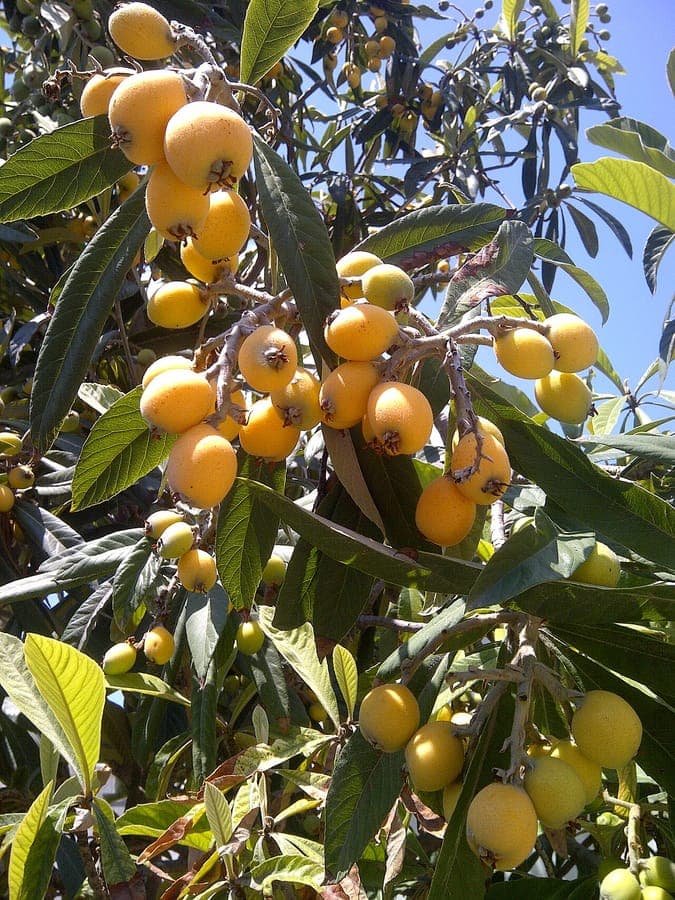
Aftabbanoori / CC BY-SA 3.0, via Wikimedia Commons
Eriobotrya japonica: complete guide
Eriobotrya japonica
¿Quieres ver Eriobotrya japonica: complete guide en tu jardín?
1 minuto, sin tarjeta de crédito
Overview
Eriobotrya japonica, commonly known as loquat or Japanese medlar, is a semi-tropical tree from the Rosaceae family. Originally from Asia, this fruit tree is valued worldwide for its juicy fruits and impressive ornamental qualities. With fragrant white winter flowers and golden fruits in spring, it is a spectacular addition to southern gardens. The tree grows well in warm climates and can also be grown in containers in temperate regions for seasonal protection.
Appearance & Bloom
The loquat grows as a compact to medium-sized tree, typically 5-8 meters in height with proportional width. The plant features large, lanceolate leaves with deep ribbing and leathery texture. From October through December, clusters of small, fragrant white flowers appear at branch tips. These flowers subsequently develop into golden to orange fruits by May-June. The round fruits reach approximately 4-5 centimeters in diameter with sweet, translucent flesh.
Ideal Location
This tree thrives in full sun to light partial shade, though full sun is ideal for fruit production. The plant requires at least 6-8 hours of direct sunlight daily for optimal fruit set and ripening. In shade, the tree may produce leaves and flowers but will bear fewer fruits. Protection from cold winds is beneficial in cooler climates.
Soil
The loquat grows in well-draining, fertile soil with pH 6-8. The plant tolerates diverse soil types but thrives best in loam-based, humus-rich soils. Ensure good drainage to prevent root rot. In very heavy soils, incorporate sand and organic matter thoroughly. The plant can tolerate moderate drought once established.
Watering
The loquat requires regular watering, especially during growth and fruiting periods. Water deeply but avoid waterlogged conditions. Established trees are fairly drought-tolerant. Provide supplemental water during dry periods for improved fruit set. Abundant water during fruit development improves fruit quality significantly.
Diseño gratis
¿Quieres ver Eriobotrya japonica: complete guide en tu jardín? Crea un diseño gratis ahora.
Pruning
Pruning after harvest (June-July) is beneficial for shaping. Remove dead or weak wood and crossing branches. Thin low-hanging branches to maintain an open, air-permeable canopy. Moderate pruning encourages more flowering and better fruit production. Remove densely growing twigs to prevent diseases.
Maintenance Calendar
- Spring (March-May): Fruit development and growth occur. Regular watering essential. Thin fruits for larger size. Apply fertilizer as needed.
- Summer (June-August): Harvest in May-June. Prune after harvest. Prepare for next bloom cycle in fall. Monitor for pests and diseases.
- Fall (September-October): Flowering begins in October. Regular watering very important. Fertilize for blooming and fruit set.
- Winter (November-February): Peak flowering occurs. Minimal maintenance required. Fruit development in progress. Protect from harsh frost.
Winter Hardiness
The loquat is hardy to approximately -8 to -5 degrees Celsius, suitable for temperate to warm climates. In colder climates, protective covering during cold winters may be helpful. In very cold regions, grow the tree in containers for possible winter protection and relocation. Young trees are more frost-sensitive than established specimens.
Companion Plants
The loquat pairs well with other semi-tropical fruit trees and winter-flowering plants. Combine with feijoa, passion fruit, or other warm-weather fruits. Add winter-blooming ornamental shrubs for seasonal color. Supporting other Asian fruit trees creates interesting garden combinations.
Closing
The loquat is a fascinating fruit tree with elegant winter flowers and delicious fruits. With full sun, good drainage, and regular watering, this tree will produce for many years. Explore more fruit trees at gardenworld.app/en and gardenworld.app/en/plants.
¿Quieres ver Eriobotrya japonica: complete guide en tu jardín? Crea un diseño gratis ahora.
Sube una foto, elige un estilo y obtén un diseño fotorrealista con lista de plantas en menos de un minuto.
Más de 10.000 jardines diseñados
Sin tarjeta de crédito


Plantas similares
Siberian crab apple: complete guide
Malus x robusta
Complete guide to the Siberian crab apple (Malus x robusta): location, soil, pruning, winter hardiness and the best companion plants for your garden.
Chinese flowering crabapple (Malus x spectabilis): complete guide
Malus x spectabilis
Meet the Chinese flowering crabapple (Malus x spectabilis): a classic spring bloomer with carmine buds and pink blossom.
Potentilla crassinervia: complete guide
Potentilla crassinervia
Potentilla crassinervia, the Corsican cinquefoil, grows wild on Corsica and Sardinia's peaks. Discover how to grow this hardy alpine rock garden gem.