
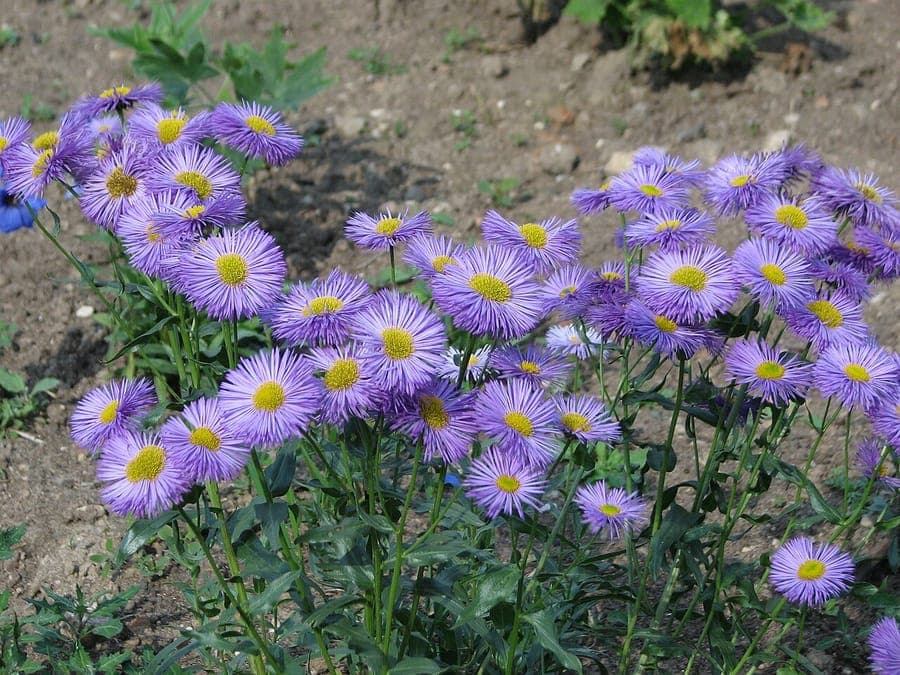
Kor!An (Андрей Корзун) / CC BY-SA 3.0, via Wikimedia Commons
Aspen Daisy: complete guide
Erigeron speciosus
¿Quieres ver Aspen Daisy: complete guide en tu jardín?
1 minuto, sin tarjeta de crédito
Overview
Aspen daisy (Erigeron speciosus), also called showy fleabane, is a cheerful perennial from the Asteraceae family. Native to western North America, this charming plant produces abundant purple-pink or lilac flowers with golden centers from June through October. It's a reliable performer that attracts pollinators and works beautifully in mixed borders, cottage gardens, and cutting gardens. The plant is easy to grow and requires minimal maintenance once established.
Appearance and Bloom
Aspen daisy reaches 50-70 cm in height with upright, sturdy stems clad in narrow, linear foliage. The dark green, lance-shaped leaves provide attractive greenery throughout the growing season. From June onwards, the plant produces hundreds of delicate, daisy-like flowers in shades of purple-pink to lilac with prominent golden centers. Continuous flowering extends through October, especially if spent flowers are regularly removed. The flowers are excellent for cutting and last well in water.
Ideal Location
Aspen daisy thrives in full sun locations receiving at least 6-8 hours of direct sunlight daily. Excellent air circulation helps prevent fungal problems. While the plant tolerates partial shade, flowering will be significantly reduced in shade. Avoid densely shaded areas where growth becomes weak and spindly. A sunny spot with good air movement produces the most prolific flowering displays.
Soil Requirements
Aspen daisy is not demanding about soil conditions. Well-drained soil is preferred, though even heavier soils are tolerated as long as they don't remain waterlogged. Neutral to slightly acidic soil is ideal. The plant thrives in lean, poor soils without requiring rich feeding. Add well-decomposed compost when planting if soil is very poor. Good drainage is critical - standing water causes root rot and plant decline. Amend heavy clay with sand or organic matter.
Watering
Aspen daisy has moderate water requirements. Water during dry periods, especially in hot summers. Allow soil to dry somewhat between waterings. Container-grown plants need more frequent watering than those in the ground. Reduce watering in winter when the plant is dormant. A thin mulch layer around the base helps retain soil moisture and maintains consistent conditions. Overwatering is more harmful than occasional drying out.
Diseño gratis
¿Quieres ver Aspen Daisy: complete guide en tu jardín? Crea un diseño gratis ahora.
Pruning
Regularly deadhead spent flowers to encourage continuous blooming throughout the season. This can be done by hand or with pruning shears. After the first flush of flowers, the plant can be lightly cut back to promote branching and fuller growth. In spring, remove any dead stems from the previous year. Heavy pruning is unnecessary as the plant grows in a naturally compact form. Remove damaged or diseased stems promptly.
Maintenance Calendar
March-April: Spring cleanup and division if needed. May: Growth begins, prepare supports if necessary. June-September: Peak blooming period, deadhead regularly. October: Final flowers, prepare for dormancy. November-February: Dormant period, minimal care. Each spring: Check soil conditions and refresh if needed. Every 3-4 years: Divide clumps to maintain vigor and prevent overcrowding.
Winter Hardiness
Aspen daisy is fully hardy to USDA zone 4, tolerating temperatures down to -30 degrees Celsius. It's a true perennial that regrows from its crown each spring. In very wet winters, mulching provides extra protection, especially in heavy clay soils. When established in the garden, the plant needs no special winter care in most climates. Snow cover provides natural protection.
Companion Plants
Aspen daisy pairs beautifully with other summer bloomers in mixed borders. Combine with Russian sage, lavender, or catmint for lovely color combinations. It also works well alongside ornamental grasses and foliage plants for textural contrast. In cottage gardens, plant with other daisies, salvia, and yarrow for natural-looking displays. The flowers are excellent for cutting gardens.
Closing
Aspen daisy is an essential perennial for anyone seeking reliable color and pollinator appeal in the garden. With basic care and regular deadheading, it provides months of cheerful blooms. Follow this guide and you'll enjoy years of beautiful flowering. Visit gardenworld.app for more perennial inspiration and garden planning ideas. Enjoy the vibrant purple-pink blooms of aspen daisy - gardenworld.app makes perennial gardening simple and rewarding!
¿Quieres ver Aspen Daisy: complete guide en tu jardín? Crea un diseño gratis ahora.
Sube una foto, elige un estilo y obtén un diseño fotorrealista con lista de plantas en menos de un minuto.
Más de 10.000 jardines diseñados
Sin tarjeta de crédito


Plantas similares
Calendula stellata: complete guide
Calendula stellata
Complete guide to Calendula stellata, the star-flowered marigold from Sicily: location, soil, watering and companion planting tips.
Korean chrysanthemum: complete guide
Chrysanthemum x rubellum
Chrysanthemum x rubellum is a hardy autumn perennial with single pink to copper flowers from August to November. Care and combinations.
Helianthus divaricatus: complete guide
Helianthus divaricatus
Helianthus divaricatus is a North American woodland sunflower with yellow summer blooms, ideal for naturalistic borders and shady edges.