
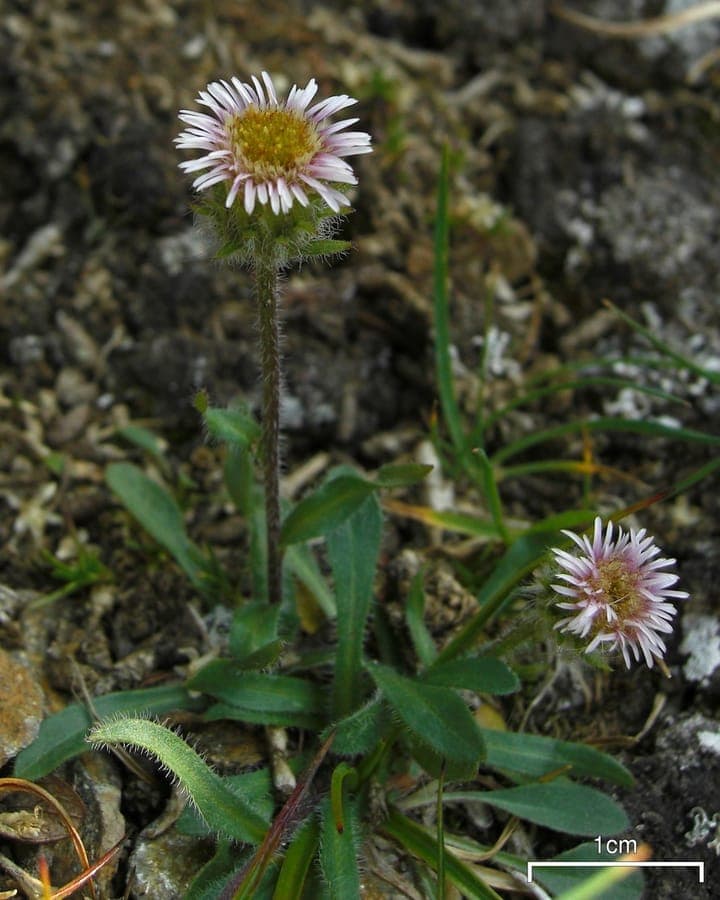
pellaea / CC BY 2.0, via Wikimedia Commons
Erigeron humilis: complete guide
Erigeron humilis
¿Quieres ver Erigeron humilis: complete guide en tu jardín?
1 minuto, sin tarjeta de crédito
Overview
Erigeron humilis, commonly known as Arctic alpine fleabane, is a charming dwarf fleabane from the Asteraceae family. This alpine plant originates from subarctic and west-central areas of North America, including mountain regions from Alaska to Wyoming. The plant is renowned for its hardiness and ability to thrive in extreme mountain conditions.
In gardens, Erigeron humilis offers a unique combination of robustness and visual beauty. This is an excellent choice for gardeners interested in integrating alpine plants without the complexity of many exotic mountain varieties. The plant grows low and compact, making it ideal for borders, alpine troughs, and rock gardens.
Appearance and bloom
Arctic alpine fleabane is a miniature plant that typically reaches only 10-15 centimeters in height. Its growth habit is compact and forms neat mats of fine, grayish-green foliage. The flowerheads are small but numerous, appearing in pink to purple tones with yellow stamens in the center.
The blooming period extends from July to August in mountain areas, making this plant flower late in the growing season. When in bloom, the plant is covered with numerous flowers that sit close together, creating a decorative effect that contrasts with the plant's overall size. The sturdy flowers hold up well and don't wither quickly.
Ideal location
Erigeron humilis grows best in fully sunny locations. The plant needs at least six hours of direct sunlight daily to bloom well. In warm climates, light afternoon shade can be beneficial, especially in regions with intense summer temperatures.
This alpine fleabane is well-suited to rock gardens, scree beds, and alpine borders. Use this plant in groupings for maximum effect, especially when combined with other alpine dwarfs. The plant also grows well in containers and alpine troughs, helping gardeners in areas with less ideal soil conditions.
Soil
The soil requirements for Erigeron humilis are clear: excellent drainage is essential. The plant grows in mountain areas on stony, lean soils and refuses in waterlogged situations. Heavier clays should be amended with gravel, sand, and organic matter to improve drainage conditions.
The pH preference is neutral to slightly acidic. Standard alpine soil mixes with approximately 50% gravel and 50% potting soil work very well in containers. For borders, soil preparation can begin by adding coarse sand and stone grit particles to existing soil.
Watering
Once established, Arctic alpine fleabane is frost-resistant and drought-tolerant. Young plants, however, need regular watering during their first growing season until they develop a good root system. Water carefully and let the soil dry slightly between waterings.
Excessive moisture, especially in winter, poses a greater risk than drought. In regions with regular winter rainfall, dripping or watering may be unnecessary. However, in dry summer periods, extra moisture should be provided. Avoid wet feet in winter, as this can cause root rot.
Diseño gratis
¿Quieres ver Erigeron humilis: complete guide en tu jardín? Crea un diseño gratis ahora.
Pruning
Pruning of Erigeron humilis is minimal. After flowering, the plant can be lightly trimmed to maintain shape. Remove dead or damaged mats in early spring. If the plant begins to sprawl after several years, it can be cut back to about one-third of its height.
Excessive pruning should be avoided, as it can weaken the plant. This fleabane doesn't form strong new shoots like many garden plants. Gentle pinching of straggling stems can help maintain compactness.
Maintenance calendar
Arctic alpine fleabane requires minimal maintenance once well-established. Work a thin layer of alpine soil improver into the area around the plant in spring. During the growing period (May through August), liquid fertilizer can be applied monthly.
After blooming in August, flower residues can be gently removed. For winter protection, snow and ice don't need to be removed: this naturally protects the plant. In very wet winters, a light layer of gravel can be carefully spread around the plant for improved drainage.
Winter hardiness
Erigeron humilis is extremely winter hardy and tolerates temperatures down to -25°C without problems. The plant is native to arctic and subarctic regions, so cold is not an issue. It is winter moisture that poses the greatest threat.
In areas with very wet winters, a layer of gravel around the plant can help prevent water from accumulating around the rosette. Avoid thick layers of mulch that can cause moisture buildup. In very dry, cold winters, freezing of growth points can occur, but the plant usually recovers in spring.
Companion plants
Arctic alpine fleabane combines beautifully with other compact alpine plants. Consider complementary plants such as:
- Saxifraga species (saxifrage)
- Sempervivum (houseleek)
- Gentiana acaulis (stemless gentian)
- Pulsatilla vulgaris (pasque flower)
- Dianthus alpinus (alpine pink)
The small pink flowers of the fleabane create attractive contrasts with yellow alpine primroses and blue forget-me-nots. In containers, this plant pairs well with alpine sedums.
Conclusion
Erigeron humilis is an excellent choice for gardeners interested in alpine flora. With minimal care and maximum cold hardiness, this dwarf fleabane provides years of low, clustered flowering. Whether you're building an alpine garden or simply seeking robust, compact plants - this fleabane deserves a spot in your garden.
Order your Erigeron humilis from quality nurseries for the best seeds or young plants. Discover more alpine plants on gardenworld.app and work with our other alpine flower guides to create a fascinating alpine flora in your garden. On gardenworld.app you'll also find inspiration for alpine borders and rock garden designs.
¿Quieres ver Erigeron humilis: complete guide en tu jardín? Crea un diseño gratis ahora.
Sube una foto, elige un estilo y obtén un diseño fotorrealista con lista de plantas en menos de un minuto.
Más de 10.000 jardines diseñados
Sin tarjeta de crédito


Plantas similares
Calendula stellata: complete guide
Calendula stellata
Complete guide to Calendula stellata, the star-flowered marigold from Sicily: location, soil, watering and companion planting tips.
Korean chrysanthemum: complete guide
Chrysanthemum x rubellum
Chrysanthemum x rubellum is a hardy autumn perennial with single pink to copper flowers from August to November. Care and combinations.
Helianthus divaricatus: complete guide
Helianthus divaricatus
Helianthus divaricatus is a North American woodland sunflower with yellow summer blooms, ideal for naturalistic borders and shady edges.