
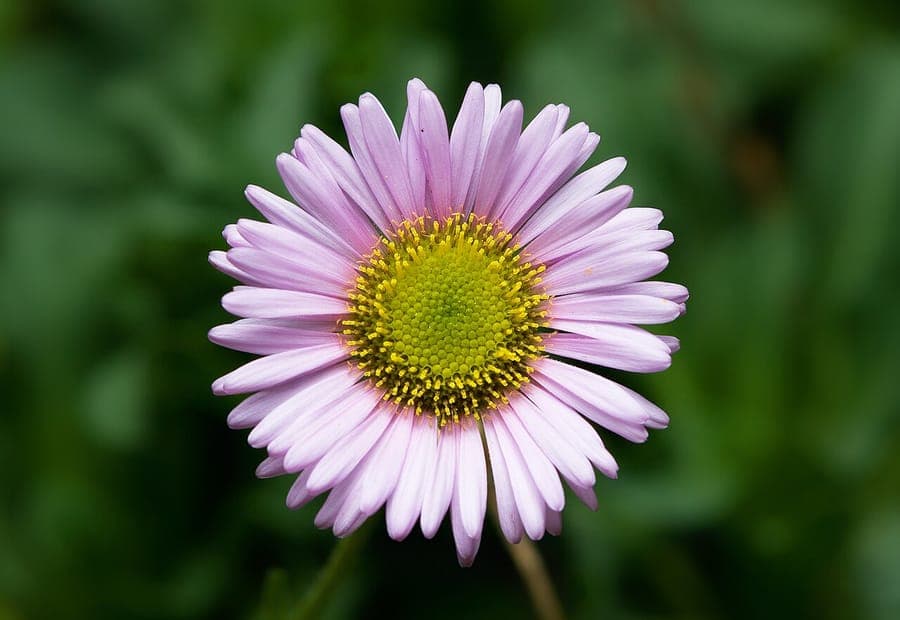
JJ Harrison (https://www.jjharrison.com.au/) / CC BY-SA 3.0, via Wikimedia Commons
Seaside daisy: complete guide
Erigeron glaucus
¿Quieres ver Seaside daisy: complete guide en tu jardín?
1 minuto, sin tarjeta de crédito
Overview
Erigeron glaucus, commonly known as seaside daisy or beach aster, is a charming, low-growing shrub native to the coasts of Oregon and California. This plant belongs to the Asteraceae family and is highly popular in coastal gardens because of its tolerance for salt spray and sea wind. The plant flowers over extended periods with attractive pink to purple blooms.
Seaside daisy is an excellent choice for coastal gardens, rock gardens, and borders where a low-growing, free-flowering plant is needed. The plant can also be grown in containers and makes a beautiful addition to balconies and terraces.
Appearance and bloom
Seaside daisy is a compact, low-growing shrub typically reaching no more than 30 to 40 centimeters high. The plant exhibits blue-gray foliage densely arranged, creating a matte, grayish appearance. Leaves are lightly covered with fine hairs, giving the plant a silky quality.
Flowering of seaside daisy is spectacular. From spring through late fall, numerous small flowers appear with pink to purple ray florets and yellow disk centers. Flowers measure approximately 2 to 3 centimeters across. The plant remains in flower for extended periods, often blooming until November in mild climates.
Ideal location
Seaside daisy thrives in locations with abundant direct sunlight. The plant requires minimum six hours of full sun daily for optimal flowering. In very warm climates, afternoon shade may prove beneficial, but generally, the plant performs best in fully sunny locations.
The plant is particularly suited to coastal locations where other plants struggle. It exhibits remarkable wind and salt tolerance. In urban environments, front-row gardens, and other challenging locations, the plant still grows, though with fewer blooms.
Soil
Seaside daisy demonstrates considerable tolerance for diverse soil types and succeeds even in poor soils. The plant prefers well-draining soil and cannot tolerate waterlogging. Light sandy to loamy soil is ideal, with pH between 6.0 and 7.5.
The plant requires minimal feeding and actually performs better in poor soils. When planting, only slight sand or grit additions to soil improve drainage sufficiently.
Diseño gratis
¿Quieres ver Seaside daisy: complete guide en tu jardín? Crea un diseño gratis ahora.
Watering
Seaside daisy is drought-tolerant and requires minimal water once established. Young plants need regular watering during their first year after planting. Allow soil to dry between watering to prevent waterlogging.
Once established, the plant tolerates extended dry periods. During very dry conditions, however, the plant may benefit from supplemental watering. Drip irrigation suits extended dry periods well.
Pruning
Seaside daisy requires minimal pruning attention. Remove faded flowers regularly to encourage additional blooms. After flowering, the plant can be lightly pruned to maintain form and prevent excessive size.
In spring, the plant can be cut back after winter, especially if frost-damaged. This will encourage renewed growth.
Maintenance calendar
March-April: Start growing season. Plant from seeds or divisions if desired.
May-June: Provide regular watering. Plant begins flowering.
July-August: Continue watering during dry periods. Remove faded flowers.
September-October: Perform light pruning. Plant continues flowering.
November-February: Winter period. Minimize watering. Light pruning can be done.
Winter hardiness
Seaside daisy is reasonably winter hardy and can tolerate temperatures to approximately minus 10 degrees Celsius. In colder climates, however, the plant must be protected or grown indoors.
In temperate climates, the plant can overwinter outdoors if protected from severe frost. In very cold regions, it is preferable to grow the plant in a container for winter indoor protection.
Companion plants
Seaside daisy grows well alongside other low-growing, drought-tolerant plants. Excellent companions include other beach flowers, salvia, lavender, and other Mediterranean plants. The plant also succeeds excellently in rock gardens and between stones.
In coastal gardens, the plant can grow with other salt and wind-tolerant species for maximum effect. The plant is also highly attractive to wildlife, drawing small birds and pollinators.
Conclusion
Erigeron glaucus, the seaside daisy, is an attractive, low-growing shrub perfect for coastal gardens. With well-draining soil, regular water for young plants, and abundant sunlight, you will enjoy many years of abundant flowering.
Whether you are designing a coastal garden or simply seeking a reliable, free-flowering plant, seaside daisy is an excellent choice. Discover gardenworld.app for additional tips on growing coastal-friendly plants and inspiration for designing your coastal garden.
¿Quieres ver Seaside daisy: complete guide en tu jardín? Crea un diseño gratis ahora.
Sube una foto, elige un estilo y obtén un diseño fotorrealista con lista de plantas en menos de un minuto.
Más de 10.000 jardines diseñados
Sin tarjeta de crédito


Plantas similares
Calendula stellata: complete guide
Calendula stellata
Complete guide to Calendula stellata, the star-flowered marigold from Sicily: location, soil, watering and companion planting tips.
Korean chrysanthemum: complete guide
Chrysanthemum x rubellum
Chrysanthemum x rubellum is a hardy autumn perennial with single pink to copper flowers from August to November. Care and combinations.
Helianthus divaricatus: complete guide
Helianthus divaricatus
Helianthus divaricatus is a North American woodland sunflower with yellow summer blooms, ideal for naturalistic borders and shady edges.