
Wikimedia Commons / CC BY-SA 3.0, via Wikimedia Commons
Alpine barrenwort: complete guide
Epimedium alpinum
¿Quieres ver Alpine barrenwort: complete guide en tu jardín?
1 minuto, sin tarjeta de crédito
Overview
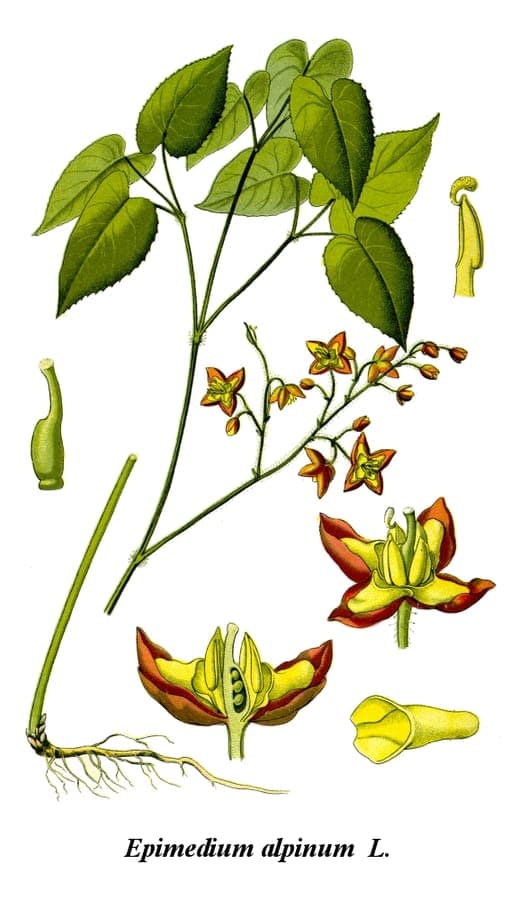
Alpine barrenwort (Epimedium alpinum) is a delicate, shade-loving perennial from European Alpine regions (Austria to Albania). This charming groundcover reaches only 20-30 cm tall and produces in April-May intricate flowers with spurs in purple-red. The plant earns its name from the characteristic curved spurs and the elegant movement of its flowers, resembling fairies from woodland tales.
This is the perfect plant for shaded gardens beneath trees and woodland-floor conditions. Alpine barrenwort is not merely ornamental - it governs the forest floor where it grows, provides early nectar for insects, and creates a natural, wild appearance. Through gardenworld.app, design a woodland garden where shade plants like epimedium alpinum thrive alongside other European woodland flora.
Appearance & Bloom
Leaves are small, finely-toothed heart-shaped leaflets with reddish tints in spring (especially in new growth), turning green and re-reddening in autumn. Foliage is semi-evergreen, providing winter interest. Flowers are distinctly characteristic: small, spurred flowers in purple-red, approximately 1.5-2 cm long, with elegant downward-pointing spurs.
The inflorescence is a delicate raceme with many flowers clustered densely. The plant spreads slowly via rhizomes, naturally colonizing forest floors.
Ideal Location
Alpine barrenwort thrives in partial to full shade, especially beneath deciduous trees. It tolerates deep shade but blooms optimally in filtered light. The plant feels at home beneath oaks, beeches, and conifers, becoming part of a natural woodland ecosystem.
Diseño gratis
¿Quieres ver Alpine barrenwort: complete guide en tu jardín? Crea un diseño gratis ahora.
Soil & Nutrition
This species loves humus-rich, nutrient-rich woodland soil. Ideal are acidic to neutral soils (pH 5.5-7.0) with abundant organic matter. Add compost or leafmould at planting. The plant benefits from annual mulching with leaf litter.
Watering & Moisture Requirements
Moderately moist soil is preferred - neither too dry nor waterlogged. Alpine barrenwort prefers consistently moist soil without stagnation. During dry periods, provide regular irrigation, especially after planting.
Pruning & Maintenance
Minimal care needed. Old foliage can be removed in March to expose new growth - this also improves flower visibility. The plant spreads slowly, naturally suppressing weeds in the woodland floor.
Maintenance Calendar
- March: Remove old foliage
- April-May: Flowering and new growth
- June-July: New leaf development
- August-October: Leaf color change; preparation for dormancy
- November-February: Winter rest; semi-evergreen foliage provides interest
Winter Hardiness
Epimedium alpinum is extremely hardy to USDA zone 4 (-30°C), adapted to Alpine mountain regions.
Companion Plants
Alpine barrenwort pairs beautifully with:
- Lungwort (Pulmonaria) for blue flowers
- Christmas rose (Helleborus niger) for white early blooms
- Trillium (Trillium) for elegant leaf architecture
- Waldsteinia (Waldsteinia ternata) as complementary groundcover
Conclusion
Alpine barrenwort is an understated, often overlooked plant that transforms shaded corners. This European woodland native brings wild beauty and ecological value to any wooded section. With gardenworld.app, create shade gardens where subtle Alpine inhabitants like epimedium alpinum flourish.
¿Quieres ver Alpine barrenwort: complete guide en tu jardín? Crea un diseño gratis ahora.
Sube una foto, elige un estilo y obtén un diseño fotorrealista con lista de plantas en menos de un minuto.
Más de 10.000 jardines diseñados
Sin tarjeta de crédito


Plantas similares
Barrenwort: complete guide for shade plants
Epimedium grandiflorum C.Morren
Discover Barrenwort, a fascinating shade plant with elegant foliage and beautiful flowers. Perfect groundcover for moist shade.
Christmas-rose: complete guide
Helleborus niger
The Christmas-rose (Helleborus niger) is an elegant winter-flowering perennial blooming from December to April. Perfect for shady borders and woodland gardens.