
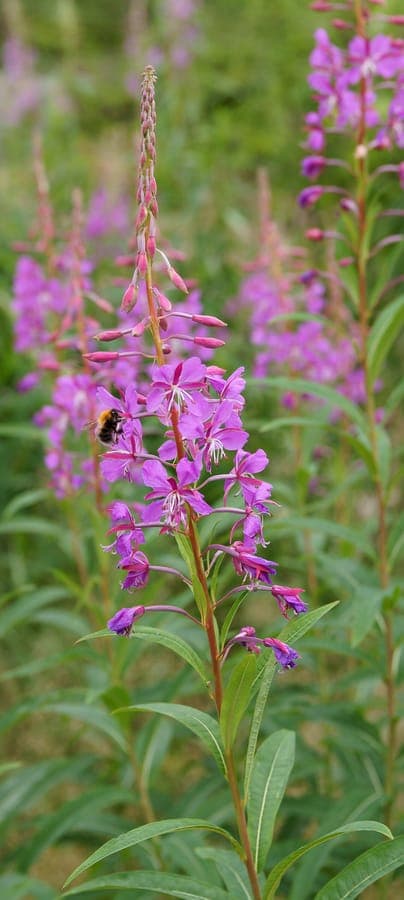
kallerna / CC BY-SA 3.0, via Wikimedia Commons
Epilobium angustifolium: complete guide
Epilobium angustifolium
¿Quieres ver Epilobium angustifolium: complete guide en tu jardín?
1 minuto, sin tarjeta de crédito
Overview
Epilobium angustifolium, commonly known as Rosebay Willowherb or Fireweed, is a spectacular perennial from the evening primrose family. This vigorous flowering plant delivers an extended show of pink to purple flowers throughout extended summer periods. Ideal for naturalistic gardens, wildlife gardens, and meadows where wild plant abundance is celebrated.
Appearance & bloom
Epilobium angustifolium reaches heights of 1-2 meters in rich soil. The plant features narrow, lance-shaped leaves on red to purple stems. Bright pink to purple flowers with four petals are arranged in elongated spikes that bloom for months. Autumn displays spectacular red to orange foliage coloration before frost.
Ideal location
This plant thrives in full sun to partial shade. Provide at least 4-5 hours of direct sunlight daily. Perfect for naturalistic gardens, woodland edges, and open meadow settings. Prefers slightly moister locations. Warning: can self-seed aggressively in ideal conditions.
Soil
Epilobium angustifolium adapts to diverse soil types, from poor sandy to rich cultivated soils. Good drainage is important. The plant is not fussy about fertility - excellent for difficult sites and restoration gardens where establishment is challenging.
Watering
Water regularly during establishment. Once established, extremely drought-tolerant and requires virtually no feeding. Water only during severe droughts. Self-sufficient in most conditions with normal rainfall.
Diseño gratis
¿Quieres ver Epilobium angustifolium: complete guide en tu jardín? Crea un diseño gratis ahora.
Pruning
Minimal pruning required except to prevent seed dispersal. Deadhead flower spikes before seeds mature if aggressive self-seeding concerns you. The plant can self-seed prolifically - remove unwanted seedlings or use underground barriers to control spread in gardens.
Maintenance calendar
Spring: Growth begins April. Minimal feeding necessary - plant thrives without inputs. Summer: Peak bloom May-September. Major pollinator attraction - bees, butterflies, and beneficial insects congregate. Autumn: Dramatic red foliage display October-November. Winter: Fully frost-hardy - survives severe cold.
Winter hardiness
Epilobium angustifolium is hardy to -20C and excels in cold climates. Fully winter-hardy throughout Northern Europe. Plant vigor actually increases following severe winters.
Companion plants
Pair with other wild plant associates like Sambucus, Salix, and native grasses for authentic meadow composition. Avoid dense cultivated plantings - Epilobium can become dominant. Works perfectly with woodland edge ecosystems and wildlife corridors.
Closing
Epilobium angustifolium is a spectacular wild plant perfect for naturalistic and ecological gardens seeking authentic native plant associations. Dual-season beauty: pink summer blooms plus red autumn foliage. Warning: can self-seed aggressively - manage seed dispersal if controlling spread matters. Available through native plant nurseries. Visit gardenworld.app/en for additional native plant guidance and gardenworld.app/en/garden-design for ecological design inspiration.
¿Quieres ver Epilobium angustifolium: complete guide en tu jardín? Crea un diseño gratis ahora.
Sube una foto, elige un estilo y obtén un diseño fotorrealista con lista de plantas en menos de un minuto.
Más de 10.000 jardines diseñados
Sin tarjeta de crédito


Plantas similares
Shortfruit evening primrose: complete guide
Oenothera brachycarpa
Everything about Oenothera brachycarpa - the shortfruit evening primrose from the American Southwest. Growing tips, placement and care for your garden.
Sundrops (Oenothera tetragona): complete guide
Oenothera tetragona
Everything about Oenothera tetragona - the cheerful daytime-blooming sundrops perennial. Growing tips, placement, pruning and care for a long summer display.
Seabeach evening primrose: complete guide
Oenothera humifusa
Full guide to Oenothera humifusa, the seabeach evening primrose native to the US Atlantic coast. Yellow blooms, silvery foliage, drought-tolerant.