
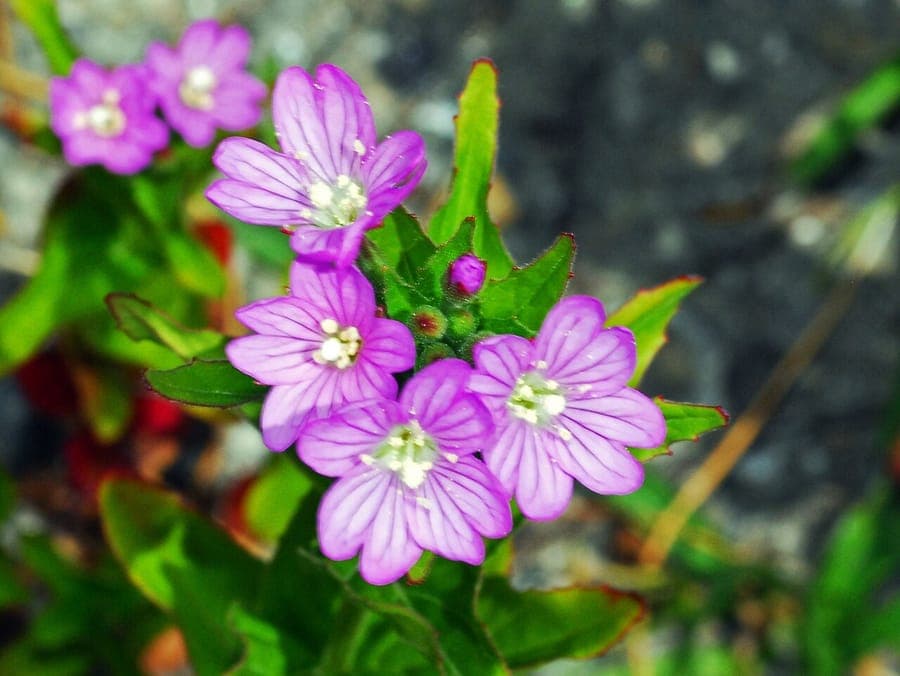
Hectonichus / CC BY-SA 4.0, via Wikimedia Commons
Epilobium alpestre: complete guide
Epilobium alpestre
¿Quieres ver Epilobium alpestre: complete guide en tu jardín?
1 minuto, sin tarjeta de crédito
Overview
Epilobium alpestre, commonly known as Alpine Willowherb or Whorled-leaved Willowherb, is an elegant alpine plant from the evening primrose family (Onagraceae). This diminutive mountain resident offers delicate purple flowers throughout summer months. Ideal for rock gardens, alpine troughs, and high-altitude landscape designs.
Appearance & bloom
Epilobium alpestre reaches modest heights of 15-40 centimeters. The plant features small, lance-shaped leaves arranged in distinctive whorls (verticils) around the stems - characteristic of the species. Purple to pink flowers with four petals appear from July through August, providing reliable summer color in alpine settings.
Ideal location
This plant thrives in alpine conditions with full sun to light shade. Provide at least 5-6 hours of direct sunlight daily. Perfect for rock gardens, alpine troughs, elevated raised beds, and north-facing mountain-slope gardens with well-aerated soil.
Soil
A very well-draining, somewhat lean alpine soil is ideal. Add gravel, sharp sand, and small stones to potting mix. Avoid rich, nutrient-laden soils that promote lush growth and reduce hardiness. Target pH 6.5-7.0 for optimal health.
Watering
Epilobium alpestre appreciates consistent moisture during growth. Water when the top 2 centimeters feel dry. During winter, keep very dry. Excellent drainage capability is essential for survival in wet climates.
Diseño gratis
¿Quieres ver Epilobium alpestre: complete guide en tu jardín? Crea un diseño gratis ahora.
Pruning
Minimal pruning required. After flowering, gently remove seed heads to prevent prolific self-seeding. Allow natural growth patterns to develop for authentic alpine appearance.
Maintenance calendar
Spring: New growth appears May-June. No feeding necessary - excessive nutrients will weaken the plant. Summer: Peak bloom July-August. Minimal feeding if any. Autumn: Growth slows September onward. Winter: Keep completely dry. Full dormancy period.
Winter hardiness
Epilobium alpestre is hardy to -10C and thrives in cold alpine environments. Fully winter-hardy throughout Northern Europe. Snow cover provides additional winter protection and moisture conservation.
Companion plants
Pair with other alpine specialists like Saxifraga, Sempervivum, and Lewisia for striking rock garden compositions. Ornamental grasses like Festuca provide textural contrast and movement.
Closing
Epilobium alpestre is a gem for alpine gardeners seeking delicate purple blooms in authentic mountain conditions. Prefers excellent drainage and full sun exposure. Available through specialized alpine plant nurseries. Visit gardenworld.app/en for additional alpine plant guidance and gardenworld.app/en/garden-design for high-altitude design inspiration.
¿Quieres ver Epilobium alpestre: complete guide en tu jardín? Crea un diseño gratis ahora.
Sube una foto, elige un estilo y obtén un diseño fotorrealista con lista de plantas en menos de un minuto.
Más de 10.000 jardines diseñados
Sin tarjeta de crédito


Plantas similares
Shortfruit evening primrose: complete guide
Oenothera brachycarpa
Everything about Oenothera brachycarpa - the shortfruit evening primrose from the American Southwest. Growing tips, placement and care for your garden.
Sundrops (Oenothera tetragona): complete guide
Oenothera tetragona
Everything about Oenothera tetragona - the cheerful daytime-blooming sundrops perennial. Growing tips, placement, pruning and care for a long summer display.
Seabeach evening primrose: complete guide
Oenothera humifusa
Full guide to Oenothera humifusa, the seabeach evening primrose native to the US Atlantic coast. Yellow blooms, silvery foliage, drought-tolerant.