
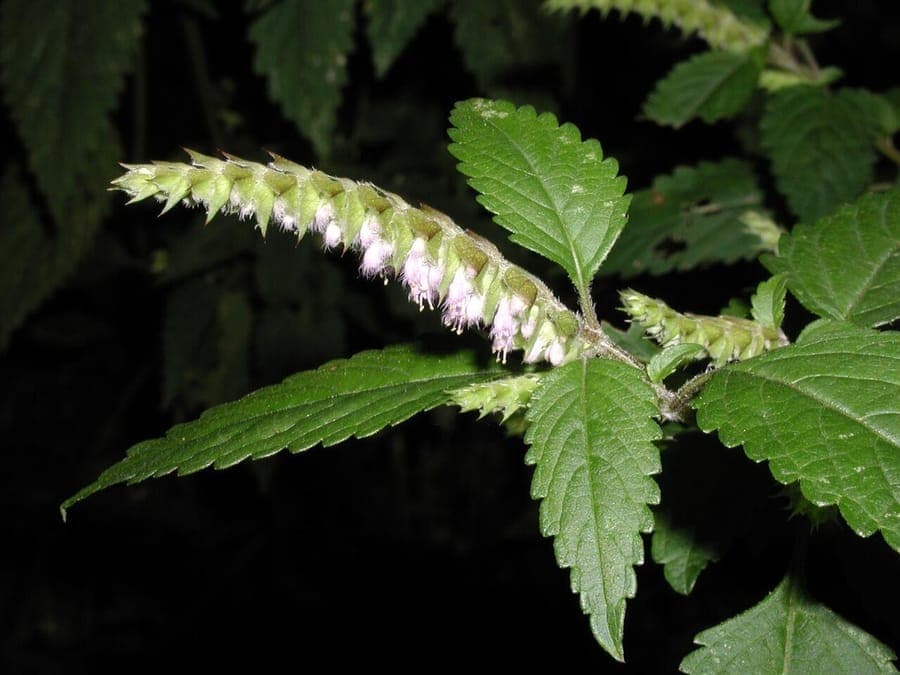
Leslie J. Mehrhoff, University of Connecticut, Bugwood.org / CC BY 3.0, via Wikimedia Commons
Elsholtzia ciliata: complete guide
Elsholtzia ciliata
¿Quieres ver Elsholtzia ciliata: complete guide en tu jardín?
1 minuto, sin tarjeta de crédito
Overview
Elsholtzia ciliata, commonly known as crested late-summer-mint or fragrant elsholtzia, is a fascinating Asian herb plant with a strong characteristic camphor and mint-like fragrance. This plant grows in temperate Asia from the Himalayan region to Southeast Asia and is traditionally used in herbal medicine and perfumery. It is an interesting addition to herb gardens.
Appearance & Bloom
This plant reaches 30-80 centimeters tall with upright, slender stems. The leaves are small to medium-sized, lanceolate and have a strongly fragrant surface when touched. Flowers appear in August to October in light pink to purple tones, forming dense flower spikes. The entire plant emits a strong camphor smell.
Ideal Location
Elsholtzia ciliata grows best in full sun to light shade. A sunny location produces more oil in leaves and stronger fragrance. Plant in sheltered locations with protection from cold autumn winds. The plant appreciates gentle conditions with some shelter.
Soil
This plant grows best in well-draining, moderately fertile soil with pH 6.0-7.5. Lean soils are also tolerated. It is important that soil drains well to prevent waterlogging. Light fertilizing in spring helps growth, but excess should be avoided.
Watering
In the first growing season water regularly to promote good root development. Once established, water moderately. This plant tolerates somewhat drier conditions than many other herbs. Ensure soil dries somewhat between waterings to avoid waterlogging.
Diseño gratis
¿Quieres ver Elsholtzia ciliata: complete guide en tu jardín? Crea un diseño gratis ahora.
Pruning
Pruning helps form a more compact plant. Pinch back tips in June-July to promote branching. Remove flower spikes after blooming for neater appearance. For medicinal harvest, harvest flowering stems in August-September when fragrance is strongest.
Maintenance Calendar
April-May: Planting season, regular watering. June-July: Pinching for compact form. August-September: Flower formation, peak harvest time. October-November: Final bloom, winter preparation. December-March: Winter dormancy, minimal maintenance.
Winter Hardiness
Elsholtzia ciliata is semi-hardy to -5 to -10 degrees Celsius. In the Netherlands it can be treated as annual in northern regions or tender perennial in southern areas. In mild winters it may survive outdoors with protection; in severe winters it will likely die. Seed or cutting preservation is recommended.
Companion Plants
Combine with other Asian herbs like Perilla and Shiso. Plant together with lavender and other fragrant herbs. Works well in herb gardens with other camphor-fragrant plants. Combines well with Mentha species for fragrance.
Closing
Elsholtzia ciliata offers a unique combination of strong fragrance, beauty and medicinal value. It is ideal for experimental gardeners and herb collectors wanting to try exotic Asian plants. Though semi-hardy, it is worth attempting in sheltered locations.
Learn more on gardenworld.app/en about Asian herbs and gardenworld.app/en/plant-blog for more herbs.
¿Quieres ver Elsholtzia ciliata: complete guide en tu jardín? Crea un diseño gratis ahora.
Sube una foto, elige un estilo y obtén un diseño fotorrealista con lista de plantas en menos de un minuto.
Más de 10.000 jardines diseñados
Sin tarjeta de crédito


Plantas similares
Apple mint (Mentha x villosa): complete guide
Mentha x villosa
Meet apple mint (Mentha x villosa): a fruity-scented kitchen herb with woolly leaves, perfect for tea and mojitos.
Salvia peyronii: complete guide
Salvia peyronii
Discover Salvia peyronii, a rare Lebanese mountain sage. Growing tips, hardiness, and companion planting for a Mediterranean gravel garden.
Bigleaf mint (Mentha x rotundifolia): complete guide
Mentha x rotundifolia
Discover bigleaf mint: cultivation, care tips, and garden uses. Learn how to grow this aromatic herb with soft, hairy leaves.