
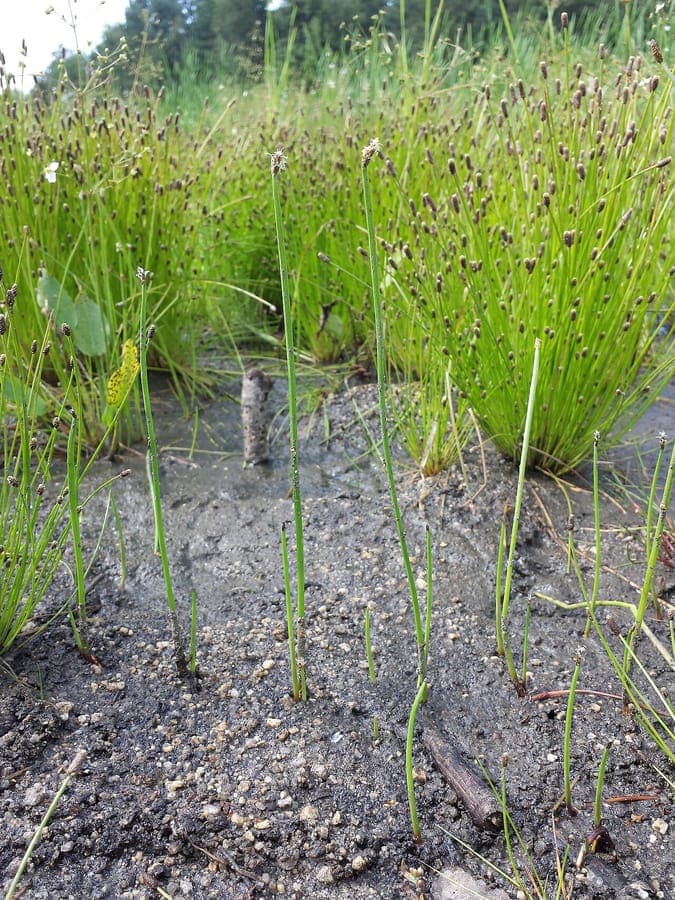
Stefan.lefnaer / CC BY-SA 4.0, via Wikimedia Commons
Soft-stem spikerush: complete guide
Eleocharis mamillata
¿Quieres ver Soft-stem spikerush: complete guide en tu jardín?
1 minuto, sin tarjeta de crédito
Overview
Soft-stem spikerush (Eleocharis mamillata) is a valuable marsh plant from the sedge family. This plant grows naturally from Europe to China and North America. It is exceptionally suitable for wet gardens.
Soft-stem spikerush is an extremely winter-hardy plant. The plant is not only practically useful for wet soils but also visually attractive.
This is a perfect choice for gardeners wanting to create a natural front yard. The plant also helps stabilize soils.
Appearance and bloom
Soft-stem spikerush has very fine, soft stems that grow upright. The plant forms beautiful green mats or clumps. The stems are characteristically soft and flexible.
The leaves are very fine and have a soft gray-green color. They are almost invisible because the stems dominate. The plant grows to approximately 40-50 cm height.
The flowers are very small and inconspicuous. They appear in mid to late growing season.
The name 'mamillata' refers to small nipple-shaped projections.
Ideal location
Soft-stem spikerush grows best in wet to very wet soils. It is a plant that really loves permanently wet conditions. The plant can grow in water up to approximately 10-20 cm deep.
Sunlight is important. At least four hours of direct sunlight per day is ideal. The plant can also grow in partial shade.
This plant is excellent for wildlife gardens and water features.
Soil
Soft-stem spikerush grows best in wet, clayey soils with plenty of organic material. The soil can be very wet. Heavy, fertile soils are ideal.
Add plenty of organic material when planting. Peat and compost help. A neutral to slightly acidic pH level is ideal.
Diseño gratis
¿Quieres ver Soft-stem spikerush: complete guide en tu jardín? Crea un diseño gratis ahora.
Watering
Soft-stem spikerush requires constantly wet conditions. The plant must always stand in wet ground or water.
If planted in pots, ensure constantly moist soil. The water must never dry out completely.
In natural water conditions, the plant grows without extra effort.
Pruning
Soft-stem spikerush virtually does not need pruning. The plant grows naturally into a neat, bush-like form.
Carefully remove brown or dead material in early spring.
The plant can also be thinned out somewhat if it becomes too dense.
Maintenance calendar
Spring: Remove dead or damaged stems. The plant begins to grow with full force.
Summer: Little maintenance needed. Check water levels regularly.
Autumn: The plant continues to grow but somewhat slower.
Winter: The plant remains green year-round.
Winter hardiness
Soft-stem spikerush is extremely winter hardy. The plant grows naturally from Europe to Siberia. The plant can withstand temperatures far below zero degrees.
In temperate regions, this plant is absolutely winter hardy. In very cold winters, above-ground parts may die, but the plant always regrows.
Companion plants
Other marsh plants work well next to soft-stem spikerush. Water plantain, water mint and water buttercup are good neighbors.
Taller reed-like plants can be planted behind soft-stem spikerush.
Closing
Soft-stem spikerush is a very practical choice for wet gardens. With almost no maintenance, this plant grows beautifully. The plant is winter hardy and can remain in the same spot for many years. Find it at garden centers. Visit gardenworld.app for tips on wet garden design. Explore gardenworld.app for water garden inspiration.
¿Quieres ver Soft-stem spikerush: complete guide en tu jardín? Crea un diseño gratis ahora.
Sube una foto, elige un estilo y obtén un diseño fotorrealista con lista de plantas en menos de un minuto.
Más de 10.000 jardines diseñados
Sin tarjeta de crédito


Plantas similares
Flat-stemmed club-rush: complete guide
Bolboschoenus planiculmis
Everything about Bolboschoenus planiculmis: growing conditions, watering, care, and use as a pond margin or wetland plant in garden design.
Great Plains flatsedge: complete guide
Cyperus lupulinus
Everything about Great Plains flatsedge (Cyperus lupulinus): growing conditions, care, garden uses, and ecological value. Tips for pond margins and dry sandy soils.
Golden beak sedge: complete guide
Rhynchospora corymbosa
Everything about golden beak sedge (Rhynchospora corymbosa): a dramatic tropical marginal for pond edges, bog gardens, and wet habitats.