
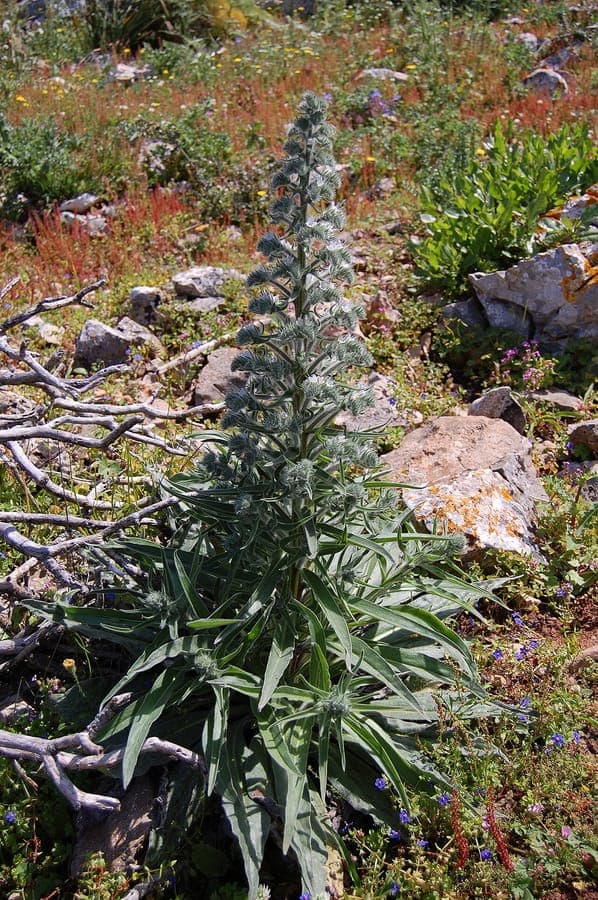
tato grasso / CC BY-SA 3.0, via Wikimedia Commons
Echium italicum: complete guide
Echium italicum
¿Quieres ver Echium italicum: complete guide en tu jardín?
1 minuto, sin tarjeta de crédito
Overview
Echium italicum, commonly known as Italian bugloss or pale bugloss, is a stunning Mediterranean herb celebrated for its vibrant flowers and multifaceted uses. This plant ranges from Southeast Europe to Afghanistan and is a favorite choice for gardens seeking drought tolerance and pollinator attraction. With its striking flower spikes, it brings color year after year.
Appearance & Bloom
This plant reaches 60-120 centimeters tall with dense, stiff stems covered in spiky hairs. The leaves are narrow and dark green, creating beautiful contrast with the flowers. Blooms appear from May to August in shades of pink and blue, sometimes yellow. They grow in long, dense flower spikes that elongate as blooming progresses. Ripe seeds develop in small nutlets that disperse readily.
Ideal Location
Echium italicum prefers full sun and well-draining soil. This is an extremely drought-tolerant plant that requires minimal maintenance once established. Provide at least six hours of direct sunlight daily. It thrives on hillsides, in Mediterranean-style gardens, and quiet corners of the yard. It is excellent for bird gardens due to seed set.
Soil
Echium italicum grows best in lean to moderately fertile soil with a pH between 6.0 and 7.0. Chalky, oxygen-rich soils are ideal. The plant tolerates poor soil better than heavy clay. Ensure good drainage to prevent waterlogging, especially in winter. Adding sand or gravel can help improve drainage in heavy clay.
Watering
While this plant requires moderate water during initial establishment, it becomes extremely drought-tolerant once mature. Water during dry spells in the first year. Once established, water only during prolonged drought. Avoid standing water, as this causes root rot. Regular rainfall is usually sufficient.
Diseño gratis
¿Quieres ver Echium italicum: complete guide en tu jardín? Crea un diseño gratis ahora.
Pruning
Pruning is rarely needed for Echium italicum. Remove dead or damaged stems in spring. If the plant becomes overgrown, carefully trim some stems after flowering. Deadhead spent flowers to preserve bird food and limit self-seeding.
Maintenance Calendar
March: Clean-up of dead material, inspect for damage. June-July: Peak blooming period, monitor watering. September: Allow seed set for birds. October-November: No maintenance required. January-February: Winter protection in severe climates only in northern regions.
Winter Hardiness
Echium italicum is hardy to about -10 degrees Celsius, making it suitable for most Dutch gardens. Snow cover provides protection in northern regions. This plant sometimes dies after seed set in warm climates, which is normal. Winter protection with dry leaf mulch is useful in severe northern winters.
Companion Plants
Combine Echium italicum with other drought-tolerant plants like Lavandula (lavender), Salvia (sage), Coreopsis (tickseed), and Sedum. The blue and pink flowers harmonize with silver-gray foliage of Artemisia. Plant together with other pollinator plants for maximum beneficial insect attraction.
Closing
Echium italicum is a versatile plant for Dutch gardens, especially where drought and full sun prevail. With minimal maintenance, it delivers years of colorful blooms and support for wild pollinators. Perfect for ecologically conscious gardeners wanting to combine beauty with purpose.
Learn more on gardenworld.app/en about Mediterranean plants and gardenworld.app/en/plant-blog for more recommendations.
¿Quieres ver Echium italicum: complete guide en tu jardín? Crea un diseño gratis ahora.
Sube una foto, elige un estilo y obtén un diseño fotorrealista con lista de plantas en menos de un minuto.
Más de 10.000 jardines diseñados
Sin tarjeta de crédito


Plantas similares
Western waterleaf: complete guide
Hydrophyllum occidentale
Full growing guide for western waterleaf (Hydrophyllum occidentale): shade tolerance, soil needs, watering, winter hardiness and naturalistic garden use.
Limestone phacelia (Phacelia affinis): complete guide
Phacelia affinis
Full guide to Phacelia affinis, the limestone phacelia: sowing tips, purple-blue bee flowers, drought tolerance and uses in dry or wildlife gardens.
Pyrenean viper's bugloss: complete guide
Echium asperrimum
Echium asperrimum is a striking biennial from the western Mediterranean with rough bristly stems and vivid blue flowers. A magnet for bees and a bold border plant.