
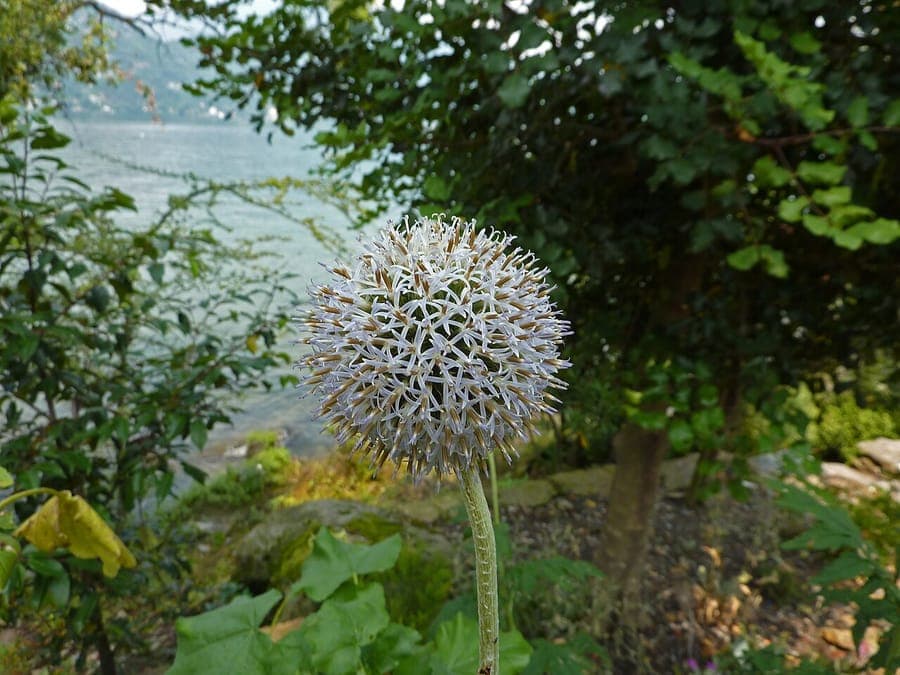
McIntosh Natura / CC BY-SA 3.0, via Wikimedia Commons
Echinops exaltatus: complete guide
Echinops exaltatus
¿Quieres ver Echinops exaltatus: complete guide en tu jardín?
1 minuto, sin tarjeta de crédito
Overview
Echinops exaltatus, commonly known as the tall globe thistle or Russian globe-thistle, is a spectacular perennial native to the Balkan Peninsula and Romania. This impressive thistle with its distinctive blue globe flowers is a true garden showstopper and especially beloved by bees and other pollinators. It's an essential element in modern sustainable gardens.
Appearance & Bloom
The tall globe thistle grows as a rounded, sturdy plant reaching 120 cm tall and 80 cm wide. Leaves are deeply lobed, spiky, and gray-green, about 20 cm long. The true show arrives in July-September: countless globe flowers (4-5 cm diameter) in fresh blue-purple on stiff stems. A mature plant can display 50-100 flower globes simultaneously!
Ideal Location
The globe thistle thrives in full sun (8+ hours daily) in a breezy, open location. The plant dislikes too much shade and becomes leggy in darker corners. Spacing: 60-80 cm apart. Perfect locations: front borders, rock gardens, or as a specimen plant in meadow settings.
Soil
Echinops exaltatus is undemanding about soil. Sandy, well-draining soil with pH 6.5-8 is ideal. Heavy clay requires amendment with sand. Thrives in poor, dry soil - actually performs better there! Fertility: moderate to poor. Excessive feeding promotes leaf growth at the expense of flowers.
Watering
Once established (after first growing season), the globe thistle is extremely drought-tolerant. Water regularly in the first year. Thereafter water only during extreme drought. Excessive water stimulates weak, leafy growth. Containerized plants need more consistent moisture than ground plants.
Diseño gratis
¿Quieres ver Echinops exaltatus: complete guide en tu jardín? Crea un diseño gratis ahora.
Pruning
Minimal pruning required. Remove spent blooms for continued flowering (August-September). In September-October, dead stems can remain for bird food and winter structure until March. Then cut back to 5 cm height. Seedheads are beautiful and provide winter food.
Maintenance Calendar
April-May: Plant out at desired location, firm in well, water regularly initially. June: Growth phase, first weeding. July-August: Peak flowering, minimal watering needed. September: Flowers at peak, begin removing spent flowers. October-November: Cut back dead stems or leave standing. March: Remove winter stems, organic contribution to soil.
Winter Hardiness
Echinops exaltatus is extremely hardy to USDA zone 3 (-40°C). Excellent for all of northern Europe! Minor winter rot risk: in very wet winters the plant can rot. Prevent this by choosing well-draining soil. Mulching unnecessary in temperate zones.
Companion Plants
The tall globe thistle combines beautifully with: Gaura lindheimeri (wandflower), Salvia nemorosa (meadow sage), Panicum virgatum (switchgrass), Achillea millefolium (yarrow), Coreopsis tinctoria (calliopsis), Sedum 'Autumn Joy' (autumn joy sedum), Geranium sanguineum (bloody cranesbill). Together they form a robust, pollinator-friendly meadow planting.
Conclusion
The tall globe thistle is a truly versatile plant that delivers spectacular blooms year after year with minimal maintenance. It's an eco-friendly choice providing nourishment for bees, bumble bees, and butterflies. Discover more sustainable garden ideas on gardenworld.app.
¿Quieres ver Echinops exaltatus: complete guide en tu jardín? Crea un diseño gratis ahora.
Sube una foto, elige un estilo y obtén un diseño fotorrealista con lista de plantas en menos de un minuto.
Más de 10.000 jardines diseñados
Sin tarjeta de crédito


Plantas similares
Echium vulgare: complete guide
Echium vulgare
Viper's bugloss with intense blue flowers. Ideal for wildflower meadows and pollinator gardens. Learn how to grow it on gardenworld.app.
Epilobium ciliatum: complete guide
Epilobium ciliatum
American willowherb with delicate pink flowers. Perfect for wet spots and naturalized areas. Learn how to grow it on gardenworld.app.