
Mason Brock (Masebrock) / Public domain, via Wikimedia Commons
Echinacea tennesseensis: complete guide
Echinacea tennesseensis
¿Quieres ver Echinacea tennesseensis: complete guide en tu jardín?
1 minuto, sin tarjeta de crédito
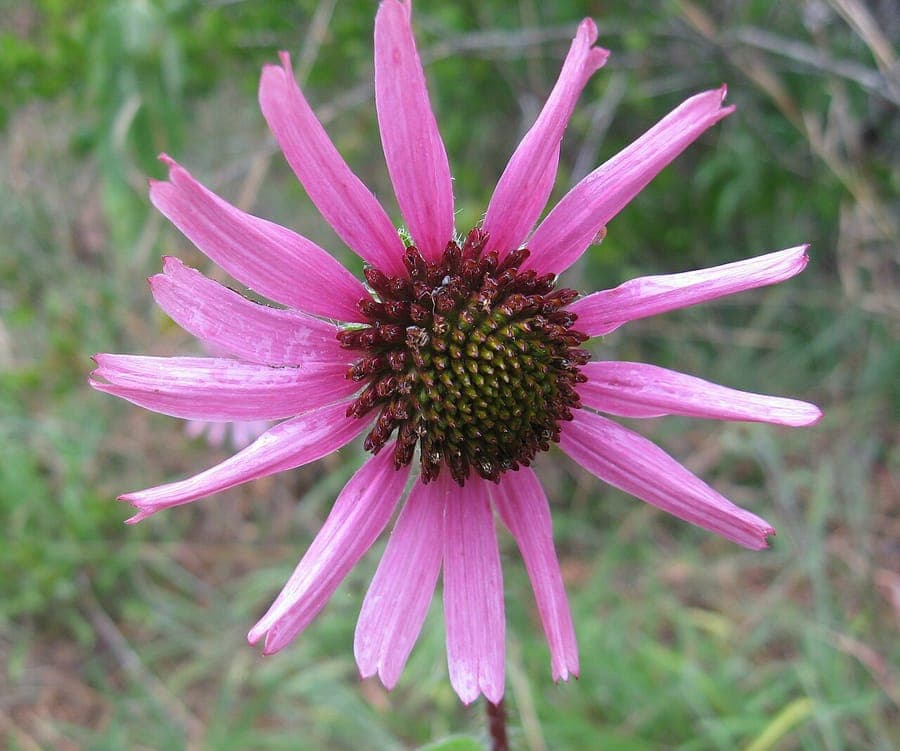
Echinacea tennesseensis, the Tennessee purple-coneflower, is a rare and endangered wildflower native to Tennessee. This very uncommon wild plant is becoming gradually more available through native plant nurseries. This exquisite plant grows low and compact, adorned with striking purple to pink blooms.
Appearance and flowering
Echinacea tennesseensis forms a compact plant only 30-50 centimeters tall, much shorter than related species (such as E. purpurea). The leaves are linear to lanceolate, rough-textured, dark green, and grow directly from the base in a rosette-like formation. The flowers are the stars of this plant: purple to pink with a distinctive yellowish, spiky central disk. Each bloom measures approximately 3-4 centimeters across. Flowering lasts throughout summer (June-October) and attracts bees, butterflies, and other pollinators.
Ideal location
Echinacea tennesseensis demands full sun: minimum 6-8 hours of direct sunlight daily. Softer light is less ideal; the plant becomes lankier with reduced flowering. A warm, sunny garden location with good air circulation is perfect. The plant thrives in USDA zones 5-9 (temperate Europe is zone 8), so this plant survives outdoors in most of Europe.
Soil requirements
Echinacea tennesseensis grows best in well-drained, moderately fertile soil. This plant prefers leaner soil mixes without excessive compost. In heavy clay, growth is poor; add sand for better drainage. Neutral to slightly acidic pH (6-7) is ideal. With heavy clay, create raised beds mixed with sand and gravel.
Watering
Once established, Echinacea tennesseensis is extremely drought-tolerant. During the first year (first growing season), water regularly to establish roots properly. After that, dramatically reduce watering frequency. During dry spells, you may water, but normal rainfall suffices. The plant tolerates drought better than excessive moisture. Overwatering, especially in winter, causes root rot.
Diseño gratis
¿Quieres ver Echinacea tennesseensis: complete guide en tu jardín? Crea un diseño gratis ahora.
Pruning and maintenance
Echinacea tennesseensis requires minimal pruning. Remove spent flowers regularly (deadheading) to encourage more blooms. In late fall, when brown seed heads appear, leave them (they feed birds) or simply remove. In spring (March), remove dead material from the previous season.
Maintenance calendar
January-February: Dormancy period; no care needed. March-April: Remove dead material; no feeding required (plant thrives in lean soil). May-June: Begin deadheading as flowers fade; check for drought stress. July-August: Regular deadheading; water only in extremely dry periods. September-October: Continue deadheading into late fall. November-December: Leave seed heads for birds or remove; plant enters dormancy.
Winter hardiness
Echinacea tennesseensis is perfectly winter-hardy in temperate climates (USDA zones 5-9). This plant tolerates temperatures down to negative 30 degrees Celsius without issue. The plant is a perennial that returns from its root system each year. The underground root system can function for five to ten years without replacement.
Companion plants
Tennessee purple-coneflower combines beautifully with other native wildflowers and hardy perennials: Rudbeckia, Helianthus, Liatris, Salvia, Nepeta, Allium, and ornamental grasses like Sorghastrum. Create a prairie border with groups of 5-7 plants for natural, colorful display.
In summary
Echinacea tennesseensis is an elegant, hardy wildflower perfect for modern, sustainable gardens. By growing this endangered species in your garden, you contribute to the conservation of this unique American plant. Enjoy its long-lasting, purple flowers and the bees and butterflies it attracts.
¿Quieres ver Echinacea tennesseensis: complete guide en tu jardín? Crea un diseño gratis ahora.
Sube una foto, elige un estilo y obtén un diseño fotorrealista con lista de plantas en menos de un minuto.
Más de 10.000 jardines diseñados
Sin tarjeta de crédito


Plantas similares
Calendula stellata: complete guide
Calendula stellata
Complete guide to Calendula stellata, the star-flowered marigold from Sicily: location, soil, watering and companion planting tips.
Korean chrysanthemum: complete guide
Chrysanthemum x rubellum
Chrysanthemum x rubellum is a hardy autumn perennial with single pink to copper flowers from August to November. Care and combinations.
Helianthus divaricatus: complete guide
Helianthus divaricatus
Helianthus divaricatus is a North American woodland sunflower with yellow summer blooms, ideal for naturalistic borders and shady edges.