
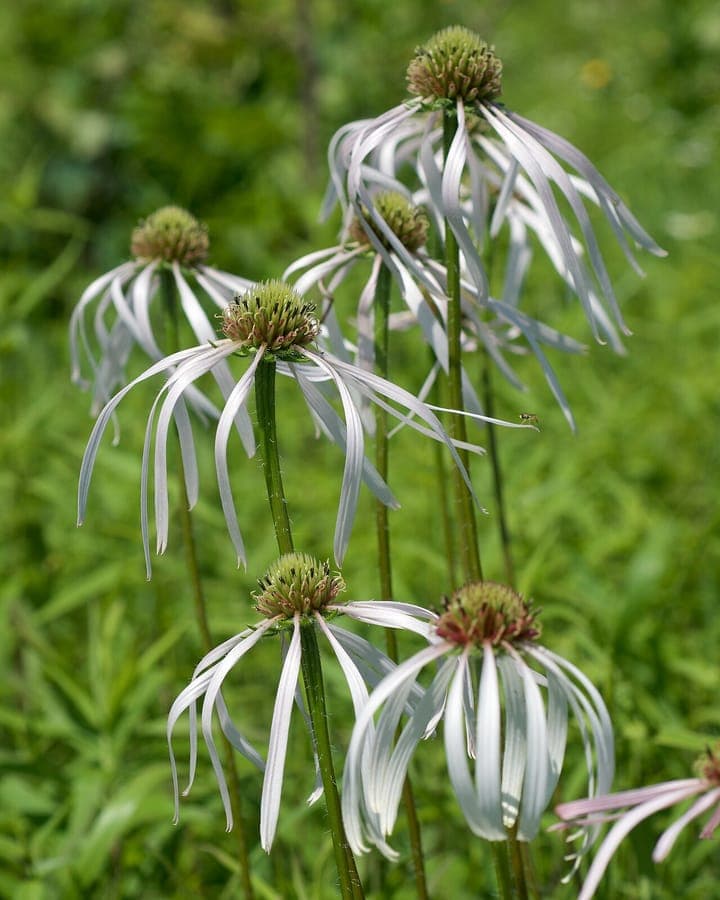
Eric Hunt / CC BY-SA 4.0, via Wikimedia Commons
Pale echinacea: complete guide
Echinacea pallida
¿Quieres ver Pale echinacea: complete guide en tu jardín?
1 minuto, sin tarjeta de crédito
Overview
Pale echinacea (Echinacea pallida) is a frost-hardy, native North American perennial from the Asteraceae family. This stately plant is admired for its elegant, purple flowers with drooping petals and yellow-orange center. Native to the prairies of central and eastern United States, it is a versatile choice for gardeners seeking durability and natural beauty.
Appearance and bloom
Echinacea pallida reaches heights of 60-120 cm with an upright, frost-resistant growth habit. The plant features long, slender stems with rough, linear foliage. Distinctive are the flowers: purple to pink petals that elegantly droop around an orange-yellow, spiny center. This bloom period runs from July through September, providing long-lasting cut flowers. The seed head remains attractive throughout winter, drawing birds and adding garden interest.
Ideal location
Pale echinacea thrives in full sun to partial shade. Minimum six hours of direct sunlight is essential for optimal blooming. Well-drained soil is crucial; this plant exhibits susceptibility to muddy, moisture-driven diseases in poor drainage. Shelter from harsh winds helps, though the plant is reasonably robust.
Soil needs
Echinacea pallida thrives in virtually any well-draining soil. Neutral to slightly acidic soil (pH 6.5-7.2) is preferred, though it is tolerant. The plant is not particular about soil fertility and can even thrive in poor soil. Avoid wet soil, which makes the plant susceptible to disease.
Diseño gratis
¿Quieres ver Pale echinacea: complete guide en tu jardín? Crea un diseño gratis ahora.
Watering
Once established, pale echinacea is highly drought-tolerant. During the first growing season, ensure regular moisture until the plant is firmly rooted. Mature plants require minimal watering. Water only during prolonged dry spells. Ensure soil dries between waterings to prevent root problems.
Pruning
Remove spent flowers for continued bloom throughout the season, or leave them for seed production and bird food. In spring, prune back dead growth. The plant prefers minimal pruning outside these periods.
Maintenance calendar
Spring: Remove winter-dead material; add mulch. Summer: Deadhead flowers; water during droughts. Fall: Allow seeds for bird food. Winter: Leave seed heads standing.
Winter hardiness
Echinacea pallida is frost-hardy to USDA hardiness zone 4 (-30 to -20 degrees Celsius). This makes it suitable for colder climates. In warm zones, it may experience some lifespan shortening, but continues seeding.
Companion plants
Pale echinacea pairs beautifully with other bee-friendly flowers: rudbeckia, helianthus, or aster. It also contrasts nicely with silver-foliaged plants.
Closing note
Pale echinacea offers gardeners a strong, native plant with elegant flowers and extended seasonal interest. With minimal maintenance once established, this plant repays you with season-long color and bird attraction.
¿Quieres ver Pale echinacea: complete guide en tu jardín? Crea un diseño gratis ahora.
Sube una foto, elige un estilo y obtén un diseño fotorrealista con lista de plantas en menos de un minuto.
Más de 10.000 jardines diseñados
Sin tarjeta de crédito


Plantas similares
Calendula stellata: complete guide
Calendula stellata
Complete guide to Calendula stellata, the star-flowered marigold from Sicily: location, soil, watering and companion planting tips.
Korean chrysanthemum: complete guide
Chrysanthemum x rubellum
Chrysanthemum x rubellum is a hardy autumn perennial with single pink to copper flowers from August to November. Care and combinations.
Helianthus divaricatus: complete guide
Helianthus divaricatus
Helianthus divaricatus is a North American woodland sunflower with yellow summer blooms, ideal for naturalistic borders and shady edges.