
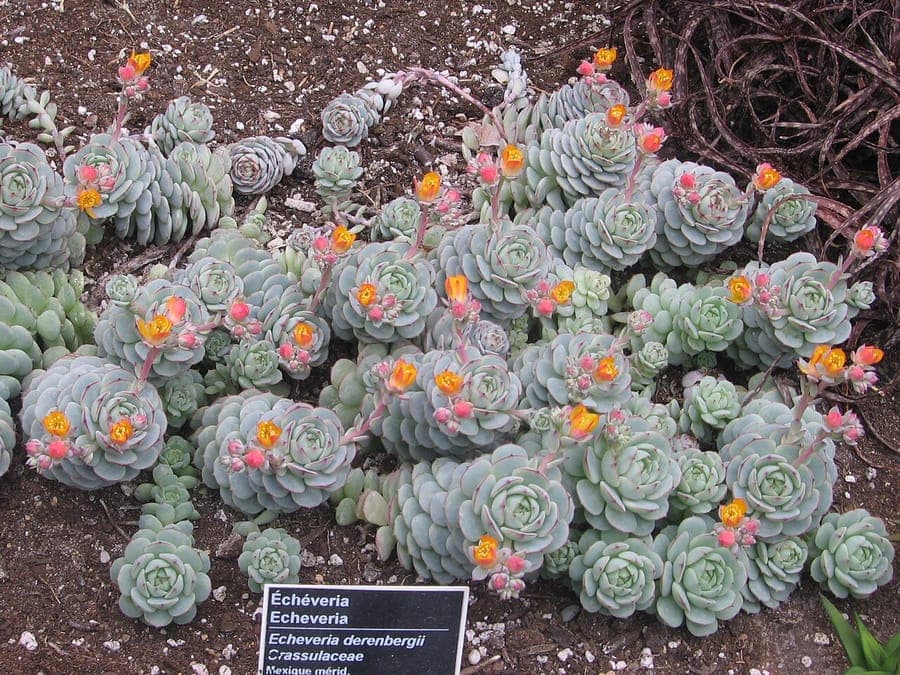
Montréalais / CC BY 3.0, via Wikimedia Commons
Echeveria derenbergii: complete guide
Echeveria derenbergii
¿Quieres ver Echeveria derenbergii: complete guide en tu jardín?
1 minuto, sin tarjeta de crédito
Overview
Echeveria derenbergii, popularly known as painted lady, is an enchanting compact succulent originating from the mountainous regions of Oaxaca, Mexico. This diminutive ornamental plant is considered by many enthusiasts to be one of the most beautiful echeveria species thanks to its vibrant color-rich foliage and elegant form. Growing to only a few centimeters diameter, it forms a perfect, geometric rosette that is equally beautiful on a windowsill as in a dry landscape garden.
The painted lady belongs to the Crassulaceae family, the same family encompassing jade plants, sedums, and numerous other popular succulents. For succulent enthusiasts, this plant is absolutely indispensable and represents a perfect starting point for beginner succulent growers.
Appearance and Bloom
Echeveria derenbergii forms compact rosettes approximately 5-8 centimeters in diameter, with foliage that is bright yellow to orange-colored with red margins. As the plant matures and receives more direct sunlight, the red tints intensify and the leaves can become nearly completely red/purple-hued. This color play is what earned it the nickname "painted lady" - it appears as though someone has carefully painted the leaves with red paint.
Flowering appears in late spring through early summer. Flowers emerge on long stems from the center of the rosette and are small, bright orange-red colored. After blooming, the mother plant dies but not before producing numerous baby rosettes, making propagation exceptionally easy.
Ideal Location
Painted lady flourishes best in full sun. Ensure your plants receive at least 6 hours of direct sunlight daily. The more sunlight, the more intense the red coloring of the leaves becomes. In very hot climates (above 35 degrees Celsius), some afternoon shade may be beneficial, but this does not truly hinder the plant.
Indoors, on a very sunny windowsill (south-facing window) the plant will grow well, though outdoor cultivation performs better. Insufficient light results in pale foliage and poorly colored plants that never reach their full potential.
Soil
Like all echeveria species, painted lady requires well-draining soil. The plant is highly sensitive to water excess and root problems. Use a cactus potting mix or prepare your own mixture by combining standard potting soil with perlite, pumice, or coarse sand in a ratio of 2:1.
The pH preference falls between 6.0 and 7.0 (neutral to slightly acidic). This succulent grows best in poor, mineral-rich soil - organic matter is unnecessary and can even be counterproductive because it retains water.
For container cultivation, terracotta pots with multiple drainage holes are best. Terracotta helps excess moisture evaporate faster.
Watering
This is essential for painted lady success: practice water conservation! The plant is highly drought-tolerant and far more damaged by excessive water than by insufficient water. Once established, the plant barely needs additional water.
During the growing season (April through October), water once the soil feels completely dry. For container plants, this often means only once every two weeks. In winter, reduce watering significantly - sometimes not at all.
A helpful tip: water carefully at the plant's base, never directly on the rosette, as this can lead to rot. Never allow water to accumulate in the leaf crevices.
Diseño gratis
¿Quieres ver Echeveria derenbergii: complete guide en tu jardín? Crea un diseño gratis ahora.
Pruning and Feeding
Painted lady requires virtually no pruning. The plant grows compact and forms attractive clusters without intervention. You may gently remove last season's withered leaves.
Feeding is optional. If desired, you can apply diluted cactus fertilizer once monthly during the growing season. This stimulates blooming and more vibrant coloring, but is not necessary.
Maintenance Calendar
May-June: Growing season begins. Water carefully once soil is dry. Check for winter damage.
July-August: Peak season. Regular (but minimal) watering. Blooming may occur during this period.
September-October: Blooming may still occur. Continue minimal watering.
November-February: Rest period. Water almost not at all. Plant tolerates cold, but not much below 0 degrees.
March-April: Carefully resume watering as temperatures rise.
Winter Hardiness
Painted lady is more frost-sensitive than many other succulents. The plant can tolerate temperatures to approximately -2 degrees Celsius if kept completely dry, but sustains damage during hard frost. In climates with harsh winters, it is prudent to cultivate this plant in containers and overwinter indoors.
Even in milder climates, prevent water from accumulating in the leaf rosettes, especially in winter, as this can lead to rot.
Propagation
Painted lady propagates exceptionally easily. After blooming, numerous baby rosettes develop at the base of the mother plant. These can be gently detached once they reach 1-2 centimeters and planted in dry cactus soil.
Alternatively, you can use damaged or fallen leaves. Allow the leaf to dry for several days, then place it on slightly moist (but not wet) seed compost. Within several weeks a small plant emerges.
Companion Plants
Painted lady combines beautifully with:
- Sedum morganianum (Burro's tail) for trailing contrast
- Aeonium arboreum for height variation
- Crassula ovata (jade plant) for larger balance
- Echeveria agavoides for formal garden arrangements
- Graptoveria hybrids for mixed compositions
Pests and Diseases
Painted lady is generally extremely resistant. Mealybugs may occasionally appear, but are easily removed by spraying with diluted rubbing alcohol. Far more important is preventing rot through excessive water avoidance.
Closing Thoughts
Echeveria derenbergii is a gem for anyone who loves succulents. Its compact size, vibrant colors, and easy propagation make it ideal for beginners. Whether you are building a windowsill collection or want to fill a dry landscape garden with color, painted lady must not be overlooked.
You will find this plant easily at garden centers where succulents are stocked, or online from reputable sellers. A small plant costs only a few euros, making it one of the best investments for your garden.
For more inspiration and plant guides, visit gardenworld.app for all your gardening tips.
¿Quieres ver Echeveria derenbergii: complete guide en tu jardín? Crea un diseño gratis ahora.
Sube una foto, elige un estilo y obtén un diseño fotorrealista con lista de plantas en menos de un minuto.
Más de 10.000 jardines diseñados
Sin tarjeta de crédito


Plantas similares
Sedum nevadense: complete guide
Sedum nevadense
Discover Sedum nevadense, the stunning alpine stonecrop from the Pyrenees. Expert care tips, growing requirements, and design ideas for rock gardens.
Aizoon stonecrop: complete guide
Phedimus aizoon
Everything about Phedimus aizoon - the frost-tolerant aizoon stonecrop from Siberia with bright yellow flowers. Planting, care and garden use.
Roseroot: complete guide
Rhodiola rosea
Everything about roseroot (Rhodiola rosea): a tough hardy succulent ideal for rock gardens, green roofs, and dry sunny positions.