
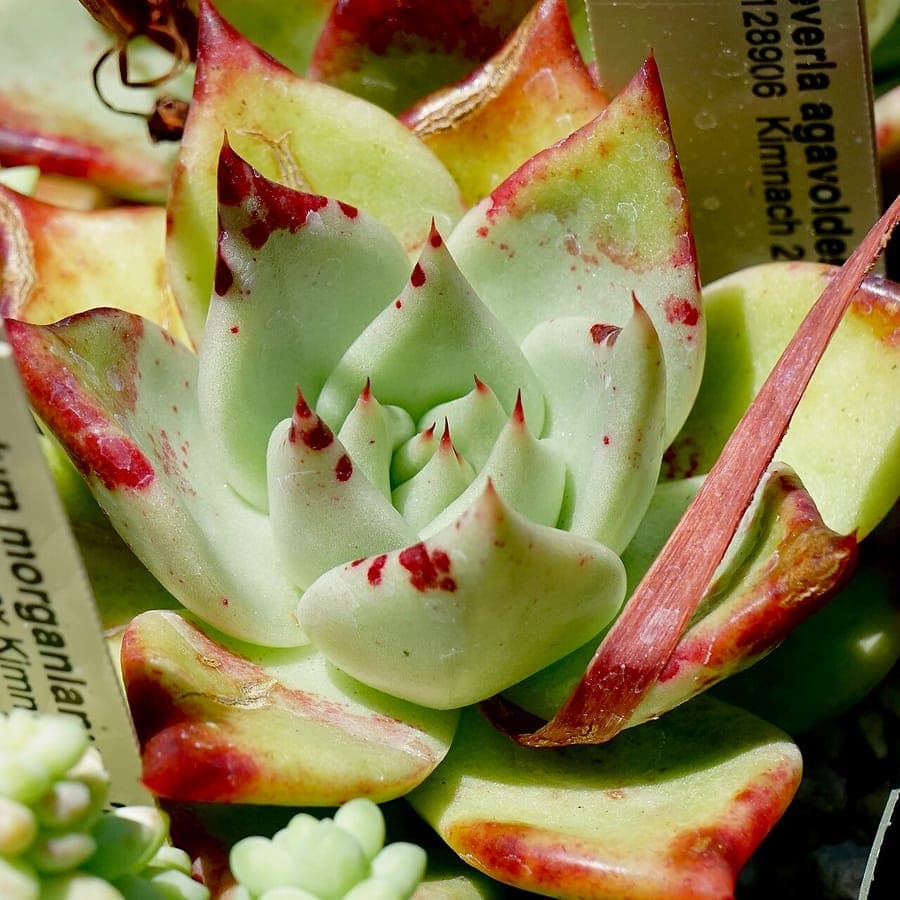
Eria Wei / CC BY-SA 4.0, via Wikimedia Commons
Echeveria agavoides: complete guide
Echeveria agavoides
¿Quieres ver Echeveria agavoides: complete guide en tu jardín?
1 minuto, sin tarjeta de crédito
Overview
Echeveria agavoides, better known as molded-wax or wax agave, is an elegant and compact succulent originating from Mexico. This plant is renowned for its unique leaf formation with pointed leaves arranged in tight rosettes. It is an excellent choice for succulent enthusiasts and those seeking low-maintenance houseplants.
The plant is valued for its architectural growth pattern and its ability to thrive with minimal maintenance. For many plant enthusiasts, molded-wax is a favorite due to its unique appearance and tolerance for neglect. With basic care, this plant thrives and becomes a true showstopper.
Appearance and bloom
Echeveria agavoides is a compact succulent that can reach 15-20 centimeters in height. The leaves form tight rosettes with pointed, sharp tips that are well-defined. The leaves are thick and fleshy, typical of the Crassulaceae family.
The color of the leaves varies from green to red-purple, depending on light conditions and season. In bright light, the leaves can turn beautiful red, making the plant extra attractive.
The plant blooms in spring with small, orange-red flowers that appear in clusters. These flowers do not indicate the end of the plant's life, as Echeveria plants can bloom for multiple years.
Ideal location
Molded-wax grows best in locations with plenty of direct light. This is actually a sun-loving plant that thrives in bright sun. Place it on a windowsill with lots of sun, preferably south-facing.
The plant thrives in warm environments. Temperatures between 15-25 degrees Celsius are ideal. The plant can also tolerate cooler winters down to about 10 degrees, which can lead to beautiful red coloring.
Outdoors, the plant can grow on a sunny terrace in summer. Ensure it is protected from drafts.
Potting soil and soil type
Molded-wax grows best in well-draining cactus soil. This is essential because this plant cannot tolerate water stagnation. Use special cactus soil or make your own mixture of standard potting soil with extra sand and perlite.
Place the plant in a smaller pot than you might expect. Succulents prefer compact pots with good drainage.
Repotting is only necessary when the plant outgrows its pot, typically once every two to three years.
Diseño gratis
¿Quieres ver Echeveria agavoides: complete guide en tu jardín? Crea un diseño gratis ahora.
Watering and feeding
Molded-wax is a drought-loving plant and requires much less water than other houseplants. Water thoroughly when you do water, but allow the soil to dry out completely before watering again.
In summer months, watering may be needed every two to three weeks. In winter, much less water is needed, possibly only once per month.
Overwatering is the primary cause of death for succulents. If you're uncertain, it's better to water less.
From May to September, very weak liquid fertilizer can be applied once per month. Special cactus fertilizer is ideal. Do not feed in winter months.
Pruning
Pruning is generally not necessary for this plant. Molded-wax maintains its natural compact form. Remove only dead or damaged leaves.
If the plant becomes too large, the rosettes can be carefully removed and planted separately.
Maintenance calendar
January-February: Minimal watering. No feeding. Inspect for pests.
March-May: Gradually increase watering. Begin weak feeding once per month.
June-August: Water regularly, continue feeding. Plant can be placed on sunny terrace.
September-October: Gradually reduce watering. Stop feeding.
November-December: Minimal watering. Bring plant back indoors.
Winter hardiness
Molded-wax is not winter hardy in temperate climates. Ensure the plant is never exposed to temperatures below 5 degrees Celsius. This can cause serious damage.
In southern gardens, the plant may overwinter outdoors under warm shelter in some years, but this is risky.
Companion plants
Molded-wax combines beautifully with other succulents such as Sedum, Aeonium, and Aloe. This combination creates an interesting display of different forms and colors.
In dish compositions, multiple Echeveria varieties can be potted together for a beautiful effect.
Conclusion
Molded-wax is an elegant, low-maintenance succulent that will last for years with minimal care. With its unique leaf formation and easygoing nature, it is ideal for both beginners and experienced plant enthusiasts.
Proper care with well-draining soil, plenty of light, and careful watering ensures this plant thrives excellently. Available year-round at garden centers.
Want to freshen up your interior with this elegant succulent? Visit gardenworld.app for more inspiration. Molded-wax is definitely worth trying. Also be sure to check gardenworld.app regularly for other beautiful succulents.
The plant is highly suitable for gardeners seeking an air-purifying plant. Studies show that this plant effectively filters harmful substances from the air, making it a perfect choice for office or bedroom.
Propagation is possible through seedlings or by dividing rootstocks. This can be done in spring with guaranteed success.
¿Quieres ver Echeveria agavoides: complete guide en tu jardín? Crea un diseño gratis ahora.
Sube una foto, elige un estilo y obtén un diseño fotorrealista con lista de plantas en menos de un minuto.
Más de 10.000 jardines diseñados
Sin tarjeta de crédito


Plantas similares
Sedum nevadense: complete guide
Sedum nevadense
Discover Sedum nevadense, the stunning alpine stonecrop from the Pyrenees. Expert care tips, growing requirements, and design ideas for rock gardens.
Aizoon stonecrop: complete guide
Phedimus aizoon
Everything about Phedimus aizoon - the frost-tolerant aizoon stonecrop from Siberia with bright yellow flowers. Planting, care and garden use.
Roseroot: complete guide
Rhodiola rosea
Everything about roseroot (Rhodiola rosea): a tough hardy succulent ideal for rock gardens, green roofs, and dry sunny positions.