
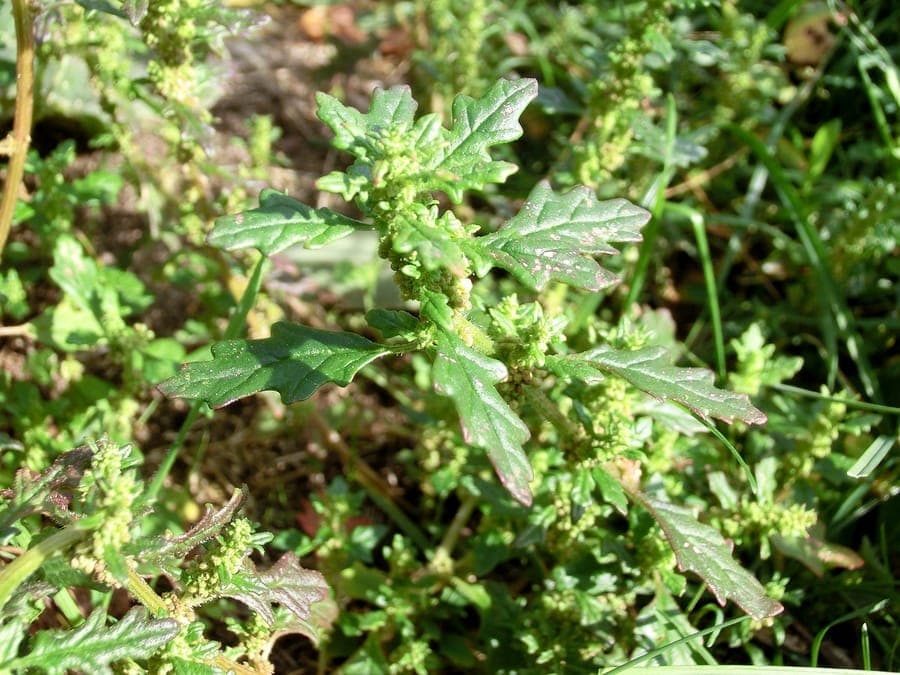
Gabriele Kothe-Heinrich / CC BY-SA 3.0, via Wikimedia Commons
Clammy goosefoot: complete guide
Dysphania pumilio
¿Quieres ver Clammy goosefoot: complete guide en tu jardín?
1 minuto, sin tarjeta de crédito
Overview
Clammy goosefoot (Dysphania pumilio) is a compact herbaceous plant from the Amaranthaceae family, native to Australia. This low-growing specimen is characterized by its very dense, prostrate growth habit and fine-textured foliage. While it does not produce showy flowers, this herb provides a useful groundcover for sunny gardens.
Appearance and bloom
Dysphania pumilio grows low and spreads horizontally, typically reaching no higher than 10-20 cm. The plant features very fine, lance-shaped leaves with a sticky appearance attesting to its clammy nature. Foliage often displays beautiful reddish-brown tints, especially in sunlight. Flowers are small and inconspicuous, appearing from August to October as tiny whitish or greenish spikes. Fruit production is noticeable, with characteristic truncated seed capsules remaining on the stems.
Ideal location
Clammy goosefoot thrives best in full sunlight, with at least six to eight hours of direct exposure daily. Choose a spot with good drainage, as the plant is sensitive to standing moisture. Shelter from harsh winds helps, though the plant is reasonably wind-resistant. This species suits USDA hardiness zone 10 and warmer; in temperate climates, it can be grown in containers and protected during winter.
Soil needs
Dysphania pumilio thrives in virtually any soil type, provided drainage is good. Sandy or loamy soils are ideal. The plant is tolerant of varied pH values, though neutral to slightly acidic (pH 6.5-7.5) is preferred. Add organic matter when planting for improved water retention, but avoid waterlogged soil.
Diseño gratis
¿Quieres ver Clammy goosefoot: complete guide en tu jardín? Crea un diseño gratis ahora.
Watering
Once established, clammy goosefoot is highly drought-tolerant. During the growing season, water regularly until the soil begins to feel dry. In mature status, you can significantly reduce watering. Ensure adequate drainage to prevent root rot. In winter, when not actively growing, provide minimal water.
Pruning
Pruning is rarely needed for this compact plant. Remove only dead or damaged parts. Light trimming can help encourage a more compact form, though the plant prefers to maintain its natural low habit.
Maintenance calendar
Spring: Preparation. Summer: Water regularly as needed. Fall: Monitor watering as growth slows. Winter: Minimal watering; protect against hard frost in temperate climates.
Winter hardiness
Dysphania pumilio is frost-sensitive and unsuitable for climates with temperatures below freezing. In temperate zones, container cultivation with movement to protected locations during winter is advisable. The plant can be treated as an annual in colder climates.
Companion plants
Particularly suited for xeriscaping or dry gardens, clammy goosefoot works well with other low-growing species: sedums, thyme, and other groundcovers sharing similar environmental needs.
Closing note
Clammy goosefoot offers gardeners an unconventional groundcover with subtle beauty. While not spectacular, this Australian plant delivers years of reliable coverage with minimal maintenance in warm, sunny environments.
¿Quieres ver Clammy goosefoot: complete guide en tu jardín? Crea un diseño gratis ahora.
Sube una foto, elige un estilo y obtén un diseño fotorrealista con lista de plantas en menos de un minuto.
Más de 10.000 jardines diseñados
Sin tarjeta de crédito


Plantas similares
Bassia laniflora (woolly summer-cypress): complete guide
Bassia laniflora
Full guide to Bassia laniflora: origin, appearance, ideal location, soil, watering and care for this drought-tolerant annual.
Suaeda spicata: complete guide
Suaeda spicata
Everything about Suaeda spicata (spiked seablite): a rare salt-tolerant coastal succulent from the western Mediterranean and Macaronesia.
California amaranth: complete guide
Amaranthus californicus
Full guide to California amaranth (Amaranthus californicus): growing tips, ideal location, soil needs, watering, and garden design ideas.