
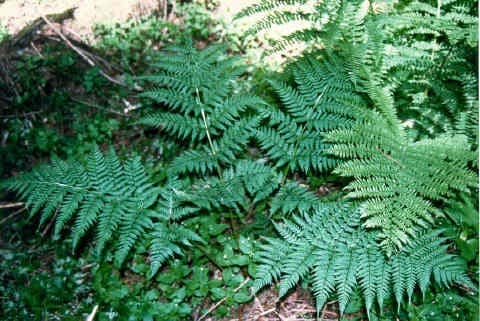
Unknown authorUnknown author / Public domain, via Wikimedia Commons
Northern buckler fern: complete guide
Dryopteris expansa
¿Quieres ver Northern buckler fern: complete guide en tu jardín?
1 minuto, sin tarjeta de crédito
Overview
Northern buckler fern (Dryopteris expansa), also called spreading woodfern, is a deeply refined choice for moist shaded gardens. This subarctic and temperate hemisphere native produces elegantly dissected fronds with a distinctive green-grey colouration. The plant is handsome without fussiness, permanent without aggression.
What separates Dryopteris expansa from common ferns is its triple-divided fronds, which create an exceptionally airy, fine-textured appearance. Once established in moist soil, it requires almost no attention beyond consistent moisture. This is a fern for patient gardeners who want refined structure.
Appearance & growth
Northern buckler fern produces large, intricately pinnate fronds that reach 60-80 centimetres in length. The fronds emerge in a circular crown from a central rhizome and are triple-pinnate (divided three times), giving an extremely delicate, lacy appearance. Colour is deep green with grey-green undersides where the sori (spore-bearing structures) cluster.
The plant grows slowly, taking 3-5 years to reach mature size (60-80 cm tall and broad). This is not a fast spreader but a very long-lived one. New fronds unfurl in early spring in synchronised fashion, creating a dramatic emergence from dormancy.
Ideal location
Northern buckler fern thrives in dappled to partial shade. This means filtered light throughout the day - under tree canopies, along north-facing walls, in woodland edges. Full sun scorch the fronds. Deep shade (north-facing against dark walls) keeps it alive but growth is slow.
Excellent locations include under deciduous trees, beside streams, in cool borders beneath evergreen hedges. Wind protection is important; the common name refers to how easily fronds snap in strong gusts.
Soil requirements
Northern buckler fern insists on moist, humus-rich, well-aerated soil. It thrives in heavy clay or peat-based mixes that hold moisture. Organic matter is non-negotiable. Before planting, excavate deeply and amend with a mix of 60% clay, 30% peat moss, 10% coarse sand.
pH tolerance is broad (acidic to neutral). The critical factor is moisture retention without stagnation. Grading ensures water moves, not pools. Most ferns rot in waterlogged ground; this species is more tolerant but still needs movement.
Diseño gratis
¿Quieres ver Northern buckler fern: complete guide en tu jardín? Crea un diseño gratis ahora.
Watering
Maintain consistently moist soil during the growing season (April-October). Water regularly, especially in dry spells. The soil should never dry out completely; this causes frond-tip dieback. A 5-centimetre mulch layer around the plant conserves moisture and keeps soil cool.
In wet seasons, supplementary watering may be unnecessary. Test soil moisture at 5 centimetres depth. Waterlogging is still harmful; ensure drainage isn't blocked. Container-grown specimens need more frequent watering than in-ground plants.
Pruning
Northern buckler fern needs no real pruning. Remove dead or damaged fronds as they appear. In spring as new fronds uncurl, clear away any dead fronds that persisted through winter. This is housekeeping, not pruning.
When plants become overly large, you can selectively remove older outer fronds, but heavy pruning stresses the plant. Ideally, choose a site where the fern has room to reach its natural size without needing reduction.
Maintenance calendar
April: New fronds unfurl. Remove previous year's dead foliage. Begin regular watering.
May-June: Active growth period. Maintain consistent moisture. No other care needed. Enjoy unfurling new growth.
July-August: Continued growth. Moisture management critical. Refresh mulch layer.
September-October: Growth slows. Fronds remain vibrant. Reduce watering as rainfall increases.
November-February: Winter dormancy. Fronds persist as evergreen structure. Minimal watering.
March: Remove any yellowed or frost-damaged fronds. Plant stirs to life.
Winter hardiness
Northern buckler fern is hardy to around -20°C, covering the entire UK, northern Europe, and Canada. In USDA zones 3-8, it's a permanent solution. Hard winters may cause some frond loss, but the rhizome always survives.
Snow actually helps by insulating roots against temperature swings. In very harsh cold, a 10-centimetre mulch layer protects rhizomes further.
Companion plants
Pair Northern buckler fern with other moisture-lovers: Polystichum (shield ferns), Athyrium (lady ferns), Osmunda. Hostas, bergenia, and corydalis create sophisticated combinations. In wet sites, pair with dwarf bamboos and other shade plants.
Ensure taller companions don't completely shade out the fern. This species isn't aggressive, so slower-growing neighbours coexist peacefully.
Closing
For fine, elegant green texture in moist shaded corners, Northern buckler fern delivers without maintenance demands. Once properly sited in humus-rich, consistently moist soil, this becomes a permanent structural element. Design your shade border including this fern on gardenworld.app, visualising how the delicate fronds mature. Use gardenworld.app's tools to plan moisture management and watch your fern develop refined foliage throughout seasons.
¿Quieres ver Northern buckler fern: complete guide en tu jardín? Crea un diseño gratis ahora.
Sube una foto, elige un estilo y obtén un diseño fotorrealista con lista de plantas en menos de un minuto.
Más de 10.000 jardines diseñados
Sin tarjeta de crédito


Plantas similares
Dryopteris sieboldii: complete guide
Dryopteris sieboldii
Discover Dryopteris sieboldii (Siebold's Buckler Fern), an elegant evergreen fern from Asia. Growing tips, care, and uses in shade gardens.
Dryopteris tyrrhena: complete guide
Dryopteris tyrrhena
Discover Dryopteris tyrrhena (Mediterranean Buckler-fern), a rare and exquisite fern species. Growing tips, care, and shade garden design.
Dryopteris villarii: complete guide
Dryopteris villarii
Dryopteris villarii, known as rigid buckler fern, is a shade-loving fern form from the Alps. Discover how to grow and maintain this elegant alpine fern in your garden.