
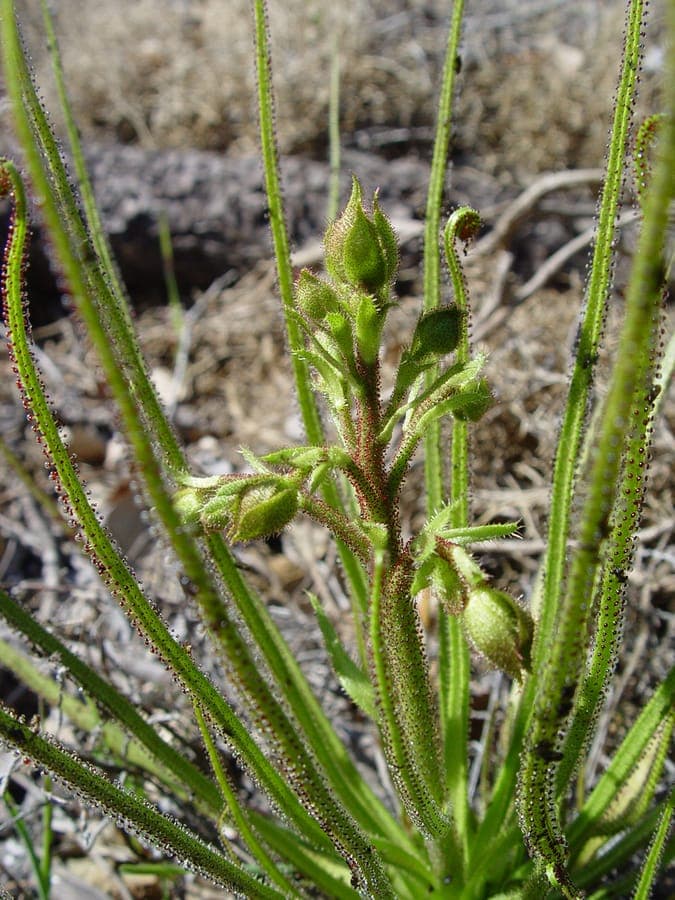
Taken by Carsten Niehaus (user:Lumbar). / CC BY-SA 3.0, via Wikimedia Commons
Drosophyllum lusitanicum: complete guide
Drosophyllum lusitanicum
¿Quieres ver Drosophyllum lusitanicum: complete guide en tu jardín?
1 minuto, sin tarjeta de crédito
Overview
Drosophyllum lusitanicum, commonly called Portuguese sundew, is an exceptional carnivorous plant from the Drosophyllaceae family. This rare endemic species grows naturally in southern Portugal and Spain, as well as northern Morocco. Unlike other sundews, Drosophyllum lusitanicum is evergreen and forms a striking addition to the sunny garden for specialized plant enthusiasts.
Appearance & Bloom
Drosophyllum lusitanicum grows as a compact shrub 20-40 centimeters tall. The plant is noted for its long, narrow leaves covered with red, glistening hairs that secrete a sticky, fragrant fluid. These hairs trap insects that adhere to the adhesive droplets, slowly being digested by the plant.
In late spring and summer, the plant produces delicate yellow flowers positioned atop long stems. These flowers are small but numerous, creating a golden glimmering effect when properly illuminated by sunlight.
Ideal Location
Drosophyllum lusitanicum demands full sun and abundant light. This is not a shade plant - it thrives in warm, sunny locations. Ensure the plant receives direct sunlight for much of the day. Wind is also tolerated and even appreciated by this species.
Soil
This is where the challenge begins. Drosophyllum lusitanicum requires extraordinarily well-draining soil. Many growers use a mix of peat, perlite, and sand. The plant despises root rot conditions and demands nearly perfect drainage. An acidic to neutral pH works best.
Diseño gratis
¿Quieres ver Drosophyllum lusitanicum: complete guide en tu jardín? Crea un diseño gratis ahora.
Watering
Water regularly during the growing season, but allow soil to partially dry between waterings. Use rainwater rather than tap water since the plant is sensitive to minerals. In winter, watering can be substantially reduced but never eliminated completely.
Pruning
Minimal pruning is needed. Remove only dead leaves and damaged portions. The plant forms a natural attractive shape without aggressive intervention.
Maintenance Calendar
March-April: Start growing season with moderate watering. May-June: Plant flowers and traps many insects. July-August: Dry weather - water carefully. September-October: Growth accelerates again. November-February: Dormant period with minimal watering.
Winter Hardiness
Drosophyllum lusitanicum is not fully winter hardy in cold climates. In frost-prone areas, the plant must overwinter indoors in a cool greenhouse. Protect from temperatures below 5 degrees Celsius.
Companion Plants
This is a specimen plant best grown alone. Grow it in pots or in specialized dry gardens with other Mediterranean plants like agave, yucca, and pelargonium. Never combine with moisture-loving plants that would compromise drainage.
Closing
Drosophyllum lusitanicum is for the true plant enthusiast who embraces horticultural challenges. With its unique insect-trapping capability and yellow flowers, it becomes a conversation piece in any garden. Provide abundant sun, perfect drainage, and patience. Order now and experience Portuguese botanical excellence.
¿Quieres ver Drosophyllum lusitanicum: complete guide en tu jardín? Crea un diseño gratis ahora.
Sube una foto, elige un estilo y obtén un diseño fotorrealista con lista de plantas en menos de un minuto.
Más de 10.000 jardines diseñados
Sin tarjeta de crédito


Plantas similares
Acer pycnanthum: complete guide
Acer pycnanthum
Acer pycnanthum, the Japanese swamp maple, is a fast-growing tree with early red flowers and brilliant autumn color, ideal for damp garden settings.
Freeman maple: complete guide
Acer × freemanii
Everything about the Freeman maple (Acer x freemanii): a fast-growing shade tree with spectacular autumn colour for large gardens.
Silver vine: complete guide
Actinidia polygama
Discover silver vine (Actinidia polygama): a hardy climbing plant with silvery foliage, loved by gardeners and cats alike.