
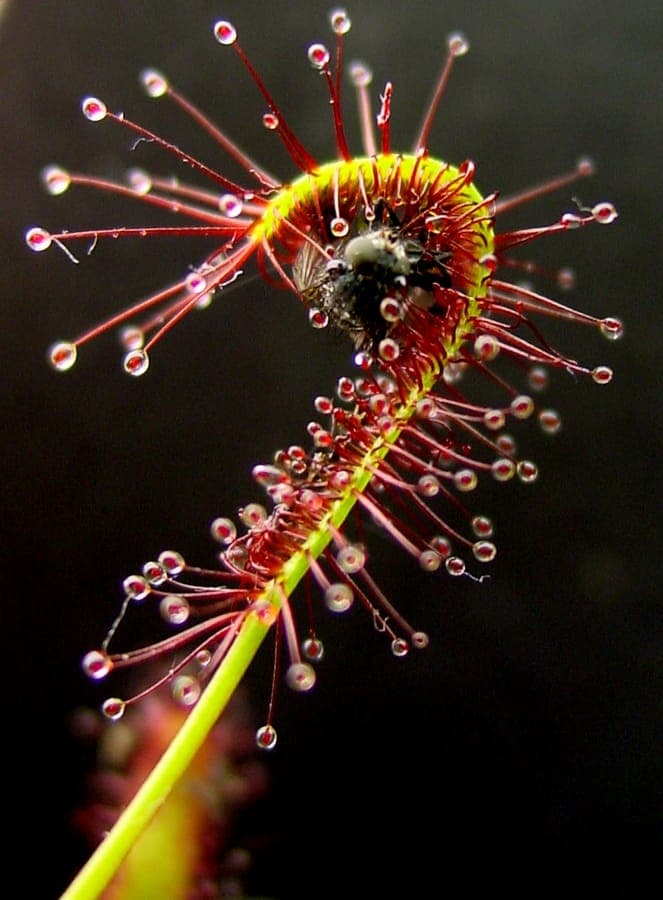
NoahElhardt / CC BY-SA 3.0, via Wikimedia Commons
Cape Sundew: complete guide
Drosera capensis
¿Quieres ver Cape Sundew: complete guide en tu jardín?
1 minuto, sin tarjeta de crédito
Overview
The Cape Sundew (Drosera capensis) is a fascinating carnivorous plant native to South Africa. This plant is known for its characteristic red leaves covered with sticky droplets that trap insects.
The plant reaches heights of 15 to 25 centimeters and grows in rosettes. The plant is relatively easy to maintain and tolerates less critical conditions than many other sundew species, making it popular with beginners.
Appearance & Bloom
The Cape Sundew distinguishes itself through characteristic red leaves covered with long, red tentacles ending in sticky droplets. These droplets are not water but a sticky, sugary fluid that attracts insects.
The flowers are small, pink to purple, and appear on slender stems. They are not spectacular but showcase the plant's beauty. After blooming, seed capsules form with numerous tiny seeds.
The plant traps insects via sticky leaves. Once an insect is stuck, the tentacles curl around the creature and the leaf closes, allowing digestion.
Ideal Location
The Cape Sundew thrives best in warm, sunny locations with at least 4 to 6 hours of direct sunlight daily. More sun gives intense red coloring.
The plant prefers high humidity of 50 to 80 percent. A terrarium or greenhouse environment is ideal. The plant can grow outdoors in summer but requires protection.
Avoid direct heat and stagnant air. Good air circulation is important for health.
Soil
The Cape Sundew requires special soil as it is extremely nutrient-poor. Use pure, acidic sand or sandy peat with pH 3.5 to 4.5.
Avoid regular potting soil or enriched soil. These can be harmful. Pure sandy peat or sand mixed with fine sand is best.
Soil stays moist but not waterlogged. Drainage is essential but moisture retention is too.
Watering
The Cape Sundew requires very pure water. Use distilled water, rainwater, or reverse-osmosis water, not tap water.
Water from below through a saucer. Keep soil consistently moist, especially during growing season. Avoid waterlogging.
In winter growth slows and moisture needs decrease slightly, but soil should never completely dry out.
Diseño gratis
¿Quieres ver Cape Sundew: complete guide en tu jardín? Crea un diseño gratis ahora.
Pruning
The Cape Sundew requires minimal pruning. Remove only dead leaves or flower clusters after blooming.
Remove old foliage carefully to avoid disturbing new growth. Damaged leaves can be carefully removed.
The plant grows continuously and flowers regularly, so much maintenance is not needed.
Maintenance Calendar
Spring (March-May): Start active growth. Ensure consistently moist pure water. Inspect for pests.
Summer (June-August): Peak growth and bloom. Ensure high humidity. Nutrition is obtained through insect trapping.
Autumn (September-October): Growth slows. Moisture can be reduced slightly. High light helps red coloring.
Winter (November-February): Rest period for many plants. Minimal growth. Less moisture needed.
Winter Hardiness
The Cape Sundew is not winter-hardy in temperate climates. The plant can briefly tolerate temperatures around 5 degrees Celsius but does not grow.
In all regions with winters, protection is needed. A cold greenhouse or cool conditions help, but at least 10 degrees is better.
Freezing is fatal. Ensure protection in all temperate climates.
Companion Plants
The Cape Sundew can grow with other carnivorous plants in terrariums. Combinations:
Other sundew species with similar requirements.
Pitcher plants and butterwort plants tolerate similar conditions.
Moss-like ground covers can grow beneath plants.
Closing Thoughts
The Cape Sundew is an exciting plant for those interested in carnivorous plants. With attention to water purity, humidity, and sunlight, this plant delivers years of fascinating predatory behavior. A unique addition to any plant collection.
Looking for plant material? Specialized nurseries or online sellers. Visit gardenworld.app/en or gardenworld.app/nl for more information.
¿Quieres ver Cape Sundew: complete guide en tu jardín? Crea un diseño gratis ahora.
Sube una foto, elige un estilo y obtén un diseño fotorrealista con lista de plantas en menos de un minuto.
Más de 10.000 jardines diseñados
Sin tarjeta de crédito


Plantas similares
Threadleaf sundew: complete guide
Drosera filiformis
Everything about Drosera filiformis, the threadleaf sundew from North America: cultivation, substrate, watering, and overwintering of this carnivorous bog plant.
Waterwheel plant: complete guide
Aldrovanda vesiculosa
A detailed guide to growing Aldrovanda vesiculosa: light, water, pH and dormancy. Perfect for ponds and aquatic setups.
Great sundew: complete guide
Drosera anglica
How to grow Drosera anglica in acidic, wet soil with full sun. Perfect for bog gardens and natural wetland plantings in temperate climates.