
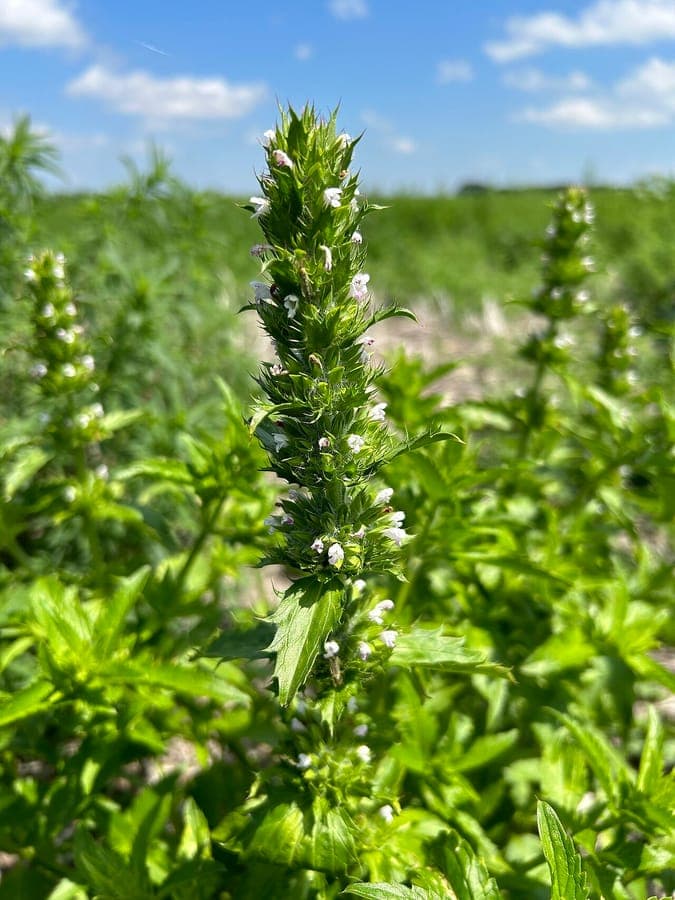
omcelroy / CC0, via Wikimedia Commons
Dracocephalum parviflorum: complete guide
Dracocephalum parviflorum
¿Quieres ver Dracocephalum parviflorum: complete guide en tu jardín?
1 minuto, sin tarjeta de crédito
Overview
Dracocephalum parviflorum, also known as American dragonhead, small-flowered dragonhead or dragonhead mint, is an elegant plant from the Lamiaceae family. This North American plant grows naturally in grasslands, mountain areas, and along waterways from Canada to the southwestern United States. The plant is renowned for its compact growth habit and abundant violet-blue flowers.
Appearance and bloom
The American dragonhead forms bushy plants 30 to 60 centimeters tall. The stems are thin, green, and slightly hairy. The leaves are narrow, linear structures reminiscent of mint and finely scented when touched. The flowers are the star: beautiful violet-blue to purple flowers appear in needle-like clusters from June to August.
Ideal location
The American dragonhead thrives best in sunny locations with at least 6 hours of full sun. The plant is also wind-resistant and can therefore be planted in exposed garden areas. In warmer climates, some afternoon shade can help keep the plant cooler.
Soil
The American dragonhead is a drought lover and feels at home in poor, lean soils. Well-draining soil is essential. The plant accepts sandy, gravelly, and stony soil. Heavy clay should be improved with sand or gravel.
Watering
Provide moderate watering, especially during the growing season. Once established, this plant is extremely drought-tolerant. The American dragonhead actually prefers dry conditions over excess moisture. Water regularly at planting, but reduce watering as the plant becomes established.
Diseño gratis
¿Quieres ver Dracocephalum parviflorum: complete guide en tu jardín? Crea un diseño gratis ahora.
Pruning
By nature, the American dragonhead forms a compact shape. You can prune lightly in early spring to stimulate extra bushiness. In August-September, spent flowers and old stems can be removed.
Maintenance calendar
March-April: Check drainage and prune lightly if needed. May-June: Ensure adequate water at planting. June-August: Enjoy the bloom and remove spent flowers. August-September: Give a light pruning. October-February: Minimal maintenance.
Winter hardiness
The American dragonhead is very winter hardy and can tolerate temperatures down to -30 degrees Celsius. This makes it an excellent choice for northern gardens. The plant is also very drought-tolerant, making it an ideal choice for xeriscaping.
Companion plants
The American dragonhead combines beautifully with other drought lovers such as lavender, chicory, and thyme. In borders and xeriscapes, it forms an attractive contrast with silver-grey foliage plants and yellow bloomers.
Conclusion
The American dragonhead is a reliable, frost-hardy plant for dry locations. With minimal maintenance and maximum visual effect, it is a valuable addition to gardens in cold climates. Discover this splendid plant through gardenworld.app for advice on drought-tolerant plant selection. For more information visit gardenworld.app.
¿Quieres ver Dracocephalum parviflorum: complete guide en tu jardín? Crea un diseño gratis ahora.
Sube una foto, elige un estilo y obtén un diseño fotorrealista con lista de plantas en menos de un minuto.
Más de 10.000 jardines diseñados
Sin tarjeta de crédito


Plantas similares
Apple mint (Mentha x villosa): complete guide
Mentha x villosa
Meet apple mint (Mentha x villosa): a fruity-scented kitchen herb with woolly leaves, perfect for tea and mojitos.
Salvia peyronii: complete guide
Salvia peyronii
Discover Salvia peyronii, a rare Lebanese mountain sage. Growing tips, hardiness, and companion planting for a Mediterranean gravel garden.
Bigleaf mint (Mentha x rotundifolia): complete guide
Mentha x rotundifolia
Discover bigleaf mint: cultivation, care tips, and garden uses. Learn how to grow this aromatic herb with soft, hairy leaves.