
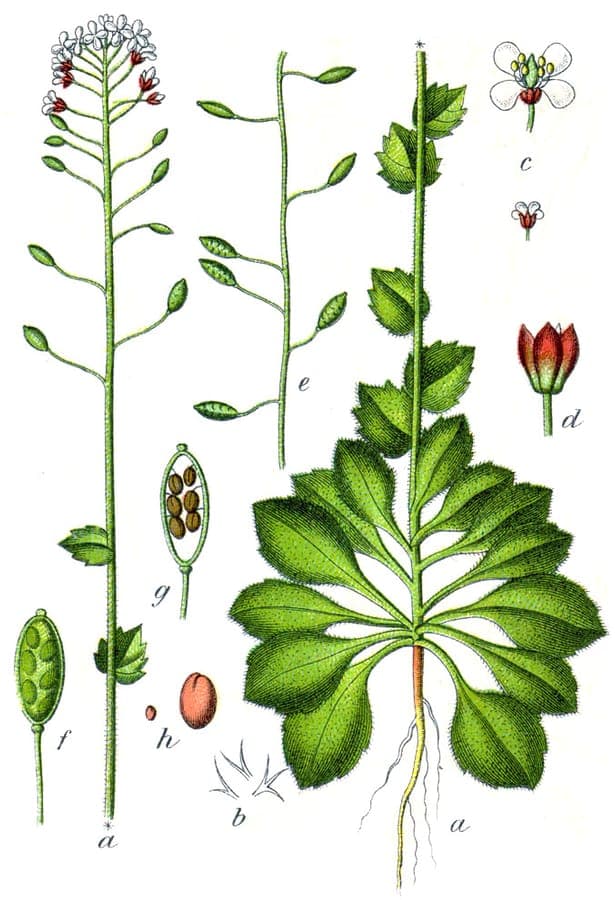
Johann Georg Sturm (Painter: Jacob Sturm) / Public domain, via Wikimedia Commons
Wall whitlow-grass: complete guide
Draba muralis
¿Quieres ver Wall whitlow-grass: complete guide en tu jardín?
1 minuto, sin tarjeta de crédito
Overview
Draba muralis, known as Wall whitlow-grass, is a small, often nearly overlooked plant from the Brassicaceae family. This biennial to short-lived perennial plant is native to European stoneware, from Central Europe to the Mediterranean. Although often overlooked due to its modest size, it's a fascinating plant that grows in the most unlikely places - between stonework, rocks, and wall mortar. On gardenworld.app, design gardens utilizing such robust little plants for texture and interest.
Wall whitlow-grass exemplifies how nature adapts in tight spaces. Despite minimal requirements, it delivers refined blooming and ecological benefits to gardens.
Appearance & Bloom Cycle
Draba muralis is an extremely compact plant typically reaching only 5 to 20 cm tall. The plant forms small rosettes of linear, thin leaves often colored red or purple, especially in winter. From these rosettes emerge delicate flower stems in spring (March to May) bearing tiny, four-petaled white flowers. The flowering clusters consist of loose arrangements of delicate white blooms against dark stems, creating striking contrast.
After blooming, small elliptical seed pods follow. The plant is typically biennial (germination, leaf rosette formation, then flowering and seed production the following year) or short-lived perennial.
Ideal Location
Wall whitlow-grass literally grows where other plants cannot. It prefers poor, well-draining sites, especially in stonework. Full sun to light shade suits it. The plant thrives particularly well in vertical stone walls, masonry, and between paving stones. Vertical gardens and living walls are ideal locations. Wind and dry conditions are not problems; the plant actually flourishes in these environments.
Soil Requirements
The plant is not fussy and actually grows best in poor, impoverished soils. Well-draining ground is essential; standing water is fatal. Sand, gravel, clay, limestone mortar - it accepts everything as long as it remains dry. Rich feeding often leads to excessive growth without flowering. For seed sowing in containers, use very gritty mix with minimal nutrition.
Diseño gratis
¿Quieres ver Wall whitlow-grass: complete guide en tu jardín? Crea un diseño gratis ahora.
Watering
Once established, Wall whitlow-grass tolerates drought completely. Regular watering can even hinder growth, especially in humid climates. During very dry periods, some supplemental moisture supports growth. In containers or troughs, water carefully; allow soil to dry between waterings. In gardens, rainwater almost always suffices.
Maintenance & Self-seeding
The plant requires practically no maintenance. Allow seed to drop for natural self-seeding next season. Remove spent stems for neatness. The plant usually self-seeds quite readily; just prevent seed from traveling unwanted areas. This is perfect for wall plants that manage their own continuation.
Maintenance Calendar
March-May: Full blooming period; minimal intervention. June-July: Seed ripening; allow seed to drop. August-October: Seed maturation; seedlings may appear. November-February: Winter dormancy; no care needed.
Winter Hardiness
Draba muralis is extremely hardy and grows better in cold climates. The plant tolerates temperatures to -15°C or lower. Rosettes deepen to red or purple in winter, providing substantial visual interest even without blooms. Snow protects against extreme freezing. In warm, humid climates, it may struggle with disease.
Related Plants
Similar wall plants include Arenaria, Sedum, Saxifraga, and other small alpine types. These grow well together in living walls. Draba aizoides is a larger, more prominent relative.
Conclusion
Wall whitlow-grass is a small but remarkable plant proving that even the smallest surfaces can bloom with proper plant choices. It requires practically no care and self-seeds in favorable conditions. On gardenworld.app, design spaces where these tiny plants contribute to the whole, especially in living walls and vertical gardens. With reliable performance and refined blooming, Wall whitlow-grass is invaluable for any garden featuring stone or masonry.
¿Quieres ver Wall whitlow-grass: complete guide en tu jardín? Crea un diseño gratis ahora.
Sube una foto, elige un estilo y obtén un diseño fotorrealista con lista de plantas en menos de un minuto.
Más de 10.000 jardines diseñados
Sin tarjeta de crédito


Plantas similares
Brassica cretica: complete guide
Brassica cretica
Brassica cretica, the Cretan cabbage, grows wild on Aegean cliffs. Discover how to grow this drought-tolerant, yellow-flowered Mediterranean perennial.
Corsican cabbage: complete guide
Brassica insularis
Corsican cabbage is a rare Mediterranean rock cabbage with white flowers and blue-green leaves. Location, soil and winter protection.
Prostrate cabbage: complete guide
Brassica procumbens
Prostrate cabbage is a creeping North African cliff plant with yellow flowers. Discover location, soil type and winter protection.