
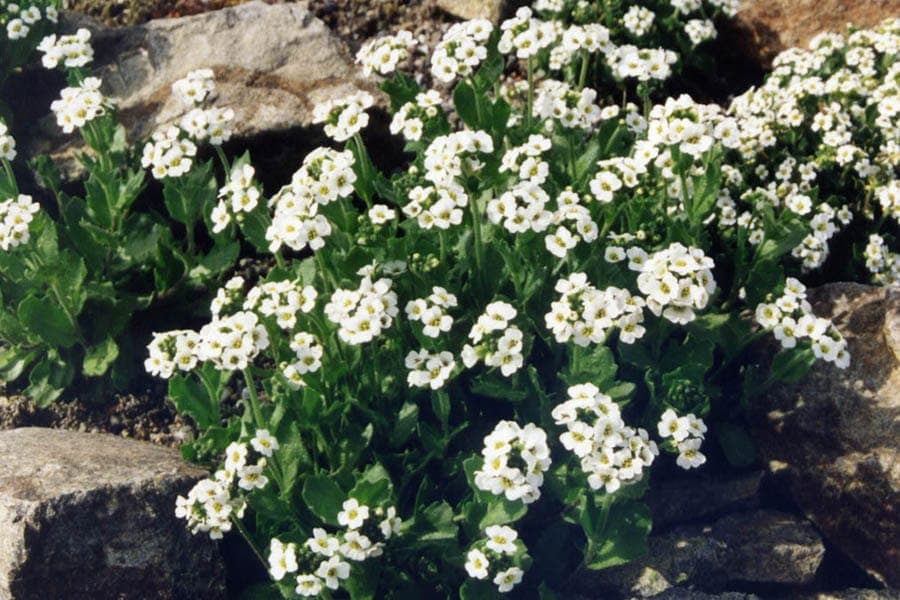
Ghislain118 (AD) http://www.fleurs-des-montagnes.net / CC BY-SA 3.0, via Wikimedia Commons
Draba fladnizensis: complete guide
Draba fladnizensis
¿Quieres ver Draba fladnizensis: complete guide en tu jardín?
1 minuto, sin tarjeta de crédito
Overview
Draba fladnizensis, better known as Austrian draba or Austrian whitlowgrass, is a delicate alpine plant from the Brassicaceae family. This compact plant grows natively in mountain regions of the Alps and occurs from Austria to Siberian areas. The plant is renowned for its extremely small stature and its charming white flowers. It is a favorite among alpine gardeners.
Appearance and bloom
The Austrian draba forms clusters of narrow, hairy leaves in small rosettes. The plant is extremely compact and forms low cushions of just a few centimeters high. In July-August, dozens of small white flowers appear in dense clusters above the foliage. The flowers are very small, about 0.5 centimeters in diameter, but very abundant, creating an attractive white haze over the plant.
Ideal location
The Austrian draba thrives best in sunny to partly shaded spots with good ventilating air. In warmer regions, some afternoon shade helps keep this mountain dweller cooler. The plant is very wind-resistant and handles windy situations well. Ensure the plant receives enough light for compact growth and profuse bloom.
Soil
Alpine soil is essential for success. A very well-draining mixture of soil with gravel, stone chips, and sand is ideal. The Austrian draba does not thrive in heavier, more compact soils. A mix of 50 percent alpine soil and 50 percent gravel works perfectly. The plant prefers a slightly acidic to neutral pH range.
Diseño gratis
¿Quieres ver Draba fladnizensis: complete guide en tu jardín? Crea un diseño gratis ahora.
Watering
Watering must be careful because this plant is moisture-sensitive and suffers from rot when water-logged. Water only when the soil surface feels dry. During rain, supplemental water is not needed. In extreme dry periods, light misting can help, but water must not pool around the plants.
Pruning
The Austrian draba requires practically no pruning work. Remove only withered plant parts or diseased leaves. After bloom, seed pods can be removed to conserve plant energy.
Maintenance calendar
April-May: Check drainage and soil condition. June-July: Prepare for bloom by ensuring the plant is not overwatered. July-August: Enjoy the bloom and remove spent flowers. August-September: If you want seed, allow seed pods to ripen. October-March: Minimal maintenance.
Winter hardiness
The Austrian draba is extremely winter hardy and easily tolerates -20 degrees Celsius or lower. It is not the cold that endangers the plant, but moisture accumulation in winter. Ensure excellent drainage, especially in winter.
Companion plants
The Austrian draba combines well with other alpine plants such as saxifrage, Sempervivum, and alpine phlox. In rock gardens and alpine troughs, it forms a pleasant contrast with dark green or blue-green neighboring plants.
Conclusion
The Austrian draba is a splendid choice for those who appreciate alpine flora. With well-draining soil and sunny location, you'll enjoy this charming white flower carpet for years. Search for this plant on gardenworld.app for expert advice and inspiration. For all your questions about alpine gardening design, consult gardenworld.app.
¿Quieres ver Draba fladnizensis: complete guide en tu jardín? Crea un diseño gratis ahora.
Sube una foto, elige un estilo y obtén un diseño fotorrealista con lista de plantas en menos de un minuto.
Más de 10.000 jardines diseñados
Sin tarjeta de crédito


Plantas similares
Brassica cretica: complete guide
Brassica cretica
Brassica cretica, the Cretan cabbage, grows wild on Aegean cliffs. Discover how to grow this drought-tolerant, yellow-flowered Mediterranean perennial.
Corsican cabbage: complete guide
Brassica insularis
Corsican cabbage is a rare Mediterranean rock cabbage with white flowers and blue-green leaves. Location, soil and winter protection.
Prostrate cabbage: complete guide
Brassica procumbens
Prostrate cabbage is a creeping North African cliff plant with yellow flowers. Discover location, soil type and winter protection.