
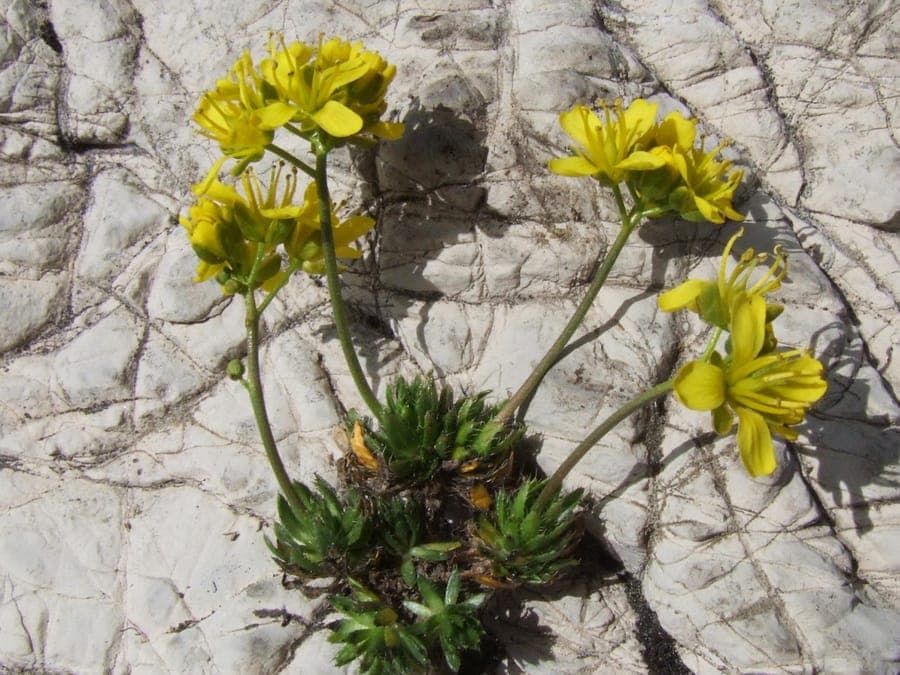
Jerzy Opioła / CC BY-SA 4.0, via Wikimedia Commons
Yellow whitlow-grass: complete guide
Draba aizoides
¿Quieres ver Yellow whitlow-grass: complete guide en tu jardín?
1 minuto, sin tarjeta de crédito
Overview
Draba aizoides, commonly called Yellow whitlow-grass or Evergreen Draba, is a small but remarkable alpine plant from the Brassicaceae family (mustard family). This hardy perennial is renowned for its evergreen rosettes and early spring yellow flowers. Native to European mountain ranges from the Alps to the Carpathians, it's a perfect choice for rock gardens, alpine troughs, and scree gardens. On gardenworld.app, you can design gardens featuring alpine and mountain plants that provide year-round structure and early seasonal color.
Yellow whitlow-grass is a favorite among alpine gardening enthusiasts due to its compact growth, low maintenance requirements, and reliable flowering. This plant transforms small spaces into colorful displays with minimal effort.
Appearance & Bloom Cycle
Draba aizoides forms neat, compact rosettes of dark green, lance-shaped leaves that remain green throughout the year. The plant typically reaches only 5 to 10 cm in height, making it ideal for rock crevices or as border edging. Each rosette produces multiple flower stems that emerge in spring, bearing bright yellow four-petaled flowers in dense racemes. Flowering begins as early as March and continues through May, depending on local climate.
After blooming, the plant produces small, flattened seedpods characteristic of the mustard family. The plant is noted for longevity and forms compact clumps over many years.
Ideal Location
Yellow whitlow-grass grows best in full sun to light dappled shade. The plant tolerates elevation changes well and remains stable even on steep slopes. This makes it excellent for alpine screes where many other plants struggle. In warm Mediterranean regions, some afternoon shade benefits the plant. Wind exposure poses no problems, making it suitable for exposed mountain peaks.
Soil Requirements
The plant is not fussy about soil composition but thrives in well-draining, mineral-rich soils. Limy soil is beneficial but not essential. Poor drainage and heavy clay can lead to root rot during wet winters. Grit, gravel, or coarse sand significantly improves drainage. A mix of alpine compost and coarse sand with added grit produces optimal results in containers. Poor soils are acceptable; heavy feeding is unnecessary.
Diseño gratis
¿Quieres ver Yellow whitlow-grass: complete guide en tu jardín? Crea un diseño gratis ahora.
Watering
Once established, Yellow whitlow-grass tolerates drought excellently through its fine root system. During growth periods (spring/early summer), consistent moderate moisture supports blooming and growth. However, excess water is dangerous, especially in winter. Well-draining soils are crucial. Container specimens require more careful winter watering. Alpine gardens typically require only rainwater.
Maintenance & Propagation
The plant is highly maintenance-free. Remove spent flowers to prevent seed production and encourage extended blooming. Rosettes slowly enlarge annually. Propagation occurs from seed (spring sowing) or separating small offsets during growth periods. The plant doesn't require pruning or shaping; allow natural growth.
Maintenance Calendar
March-May: Blooming period; regular deadheading. June-July: Seed production and rosette expansion. August-September: Seed collection possible. October-February: Winter dormancy; minimal care needed.
Winter Hardiness
Draba aizoides is extremely hardy (USDA zone 2, -20°C or lower) due to its alpine heritage. Actually, it thrives better in cold climates. Foliage sometimes develops red or purple tones in winter, providing extra visual interest. Snow cover is actually beneficial, protecting against extreme freeze damage. In warmer regions with warm wet winters, drainage issues may arise.
Related Plants
Other alpine Draba species include D. muralis (wall whitlow-grass) and D. polytricha. Similar alpine plants are Arabis, Sempervivum, and Saxifraga. These group beautifully together in alpine gardens.
Conclusion
Yellow whitlow-grass is an unparalleled choice for rock gardens, scree gardens, and alpine containers. It delivers reliable early yellow colors while requiring minimal care. Its hardiness and compact growth fit perfectly into small spaces. On gardenworld.app, design alpine gardens that bloom season after season. With proper drainage and sun, you'll enjoy this enchanting plant for years.
¿Quieres ver Yellow whitlow-grass: complete guide en tu jardín? Crea un diseño gratis ahora.
Sube una foto, elige un estilo y obtén un diseño fotorrealista con lista de plantas en menos de un minuto.
Más de 10.000 jardines diseñados
Sin tarjeta de crédito


Plantas similares
Brassica cretica: complete guide
Brassica cretica
Brassica cretica, the Cretan cabbage, grows wild on Aegean cliffs. Discover how to grow this drought-tolerant, yellow-flowered Mediterranean perennial.
Corsican cabbage: complete guide
Brassica insularis
Corsican cabbage is a rare Mediterranean rock cabbage with white flowers and blue-green leaves. Location, soil and winter protection.
Prostrate cabbage: complete guide
Brassica procumbens
Prostrate cabbage is a creeping North African cliff plant with yellow flowers. Discover location, soil type and winter protection.