
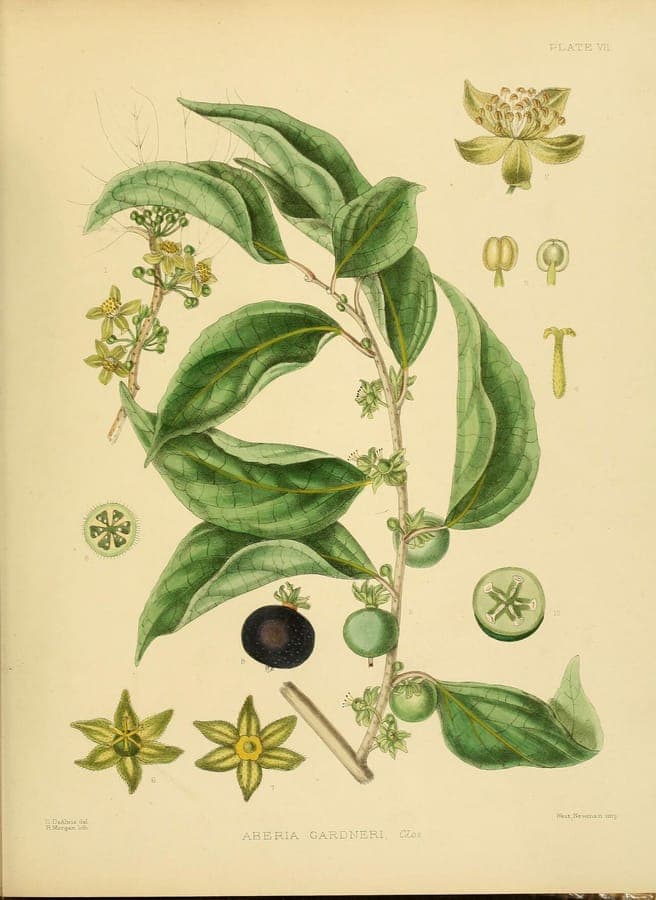
Alston, A. H. G.; Hooker, Joseph Dalton; Trimen, Henry / Public domain, via Wikimedia Commons
Ceylon Gooseberry: complete guide
Dovyalis hebecarpa
¿Quieres ver Ceylon Gooseberry: complete guide en tu jardín?
1 minuto, sin tarjeta de crédito
Overview
The Ceylon gooseberry, scientifically known as Dovyalis hebecarpa, is a remarkable tropical fruit tree native to Sri Lanka that has since naturalized across warm regions worldwide. Belonging to the Salicaceae family, this distinctive tree produces delightful reddish-brown berries that can be enjoyed fresh or processed. Growing into a medium-sized tree or substantial shrub, the Ceylon gooseberry offers temperate-climate gardeners an exciting opportunity to cultivate something genuinely exotic. The fruit is tart-sweet, aromatic, and highly productive when grown under optimal conditions.
Historically introduced to Hawaii, the Caribbean, and various other regions, the Ceylon gooseberry has become a specialty crop for adventurous gardeners and collectors. While not common in European gardens, interest continues to grow among those willing to provide the warmth and protection this plant requires. The tree offers not only unique fruit but also attractive foliage and interesting structural form, making it suitable for large containers, conservatories, and greenhouse cultivation.
Appearance and Bloom
The Ceylon gooseberry grows into a moderately sized tree or substantial shrub, typically reaching 4 to 6 meters in ideal conditions. The tree exhibits upright growth with an open, branching architecture characteristic of the Salicaceae family. The leaves are lanceolate to ovate, glossy green, and have an attractive texture that persists throughout the growing season. Small, inconspicuous flowers appear abundantly in spring and early summer, though they are not ornamental, they are remarkably prolific.
The fruit becomes the main visual feature, appearing in large quantities throughout the ripening season. Berries are approximately 2 to 3 centimeters in diameter, round to slightly oval, with a thin skin that ripens to a distinctive reddish-brown color. The interior contains juicy, tart-sweet flesh with a pleasant flavor that intensifies as the fruit matures. Full ripening typically occurs from midsummer through autumn, depending on growing conditions and climate.
Ideal Location
Warmth is absolutely critical for Ceylon gooseberry cultivation. The tree thrives in sunny locations receiving at least 6 to 8 hours of direct sunlight daily. In temperate climates, a protected, south or southwest-facing position against a warm wall is ideal, as this provides additional heat retention. In greenhouse or conservatory settings, the tree can receive full sunlight while being protected from unpredictable weather.
The Ceylon gooseberry is frost-sensitive and cannot tolerate temperatures below 5°C without significant damage. Optimal growth and fruiting occur between 20 and 30°C. In cooler regions, container cultivation is strongly recommended, allowing the plant to be moved indoors when freezing temperatures threaten. Avoid placing the tree near cold drafts or areas experiencing temperature fluctuations.
Soil Requirements
The Ceylon gooseberry prefers nutrient-rich, well-draining soil. A mixture of garden soil, coconut coir, and additional sand ensures optimal drainage. Like many tropical fruit trees, waterlogging is detrimental; roots can easily rot if soil remains saturated for extended periods. The pH should range between 6.0 and 7.0 for optimal nutrient uptake. When grown in containers, use a high-quality potting mix with excellent drainage properties. Incorporate organic material annually to maintain soil structure and fertility.
Root development benefits greatly from well-structured soil, which supports stronger trees and better fruiting. If growing in the ground in warmer regions, amend the soil with compost and ensure the location has good natural drainage.
Diseño gratis
¿Quieres ver Ceylon Gooseberry: complete guide en tu jardín? Crea un diseño gratis ahora.
Watering
The Ceylon gooseberry requires moderate watering. Keep soil consistently moist during the growing and flowering season (spring and summer), but never waterlogged. In winter, significantly reduce watering, especially if the tree is dormant or temperatures have dropped. A good rule of thumb: water thoroughly when the top soil layer feels dry to the touch.
In containers, monitor drainage carefully. Water should flow freely through the drainage holes - ensure these are not blocked. During hot, dry periods, daily watering may be necessary, particularly for young trees. During rainy periods, reduce or suspend watering accordingly to prevent waterlogging.
Pruning
Pruning is not strictly necessary but can improve the tree's shape and health. The Ceylon gooseberry naturally grows into an attractive form, but light crown pruning can improve air circulation and reduce disease risk. Remove all dead, diseased, or crossing wood. Perform this in late spring, just before or at the beginning of the growing season.
Avoid heavy pruning, as the tree fruits on new growth. Gentle pruning will not cause significant fruit loss, but aggressive cutting may result in losing an entire season's harvest.
Maintenance Calendar
January-February: Minimal care. Check for pests and disease. Significantly reduce watering.
March-April: Begin feeding monthly with calcium-enriched fertilizer. Increase watering gradually. Monitor for pests.
May-June: Full growth. Regular feeding and watering. Flowering expected.
July-August: Fruit setting. Continue feeding. Keep soil consistently moist.
September-October: Harvest period. Store fruits appropriately. Gradually reduce watering.
November-December: Stimulate dormancy. Prepare for cooler weather. Minimal feeding.
Winter Hardiness
The Ceylon gooseberry is not winter-hardy in temperate climates. The tree cannot tolerate frost and will die if exposed to temperatures below 5°C. In southern Europe (southern Spain, southern Portugal, southern Italy) the tree might survive outdoors with protection, but in northern climates, container cultivation is essential. Move your Ceylon gooseberry to a greenhouse, conservatory, or sheltered indoor location before the first frost.
Optimal overwintering occurs in cool conditions around 10-15°C with minimal watering. Return the tree outdoors when temperatures remain consistently above 15°C. Avoid exposing dormant trees to sudden temperature changes.
Companion Plants
The Ceylon gooseberry grows well alongside other tropical fruit trees with similar requirements. Citrus trees are excellent companions - they share the same warmth and moisture preferences. Passion fruit (Passiflora) offers interesting flowering contrasts. The tropical tree tomato also makes an interesting companion due to comparable requirements. Guava and mango can thrive in the same conditions, especially when grown together in the same greenhouse.
Avoid shade-producing plants, as the Ceylon gooseberry requires abundant light for optimal growth and fruiting.
Closing
The Ceylon gooseberry offers talented gardeners an exciting opportunity to cultivate exotic fruit in temperate climates. With warmth, well-draining soil, and attentive care, you can enjoy rewarding harvests of delicious fruit. Although the tree requires extra attention due to frost sensitivity, the wonderful taste and attractive growth patterns justify the effort. For tropical plant enthusiasts, the Ceylon gooseberry is an absolute treasure for any greenhouse or conservatory. Learn more about exotic fruit cultivation on gardenworld.app. For plant sourcing, consult specialized fruit tree nurseries. With patience and dedication, your Ceylon gooseberry will develop into a beautiful and productive specimen. Visit gardenworld.app for additional tips on tropical fruit growing.
¿Quieres ver Ceylon Gooseberry: complete guide en tu jardín? Crea un diseño gratis ahora.
Sube una foto, elige un estilo y obtén un diseño fotorrealista con lista de plantas en menos de un minuto.
Más de 10.000 jardines diseñados
Sin tarjeta de crédito


Plantas similares
Grey poplar: complete guide
Populus x canescens
Everything about Populus x canescens - a fast-growing hybrid poplar with silver-grey foliage, ideal as a windbreak or specimen tree in large gardens.
Populus adenopoda: complete guide
Populus adenopoda
Chinese aspen: a fast-growing tree for large gardens. Cultivation tips, pruning, and use as windbreak or shade tree.
Populus fremontii: complete guide
Populus fremontii
Fremont's cottonwood is a majestic American tree with rapid growth and drought tolerance. Read our guide for cultivation tips and garden integration.