
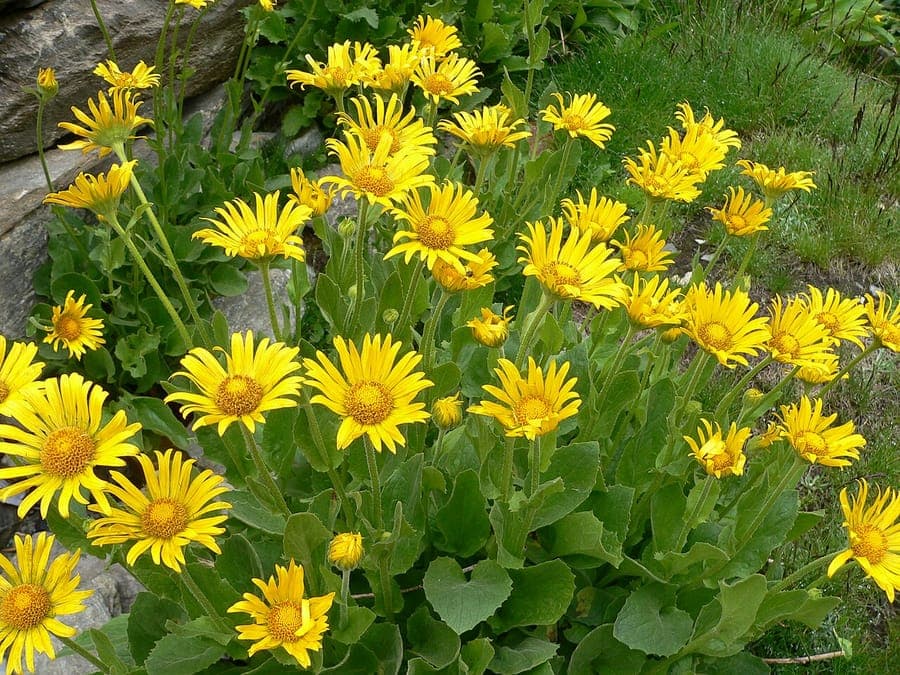
No machine-readable author provided. Philipendula assumed (based on copyright claims). / CC BY-SA 3.0, via Wikimedia Commons
Doronicum grandiflorum: complete guide
Doronicum grandiflorum
¿Quieres ver Doronicum grandiflorum: complete guide en tu jardín?
1 minuto, sin tarjeta de crédito
Overview
Doronicum grandiflorum, commonly known as Large-flowered Leopard's-bane, is an attractive spring-flowering perennial native to the Alps and surrounding mountain regions. This robust plant delivers cheerful bright yellow flowers when most other garden residents are still dormant. Ideal for gardeners seeking early-season color and reliable performance in mixed borders and alpine troughs.
Appearance & bloom
Doronicum grandiflorum reaches heights of 40-60 centimeters with strong, upright stems. The flowers are notably large, reaching 5 centimeters in diameter, with bright yellow ray florets surrounding a yellow disc. The flowering period extends from May through June, occasionally reblooming in July if deadheaded promptly.
Ideal location
This plant thrives in full sun to partial shade conditions. Provide at least 4-5 hours of direct sunlight daily. In warm climates, afternoon shade offers relief from heat stress. Excellent for perennial borders, wildflower meadows, and container cultivation on patios.
Soil
A well-draining, moderately fertile soil is ideal. Doronicum grandiflorum tolerates diverse soil types but prefers slightly moister conditions. Incorporate humus-rich compost and avoid waterlogged feet. Target pH 6.0-7.5 for optimal growth.
Diseño gratis
¿Quieres ver Doronicum grandiflorum: complete guide en tu jardín? Crea un diseño gratis ahora.
Watering
Water regularly during establishment. Once established, Doronicum grandiflorum exhibits good drought tolerance. Water when the top 5 centimeters feel dry. Avoid wet feet during winter dormancy. Rainwater collection is preferred.
Pruning
After flowering, cut back the plant to encourage compact growth and potential second blooms. Deadhead spent flowers regularly throughout the season. In autumn, cut back foliage to ground level. Handle delicate foliage gently during pruning.
Maintenance calendar
Spring: Growth begins March. Light feeding in April. Peak bloom May-June. Summer: Post-bloom cutback stimulates rebounds. Regular watering during dry spells. Autumn: Allow foliage senescence. Winter: Dormancy period. Keep relatively dry.
Winter hardiness
Doronicum grandiflorum is hardy to -15C and thrives in cold and temperate climates. Fully winter-hardy throughout Northern Europe with excellent snow tolerance.
Companion plants
Pair with Helleborus, Primula, and Ajuga for spring layering. Summer bloomers like Coreopsis and Achillea camouflage bare patches. Ornamental grasses provide structural interest and movement.
Closing
Doronicum grandiflorum is a reliable harbinger of the garden season with radiant yellow blooms that celebrate spring's arrival. Easy to grow and fully hardy. Available through quality garden centers. Visit gardenworld.app/en for additional plant guidance and gardenworld.app/en/garden-design for personalized design recommendations.
¿Quieres ver Doronicum grandiflorum: complete guide en tu jardín? Crea un diseño gratis ahora.
Sube una foto, elige un estilo y obtén un diseño fotorrealista con lista de plantas en menos de un minuto.
Más de 10.000 jardines diseñados
Sin tarjeta de crédito


Plantas similares
Calendula stellata: complete guide
Calendula stellata
Complete guide to Calendula stellata, the star-flowered marigold from Sicily: location, soil, watering and companion planting tips.
Korean chrysanthemum: complete guide
Chrysanthemum x rubellum
Chrysanthemum x rubellum is a hardy autumn perennial with single pink to copper flowers from August to November. Care and combinations.
Helianthus divaricatus: complete guide
Helianthus divaricatus
Helianthus divaricatus is a North American woodland sunflower with yellow summer blooms, ideal for naturalistic borders and shady edges.