
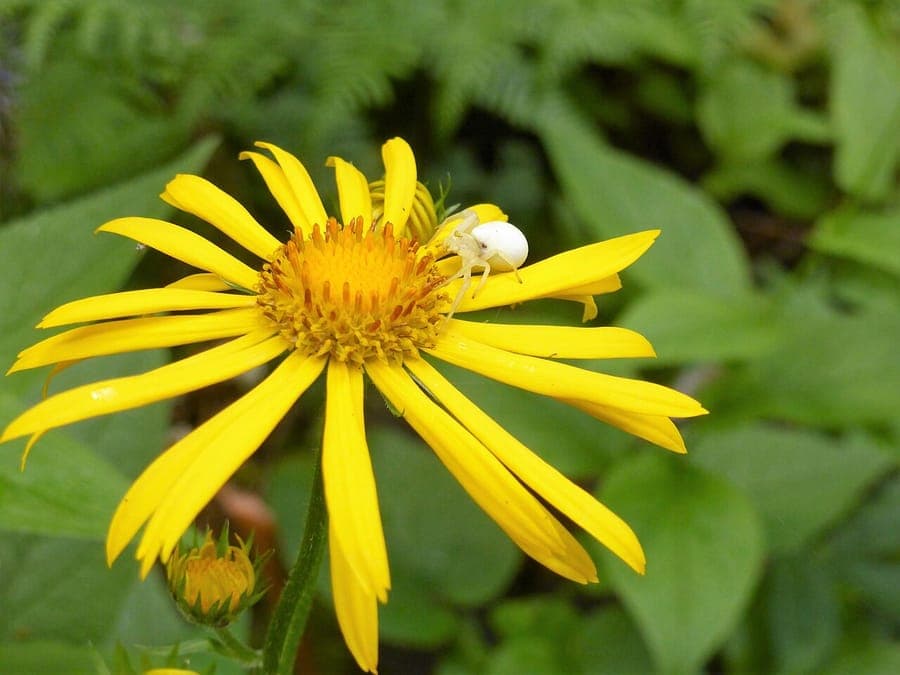
Rosa-Maria Rinkl / CC BY-SA 4.0, via Wikimedia Commons
Austrian leopard's-bane: complete guide
Doronicum austriacum
¿Quieres ver Austrian leopard's-bane: complete guide en tu jardín?
1 minuto, sin tarjeta de crédito
Overview
Austrian leopard's-bane (Doronicum austriacum) is an early spring wildflower from European mountain woodlands. This reliable bloomer brings sunshine yellow to gardens in April and May when other plants are just awakening. Undemanding and cheerful, it deserves a place in every spring garden.
Appearance and Bloom
This plant forms a rounded, spreading mound with heart-shaped leaves. Bright yellow, daisy-like flowers appear from April to May on sturdy stems, reaching 30-50 cm in height. Flowers close in overcast weather and reopen in sunshine, adding movement and interest to the garden.
Ideal Location
Austrian leopard's-bane thrives in sun to partial shade. Particularly suited to moist spots near water features or bog gardens. Accepts full light but equally comfortable in dappled shade. Protect from intense afternoon sun in dry soils. Woodland edges are perfect settings.
Soil Requirements
Prefers nutrient-rich soil with good moisture retention. Add humus to sandy soils before planting. Tolerates acidic, neutral, or slightly alkaline conditions. Excessive drainage must not create drought during the growing season.
Watering
Water regularly during the growing season (March-May). Supplement in dry periods. After flowering, reduce watering as plants go dormant. Deadheading promotes possible repeat blooming. Young plants require consistent moisture in their first summer.
Diseño gratis
¿Quieres ver Austrian leopard's-bane: complete guide en tu jardín? Crea un diseño gratis ahora.
Pruning
Deadhead spent flowers after blooming to encourage possible secondary flowering. Leave foliage in place until July-August when it naturally yellows. Remove entirely when withered. This encourages new growth and possible autumn flowering.
Maintenance Calendar
Spring (March-May): Plant divisions, fertilize, and water well. Summer (June-August): Deadhead, water as needed. Autumn (September-October): Remove withered foliage. Winter: Clean planting area and apply mulch.
Winter Hardiness
Fully hardy throughout the Netherlands and northern Europe. Requires no winter protection. Can persist for many years in the same location.
Companion Plants
Perfect with spring bulbs like daffodils, hyacinths, and tulips. Excellent with other moisture-loving plants like astilbe. Underplant with forget-me-nots or ornamental grasses for layered effect.
Summary
Austrian leopard's-bane brings early yellow joy to spring gardens. The plant is undemanding, reliable, and grows almost anywhere. Perfect for gardeners seeking quick spring results with minimal effort.
Available from garden centers, online nurseries, and specialist wildflower suppliers.
¿Quieres ver Austrian leopard's-bane: complete guide en tu jardín? Crea un diseño gratis ahora.
Sube una foto, elige un estilo y obtén un diseño fotorrealista con lista de plantas en menos de un minuto.
Más de 10.000 jardines diseñados
Sin tarjeta de crédito


Plantas similares
Calendula stellata: complete guide
Calendula stellata
Complete guide to Calendula stellata, the star-flowered marigold from Sicily: location, soil, watering and companion planting tips.
Korean chrysanthemum: complete guide
Chrysanthemum x rubellum
Chrysanthemum x rubellum is a hardy autumn perennial with single pink to copper flowers from August to November. Care and combinations.
Helianthus divaricatus: complete guide
Helianthus divaricatus
Helianthus divaricatus is a North American woodland sunflower with yellow summer blooms, ideal for naturalistic borders and shady edges.