
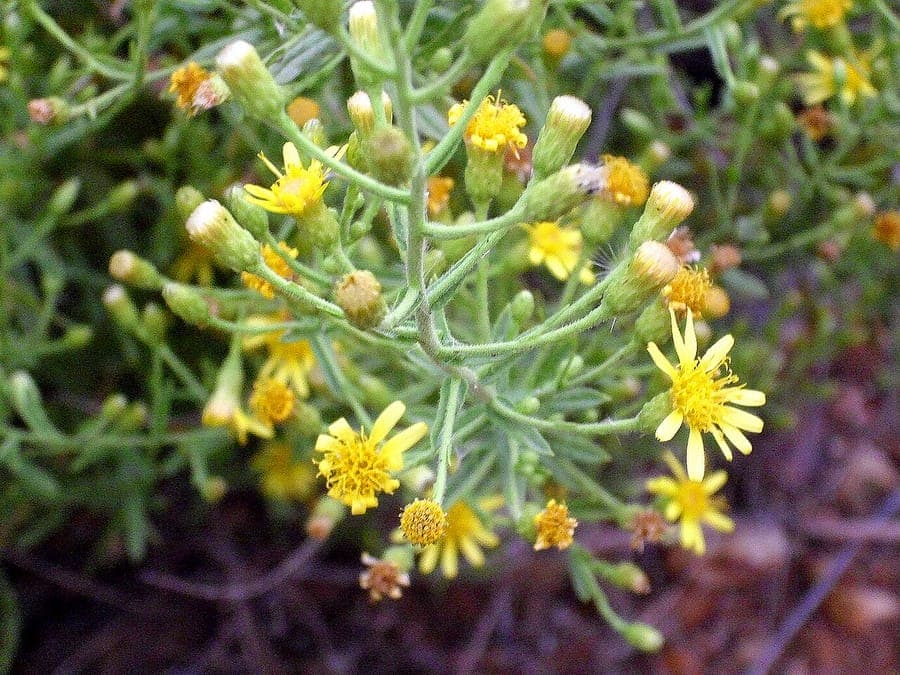
Javier martin / Public domain, via Wikimedia Commons
Sticky fleabane: complete guide
Dittrichia viscosa
¿Quieres ver Sticky fleabane: complete guide en tu jardín?
1 minuto, sin tarjeta de crédito
Overview
Sticky fleabane (Dittrichia viscosa) is a robust shrubby plant from the Asteraceae family thriving in warm, dry regions. This compact to moderately growing plant is prized for its fragrant foliage and abundant yellow flowers spanning a long growing season. Native to Macaronesian and Mediterranean regions, it offers gardeners a versatile choice for sunny settings.
Appearance and bloom
Dittrichia viscosa reaches an average height of 30-60 cm with comparable spread. The plant appears as a bushy shrub with numerous branching stems. Distinctive to this species are its sticky leaves with a strong aromatic perfume, hence the common name "woody fleabane". Flowers appear as tiny yellow composite heads scattered throughout many fine branching stems. This bloom period runs from September through October, providing late-season color.
Ideal location
Success with sticky fleabane begins with placement. Choose a location receiving at least eight hours of direct sunlight daily. The more sun, the better this Mediterranean plant thrives. A sheltered spot away from strong winds is ideal, though the plant offers reasonable wind tolerance. In areas with average winter temperatures above 7 degrees Celsius, this species can remain outdoors year-round.
Soil needs
Dittrichia viscosa is not particular about soil type but performs best in well-draining soil. Optimal pH ranges between 7.0 and 7.5 (neutral to slightly alkaline). Heavy clay soils can lead to root rot; add sand or perlite for improved drainage. This plant can thrive in moderate fertility soil - rich soil encourages excessive foliage at the expense of bloom.
Diseño gratis
¿Quieres ver Sticky fleabane: complete guide en tu jardín? Crea un diseño gratis ahora.
Watering
Once established, sticky fleabane is highly drought-tolerant. Water regularly in the first season until the plant is firmly rooted. In mature status, this species requires minimal watering. Allow soil to dry between waterings. Excessive moisture can lead to fungal infections; ensure good air circulation around the plant.
Pruning
Pruning is optional but promotes a more compact form and richer bloom. In early spring, prune the plant back to about two-thirds of its height. Remove dead or damaged branches anytime during the season. After flowering, light pruning helps maintain plant shape.
Maintenance calendar
Spring: Apply mild pruning as needed. Winter: Protect against hard frost in areas colder than -5 degrees Celsius. Summer: Monitor watering needs during dry periods. Fall: Enjoy the bloom spectacle; no specific actions needed.
Winter hardiness
Dittrichia viscosa tolerates temperatures down to approximately -5 degrees Celsius and is suitable for USDA hardiness zone 8 and warmer. In temperate climates, protection may be needed during hard winters. Consider container cultivation in colder regions, moveable to protected locations during winter.
Companion plants
This Mediterranean plant pairs well with other drought-tolerant species: lavender, rosemary, santolina, and similar shrubs sharing comparable environmental needs. The yellow flowers contrast beautifully with purple and blue tones.
Closing note
Sticky fleabane offers gardeners a solid, low-maintenance plant adapting well to dry, sunny conditions. With minimal care once established, this plant rewards you with long-lasting yellow flowers and aromatic foliage enjoyed throughout your garden.
¿Quieres ver Sticky fleabane: complete guide en tu jardín? Crea un diseño gratis ahora.
Sube una foto, elige un estilo y obtén un diseño fotorrealista con lista de plantas en menos de un minuto.
Más de 10.000 jardines diseñados
Sin tarjeta de crédito


Plantas similares
Calendula stellata: complete guide
Calendula stellata
Complete guide to Calendula stellata, the star-flowered marigold from Sicily: location, soil, watering and companion planting tips.
Korean chrysanthemum: complete guide
Chrysanthemum x rubellum
Chrysanthemum x rubellum is a hardy autumn perennial with single pink to copper flowers from August to November. Care and combinations.
Helianthus divaricatus: complete guide
Helianthus divaricatus
Helianthus divaricatus is a North American woodland sunflower with yellow summer blooms, ideal for naturalistic borders and shady edges.